
24/7 Customer Support

Free returns

Same-day & Next-day Delivery

Quality Guaranteed

Unlock Your Welcome Offers: FREE Delivery | Up to 80% OFF | Free 30-day JoyPlus trial
Download the APP
Artificial roses can provide a practical alternative to fresh flowers for UK weddings, anniversaries, parties and everyday interiors. They do not require watering, refrigeration or regular replacement, but not every faux rose arrangement offers the same appearance, flexibility or value.
Before ordering, look beyond attractive product photographs. Petal texture, stem construction and the scale of each flower can determine whether your arrangement looks carefully styled or noticeably artificial.
Online images may make a bouquet appear fuller or more vibrant than it is in person. Lighting, camera settings and screen calibration can affect the perceived shade. Red, cream, pink and green artificial roses may also look different under warm indoor lighting than they do on a phone screen.
Check the number of stems, flower-head diameter and total length rather than relying only on the product image. A single bouquet with several heads may be more suitable for a small vase than a multi-pack of separate stems, depending on the arrangement you want to create.
The phrase “real touch roses” usually refers to a soft or natural-feeling surface, but it does not guarantee realistic shaping, colouring or petal layering. Some artificial roses have a convincing texture but overly uniform petals, while others look attractive but have rigid stems that are difficult to position.
Material descriptions are more useful when read alongside construction details. Silk fabric, faux silk and latex each provide a different look and feel. Also check whether the stem contains wire, as this affects how easily you can shape the flowers.
A bouquet that looks generous in a product photograph may be too short for a tall floor vase or too large for a narrow table arrangement. Likewise, “maintenance-free flowers” still need occasional dusting, and stems with wire cores require careful handling if cut.
Keep artificial flowers away from open flames and direct heat sources. If a stem is trimmed, cover or safely dispose of any exposed wire ends, particularly in homes with children or pets.
For a softer, fabric-like appearance, look for silk or faux silk petals with visible shaping and layered construction. Latex artificial roses can offer a more flexible, tactile surface and may suit shoppers specifically seeking real touch roses. However, material alone does not determine realism; leaf detailing, colour variation and petal form also matter.
For a silk rose bouquet, confirm whether “silk” describes the flower and leaves, rather than assuming the entire product is made from silk. Stems are commonly made from plastic with a steel or iron wire core.
Use the measurements to match the flowers to your vase and intended setting:
For a fuller display, compare the number of individual stems with the number of flower heads. A 12-stem pack provides more separate pieces to distribute, while a single multi-head bouquet can create volume without as much arranging.
Artificial roses generally need less care than fresh flowers, but dust can collect between petals and leaves. Clean them gently with a damp cloth or a light rinse where the product instructions allow. Store them in a dry place away from prolonged direct sunlight to help reduce fading.
There is no need for water, sunlight or flower food, so artificial roses can work well in offices, rented homes and venues where regular maintenance is inconvenient. They should still be treated as decorative materials rather than toys, and they should not be placed near candles, hobs, heaters or other heat sources.
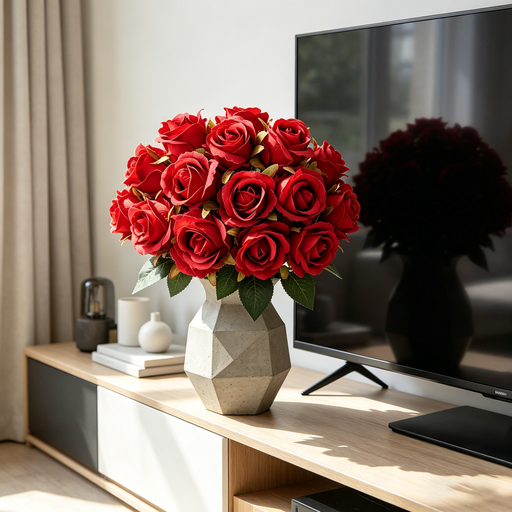
Why This Fits Their Persona: Twelve separate red stems give first-time buyers flexibility for a medium vase, small event display or DIY bridal bouquet without committing to a large pre-styled arrangement.
The listing specifies 12 stems, approximately 27 cm in length and approximately 5 cm per rose bud, making the quantity and scale clearer than a photo-only listing.
Silk flowers and leaves; plastic-coated steel wire cores can be bent, trimmed and shaped for different arrangements.
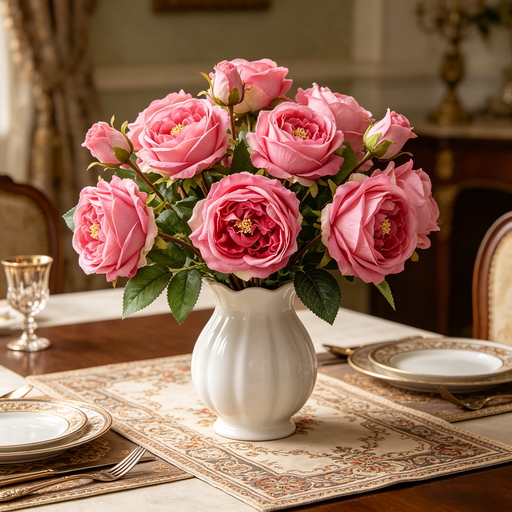
Why This Fits Their Persona: Shoppers prioritising a larger flower head and tactile latex finish may find this two-stem set suitable for a focused display, gift presentation or formal table styling.
The product details state the 45 cm stem length and approximately 9.5 cm flower-head diameter, helping prevent a mismatch with the intended vase or display.
Latex flower and leaf components; internal iron wire allows the stems to be bent, cut and customised.
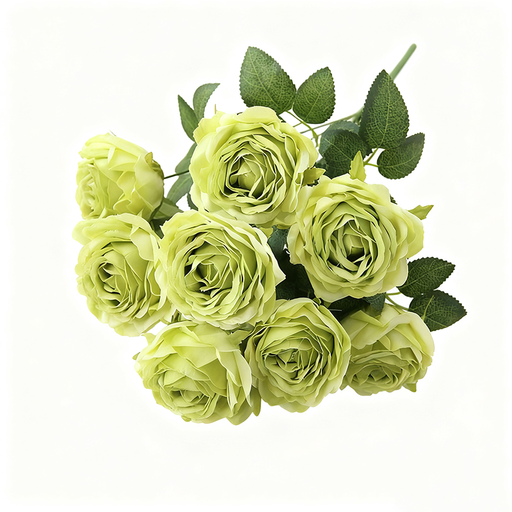
Why This Fits Their Persona: This ready-made bouquet suits offices, reception areas, event venues and larger vases where a taller arrangement is needed with minimal preparation.
The listing identifies one bouquet containing 10 flower heads, rather than leaving shoppers to estimate fullness from the photograph.
Approximately 48 cm tall; faux silk construction with a plastic stem and internal iron wire for support and shaping.
For wedding table decorations, choose consistent colours and check the vase height before ordering. Separate artificial rose stems are useful when you need to distribute flowers across several tables or combine them with greenery.
For a bridal bouquet, consider weight, flexibility and flower-head size. Shorter stems can be easier to group and wrap, while longer wire-supported stems allow more control over the bouquet shape.
For home décor flowers or office displays, a ready-made bouquet can reduce styling time. Place arrangements away from radiators and strong windows, and dust them periodically to maintain their appearance.
We have compiled a complete, real-time list of products that fully satisfy these strict selection criteria and UK safety regulations.
Their usable display life depends on material, handling, dust levels and exposure to sunlight or heat. Silk, faux silk and latex flowers can be reused for multiple occasions when stored carefully. Keep them dry where required, dust gently and avoid placing them near flames or direct heat.
Separate and reshape the petals and leaves before placing the stems in a vase. Bend wire-supported stems at slightly different angles, vary the flower heights and avoid arranging every head at the same level. Combining several bouquets or adding complementary foliage can also create a less uniform appearance.