
24/7 Customer Support

Free returns

Same-day & Next-day Delivery

Quality Guaranteed

Unlock Your Welcome Offers: FREE Delivery | Up to 80% OFF | Free 30-day JoyPlus trial
Download the APP
Choosing the right set of artist coloured pencils can feel overwhelming. With a market full of options ranging from classic wax-based pencils to versatile watercolour and textured pastel varieties, it’s difficult to know where to begin. Whether you are an art student stocking up on supplies, a hobbyist looking to upgrade or a professional illustrator seeking a specific medium, the pencils you choose can significantly shape your creative output.
This guide is designed to help you navigate the options. We will break down the key types of artist pencils, offer practical advice on what to look for and present a few carefully selected recommendations to suit different artistic needs and techniques.
Before diving into specific products, it’s helpful to understand the main factors that differentiate one set of pencils from another. Considering these points will help you select a set that aligns with your artistic style and projects.
The most significant choice you'll make is the type of pencil core, as this dictates the texture, application and effects you can achieve.
The quality of a pencil is often determined by its core. A higher pigment concentration results in more vibrant, saturated colours that require less pressure to apply. Lightfastness, or the pigment's resistance to fading when exposed to light, is another crucial factor for professional artists who intend to display or sell their work.
Additionally, look for break resistant coloured pencils. Many manufacturers use special bonding processes to secure the lead within the wooden casing, reducing the frustration of tips snapping during sharpening or use.
If you are just beginning or exploring a new medium, an art pencils set of 24 is often a perfect starting point. It provides a broad enough colour palette to experiment with shading, mixing and composition without the significant investment of a larger 72 or 120-piece set.
Here are our recommendations for artists looking for reliable and high-performing coloured pencils. We have selected three distinct types to cover a range of artistic applications.

Why It Stands Out: This set is a dependable workhorse for any artist's toolkit. The pencils are known for their vibrant colour laydown and exceptional durability. The special secural bonding process (SV) used in their manufacturing makes the leads highly break-resistant, which is a significant advantage during detailed work or frequent sharpening.
Pros:
Who is it for: Students, hobbyists and artists who need a reliable and high-quality set of classic coloured pencils for drawing, sketching and layering. Their durability makes them particularly suitable for classroom or studio environments.

Why It Stands Out: The STABILO Aquacolor set bridges the gap between drawing and painting. These premium aquarelle pencils can be used dry for crisp lines or transformed with water to create beautiful, flowing watercolour effects. You can even lift pigment directly from the 2.8mm lead with a wet brush for more controlled application.
Pros:
Who is it for: Illustrators, mixed-media artists and anyone curious about exploring watercolour techniques without the full setup of paints and palettes. They are excellent for art journaling, illustration and adding painterly touches to drawings.
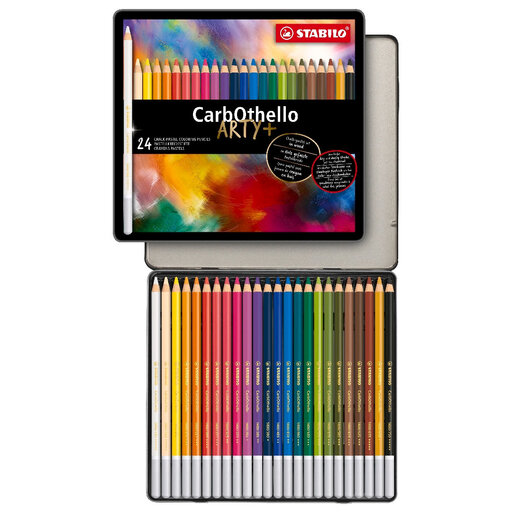
Why It Stands Out: The CarbOthello pencils offer the rich, blendable texture of chalk pastels in the convenient and precise format of a pencil. They deliver a wonderfully dry, dusty stroke with high pigmentation, making them stand out beautifully on both light and dark papers. The colours can be dry-blended or smudged and are even partially water-soluble for more effects.
Pros:
Who is it for: Portrait artists, crafters and anyone who enjoys working with pastels but seeks greater precision for details. They are also a great choice for artists looking to add texture and high-contrast highlights to their work.
If our recommendations don't quite match what you're looking for, or if you'd like to browse a wider selection of set sizes and specialty pencils, there are many other choices available.
Explore our full range of colouring pencils to find the perfect set for your next creative project.
1. What is the difference between artist grade and student grade coloured pencils? Artist grade pencils generally contain a higher concentration of high-quality pigments, which results in richer colours and superior lightfastness (resistance to fading). They also tend to have a softer, smoother core for better blending and layering. Student grade pencils are more affordable and are excellent for practice, but may have harder leads and less vibrant pigmentation.
2. Can you mix different types of coloured pencils in one artwork? Absolutely. Many artists combine different pencil types to achieve unique effects. For instance, you could create a base drawing with classic coloured pencils and then use watercolour pencils over certain areas to create soft washes. It is always a good practice to test your combinations on a scrap piece of paper first to see how they interact.
3. How should you sharpen pastel pencils to avoid breaking the core? Pastel pencils have a much softer and more brittle core than standard graphite or coloured pencils. To avoid snapping the tip, it is often recommended to use a sharp craft knife or a specialised pastel pencil sharpener. A standard rotary sharpener can apply uneven pressure and break the delicate core. Sharpening carefully by hand provides the most control.