Choose a powered desktop HDD if your growing artwork archive will stay beside the workstation; consider a portable HDD if you need to carry a multi-terabyte copy, or a portable SSD if frequent large-file transfers matter more. Check capacity, workstation connections and file-system requirements for the exact drive. Whichever route you take, keep another copy in a separate location rather than making one external drive the entire archive.
Who needs which kind of drive?
Growing home artwork archivists
If project folders, exports, scans and reference assets mostly stay beside one workstation, capacity and a stable desk setup may matter more than portability. Western Digital’s My Book specification illustrates the powered desktop-drive route.
Artists carrying an off-site copy
If you move a copy between home, a studio and another storage location, consider how easily the drive travels and whether its connector works with each computer. A portable drive still needs careful handling and a separate copy elsewhere.
Artists working with large active projects
If you frequently transfer large projects or work directly from the external drive, check the workstation port and cable as well as the drive. Samsung says the T7 Shield’s stated maximum speeds depend on a compatible host, cable and transfer mode.
What matters when choosing?
Desktop external HDD
Choose it when: the archive will normally remain beside the home workstation and room for growing project folders is the main priority.
Allow for: mains power and a fixed desk location; Western Digital’s My Book range is an example of this setup.
Portable external HDD
Choose it when: you need a multi-terabyte archive copy that can travel between locations.
Allow for: careful handling and a separate backup; check the connector and software for the exact model.
Portable external SSD
Choose it when: frequent large-file transfers or working from the drive make connection speed important.
Allow for: model-specific speed and protection claims. Samsung says the T7 Shield’s maximum throughput requires a compatible host, cable and UASP.
| Concern |
What to check |
Who this matters to |
| Archive capacity and desk setup |
Measure existing files, versions and exports, then allow room for future projects. If considering a desktop drive, check its power supply and desk space. |
If my artwork folders will mostly stay at one workstation, I need enough room to keep the archive growing without moving it regularly. Around 40% of consumers put stationary archive capacity first. |
| Portability and handling |
Decide how often the copy must travel. Check the exact model’s connector and any stated protection conditions. |
When I carry an archive copy between locations, I need a drive I can transport and handle appropriately. Portability is the primary concern for around 30% of consumers. |
| Transfer speed and compatibility |
Identify the workstation’s USB port and intended cable; confirm file-system and backup-software needs before moving the full archive. |
Frequent large-project transfers make me care about whether the drive and workstation connection work together. Around 30% of consumers prioritise transfer speed and compatibility. |
Artwork archive mistakes to avoid
-
Treating one external drive as the complete archive
A single device leaves the artwork dependent on one storage copy. The National Archives recommends several copies in different physical locations and on different storage technologies; the Library of Congress likewise advises separate locations and media.
Keep an additional copy elsewhere, and review the archive periodically so files are not left indefinitely on one device.
-
Buying an SSD by its advertised speed alone
Samsung says reaching the T7 Shield’s stated maximum transfer speeds requires a compatible USB 3.2 Gen 2 host and cable, with UASP enabled.
Identify the workstation’s actual port specification and the cable you will use before deciding whether that connection suits your work.
-
Assuming a rugged rating replaces a backup
Samsung’s T7 Shield ingress and drop claims apply under its stated controlled test conditions. Samsung also says liquid, dust and drop damage are not covered under its warranty.
Use physical protection when carrying the drive, but retain separate copies and check transferred files.
-
Choosing capacity from today’s folder size alone
An artwork archive may include editable files, versions and exports as well as finished images. A capacity choice based only on current use can leave little room for later projects.
Measure what you have, include the files you intend to retain and allow growth headroom while planning a separate backup copy.
Running out of space may mean replacing the drive sooner than planned or reorganising the archive.
Relevant brands and product lines
Western Digital
Western Digital’s My Book specifications illustrate the powered desktop-HDD route, with listed capacities from 4TB to 26TB and an included AC adapter.
- The stated capacity range gives a stationary artwork archive room to grow.
- Its powered desktop format is less convenient if the archive needs to travel routinely; check the connection and exact capacity before choosing a model.
Samsung
Samsung’s T7 Shield is a portable-SSD example for frequent transfers or carrying working files. Samsung lists 1TB, 2TB and 4TB variants and USB 3.2 Gen 2 connectivity.
- Samsung states sequential read and write speeds of up to 1,050MB/s and 1,000MB/s for the T7 Shield, subject to its compatible-host, cable and UASP conditions.
- Its IP65 and drop claims are based on controlled conditions; Samsung says liquid, dust and drop damage are not covered under warranty.
Seagate
Seagate’s Backup Plus Portable pages illustrate a portable-HDD route for moving a multi-terabyte copy; they describe USB 3.0 models and backup tools.
- The cited Backup Plus Portable information includes 4TB and 5TB models for a carryable archive copy.
- Backup Plus pages cover multiple generations, so check the exact model’s connector, software and warranty terms.
Joybuy drive choices for artwork archiving
These drives cover portable SSDs for frequent file access, portable HDDs for carrying an archive copy and a powered desktop HDD for a mostly stationary collection. Size the drive against your own files and keep a separate copy whichever format you choose.
 No image available
Samsung Portable SSD T7 4TB, Grey
Consider this portable SSD if you need room for artwork files that you access or transfer regularly.
The named variant has 4TB capacity and a USB Type-C 3.2 Gen 2 connection. Check the workstation port and intended cable before relying on a faster connection, and confirm the file system suits your archive workflow.
Joybuy
 No image available
Samsung T7 Shield MU-PE1T0S 1TB, Black
Consider this portable SSD for a smaller travelling copy or frequent large-project transfers, provided 1TB leaves enough room for your files.
The named variant has a USB Type-C 3.2 Gen 2 connection. Samsung’s T7 Shield speed and protection claims have stated connection and test conditions; neither physical protection nor portability removes the need for another archive copy.
Joybuy
 No image available
Western Digital My Passport Ultra for Mac 5TB, Silver
This portable HDD is worth considering when a multi-terabyte archive copy needs to move between work locations.
The named variant has 5TB capacity. Because it is the for Mac edition, check its file system and whether a Windows workstation would need an HFS+ driver before moving the archive; confirm the applicable warranty terms too.
Joybuy
 No image available
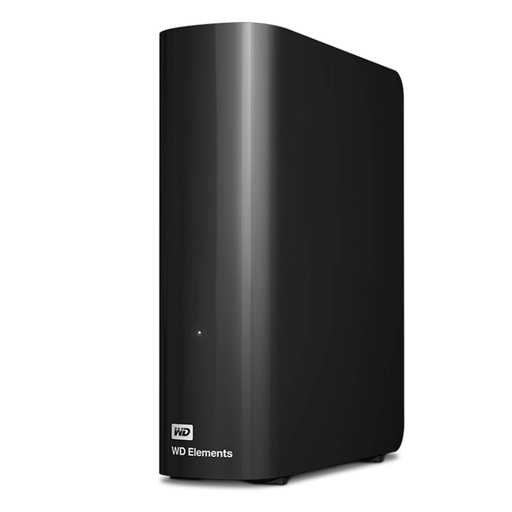
Western Digital Elements Desktop 10TB
This desktop HDD suits an artwork collection that will normally remain beside the home workstation and needs substantial capacity.
The named variant has 10TB capacity. Plan for its AC power adapter and a stable desk location; check formatting requirements before using it with macOS.
Joybuy
 No image available
Western Digital Elements Portable 4TB, Black
Consider this portable HDD for a multi-terabyte artwork copy that you need to move occasionally.
The named variant has 4TB capacity and a USB 3.0 connection. Check its file system before using it with a Mac or another operating system, and protect it from water, dust and physical shocks.
Joybuy
Frequently asked questions
Can one external drive hold my only artwork archive?
No: treat the drive as one copy, not the entire preservation plan. The National Archives advises several copies in different physical locations and on different storage technologies; the Library of Congress advises using at least two storage media in separate locations.
How can I tell whether artwork copied correctly?
Use a transfer process that verifies the copied content, or check it afterwards with checksum software. The National Archives recommends checking that copies are identical and carrying out regular integrity checks.
Does archiving digital artwork mean I need an SSD?
No: an HDD can suit an archive where capacity is the main need, while an SSD is worth considering for frequent large-file transfers or work from the drive. If you are considering Samsung’s T7 Shield for speed, its stated maximum depends on compatible USB 3.2 Gen 2 hardware, cable and UASP.
Will the same external drive work with Windows and Mac?
That depends on the exact drive, its file system and the backup workflow you intend to use. Western Digital lists exFAT formatting and Windows 10 or later and macOS 11 or later compatibility for its cited My Book range; check the particular model and operating-system versions before transferring the full archive.


