
24/7 Customer Support

Free returns

Same-day & Next-day Delivery

Quality Guaranteed

Unlock Your Welcome Offers: FREE Delivery | Up to 80% OFF | Free 30-day JoyPlus trial
Download the APP
Shopping for Asian bread and buns can make family meals, packed lunches and quick snacks much easier. However, attractive packaging does not always reveal how a product should be stored, cooked or used. The wrong choice may leave you with dry naan, a freezer pack that does not fit your routine or a product unsuitable for someone in your household.
This guide explains what to check before buying naan bread, paratha, gua bao buns, Chinese buns, Korean buns and other frozen Asian bakery products.
Some products only need reheating, while others require thorough cooking. Pre-baked naan can usually be warmed in a microwave, toaster, grill or oven. By contrast, raw dough products, such as some Chinese-style white buns, need steaming or baking before consumption.
Always check whether the pack says ready to eat after heating, cook from frozen or raw dough product. This affects preparation time, kitchen equipment and food safety.
A family pack may offer more portions, but frozen items require space at -18°C or below. Large packs of paratha or steamed buns can be economical for regular users but inconvenient if your freezer is already full.
For ambient naan, reseal the pack or transfer it to an airtight container after opening. If freezing the product, separate individual pieces before thawing so you can use only what you need.
Many Indian flatbreads and Asian buns contain wheat and gluten. Some also contain soya, sesame, milk, egg, nuts or sulphites. A product described as plain may still contain additives, oil or raising agents.
Read the current packaging before purchase, particularly when buying for children or anyone with a food allergy. Product descriptions can change and the label supplied with the food should take priority.
Consider how you normally cook. Pre-baked naan bread is suitable for quick curry nights, while frozen paratha generally needs a dry tawa or frying pan to develop its layered texture. Gua bao buns and filled steamed buns need a steamer or suitable microwave method.
For example, the Humza plain tandoori naan can be heated for around 20–30 seconds per naan in a microwave or for 2–3 minutes in an oven. Frozen paratha is cooked from frozen on a medium-heated griddle until both sides are golden.
Compare both the number of pieces and total weight. A four-piece naan pack suits a small meal, whereas a 900g family pack containing 12 naans is more practical for larger households or batch freezing.
For buns, check whether the listed weight includes multiple individually portioned pieces. This helps you estimate breakfast portions, snack servings and freezer usage more accurately.
Frozen Asian bakery products should remain frozen until needed and should not generally be refrozen after thawing. Filled products containing meat require particular care. For example, chicken buns should be steamed until piping hot throughout and cooked to the temperature stated on the packaging.
Also compare nutritional information where relevant. Paratha typically contains more fat than plain naan because of its layered dough and margarine or oil content, while filled buns may contain more salt or sugar depending on the filling.
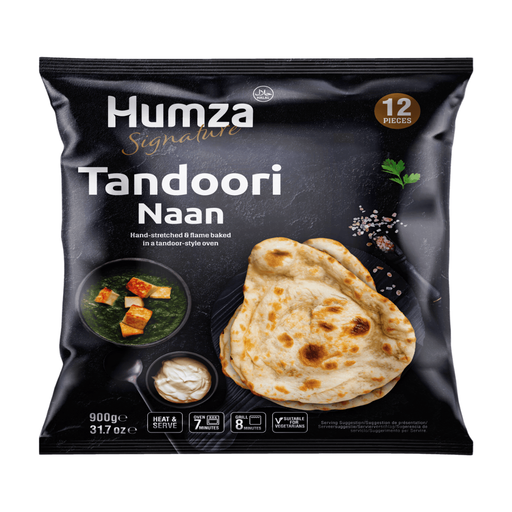
Why This Fits Their Persona: A four-piece pack offers a straightforward way to add Indian flatbreads to curry nights, wraps or quick pizzas without committing to a large family quantity.
It is clearly described as pre-baked and suitable for brief microwave, grill or oven heating, reducing uncertainty about preparation.
Plain flavour works with varied meals; each naan contains approximately 263 kcal per 100g.
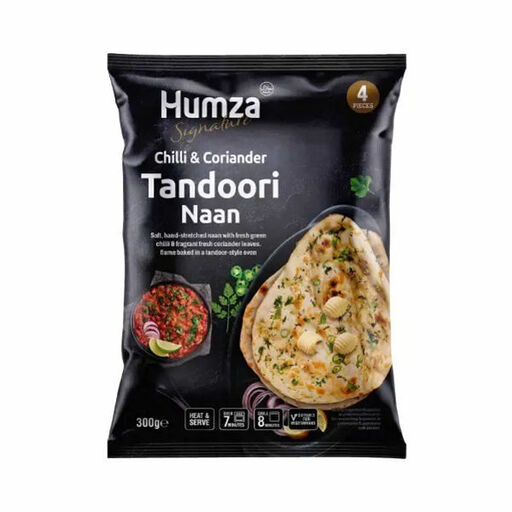
Why This Fits Their Persona: Suitable for shoppers who want a more pronounced-flavour naan to serve with curries, dals, grilled dishes or raita.
The ingredient information specifies 2% garlic and 1.5% coriander, rather than relying only on a flavour photograph or name.
Pre-baked; microwave, grill and oven instructions are provided for flexible preparation.
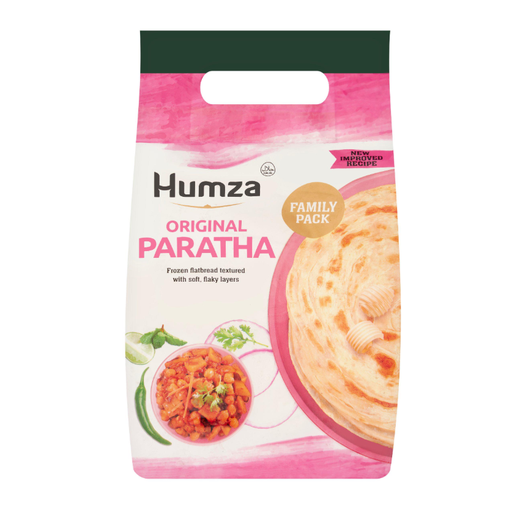
Why This Fits Their Persona: A freezer-oriented family pack suits regular users who prepare wraps, curries, kebab rolls or South Asian breakfasts.
The pack states that it is frozen and intended to cook from frozen, so it is not mistaken for a ready-to-eat flatbread.
Approximately 20 pieces per 1.6kg pack; halal-certified and suitable for vegetarians according to the supplied product information.
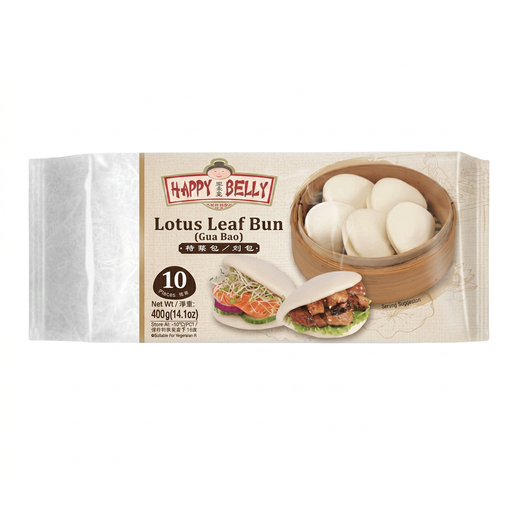
Why This Fits Their Persona: Designed for home-made gua bao with braised pork, fried chicken, tofu, pickled vegetables or salad fillings.
The product is specifically identified as a lotus leaf bun for steaming, rather than a filled bun that might not suit your chosen recipe.
Ten individually sized 40g buns; halal-certified, vegan and vegetarian-friendly according to the product information.
We have compiled a complete, real-time list of products that fully satisfy these strict selection criteria and UK safety regulations.
For sweet snacks, consider red bean buns such as KG Pastry Red Bean Bun or Samlip Red Bean Bun. These are portioned for breakfast, afternoon snacks or dessert and are typically reheated from frozen.
If you want filled savoury options, Honor Char Siu Bun provides a steamed Chinese bun with barbecue pork filling, while Freshasia New Orleans Chicken Thigh Bun contains a seasoned chicken filling and requires thorough steaming.
For a larger gua bao format, the Freshasia TW Large Hirata Bun 1.2kg pack may suit regular entertaining or meal preparation. Check freezer capacity before ordering.
Keep them at -18°C or below, follow the pack’s date guidance and avoid refreezing after thawing. Use opened products promptly and keep the packaging sealed to reduce freezer damage.
Some pre-baked naan products provide toaster instructions, but settings vary and uneven browning is possible. Use a low setting, supervise closely and follow the product packaging. An oven or microwave may provide more even warming.
Gua bao buns are a type of folded steamed bun, usually served open around a filling. Other steamed buns may be closed and filled with red bean paste, char siu, sesame paste or meat. Check whether the product is plain, folded or filled before buying.