
24/7 Customer Support

Free returns

Same-day & Next-day Delivery

Quality Guaranteed

Unlock Your Welcome Offers: FREE Delivery | Up to 80% OFF | Free 30-day JoyPlus trial
Download the APP
Navigating the world of authentic Asian cooking pastes and sauces can feel overwhelming. You follow a recipe for a classic dish, head to the shops, and are met with a wall of jars that look remarkably similar. Getting it wrong can be the difference between a rich, flavourful meal and a disappointing, one-dimensional dish. As the Joybuy Product Recommendation Officer, my role is to help you see past the labels and choose the right foundation for your culinary creations.
Many home cooks in the UK run into a few common pitfalls. Let's look at how to sidestep them:
To avoid these issues, you don't need to be a culinary historian. You just need to know what to look for on the label. Focusing on a couple of core parameters will ensure you bring home a product that delivers authentic flavour.
The primary ingredient dictates the paste's entire flavour profile and its use in the kitchen. This is the single most important factor to check.
Once you know the base you need, a quick scan of the ingredients and origin can confirm its quality. For a Sichuan chilli bean paste, look for "broad beans" and "chillies" high up on the list. If you're after an authentic sweet bean sauce, "wheat flour" should be a primary ingredient. The country of origin can also be an indicator of a traditional production style.
To make things simpler, here are a few recommendations matched to different cooking needs and styles.
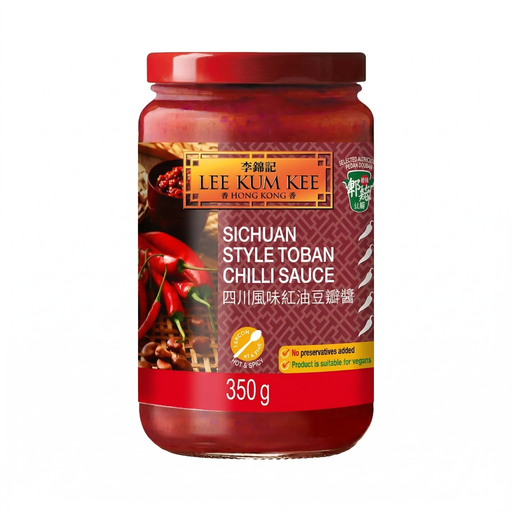
Why This Fits Their Persona: For the cook dedicated to recreating genuine Sichuan dishes like Mapo Tofu or Twice-Cooked Pork, this paste is an ideal starting point. It's specifically formulated to provide the foundational flavour of the region's cuisine.
It sidesteps the "misleading label" trap by containing Pixian Doubanjiang, the authentic fermented broad bean paste that defines Sichuan cooking, ensuring a complex, savoury and spicy flavour rather than just salt and heat.
Provides the characteristic mellow spiciness and rich aroma needed for classic Sichuan dishes. The oil and paste separation allows for easy blooming of flavours in the wok.
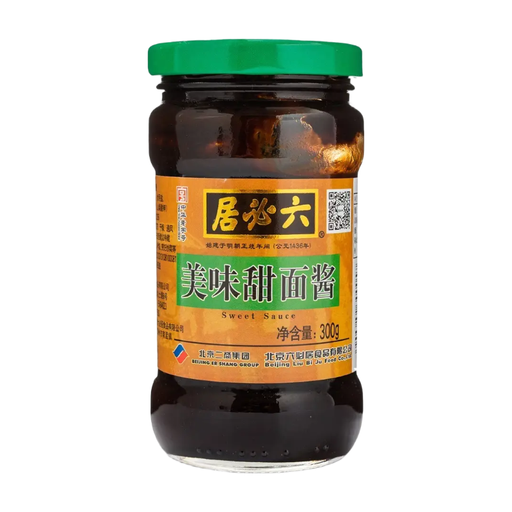
Why This Fits Their Persona: This is for the home cook who wants a reliable, multi-purpose sauce in their pantry. It's the go-to for Peking duck, but its sweet-savoury profile makes it a fantastic base for stir-fry sauces, glazes and marinades.
This is a classic sweet wheat sauce (Tian Mian Jiang), avoiding the "one-note flavour" trap of overly sugary, non-fermented alternatives. It provides a genuine, complex sweetness from its wheat flour base.
Highly versatile for dipping, stir-frying and as a base for other sauces. It's an essential component for many Northern Chinese dishes, making it a valuable pantry staple.
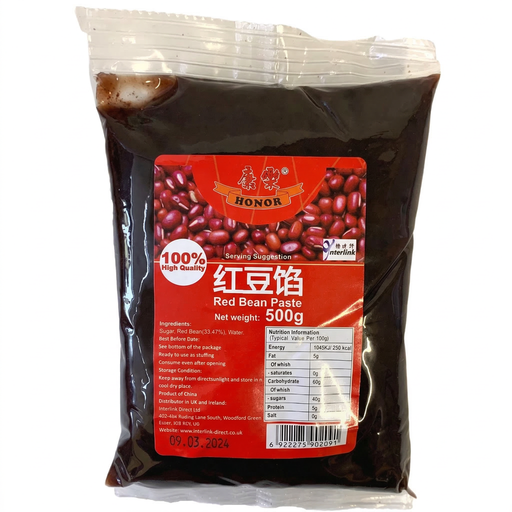
Why This Fits Their Persona: Perfect for the home baker who loves making Asian pastries like mooncakes, red bean buns, or sweet rice balls. This paste removes the most time-consuming part of the process: preparing the filling.
This product directly prevents the "sweet vs. savoury" mix-up. It is clearly labelled and formulated as a sweet filling, ensuring your desserts have the correct classic flavour and texture.
Ready-to-use straight from the package, saving hours of soaking, boiling and mashing beans. It has a delicate, smooth texture and moderate sweetness suitable for a wide range of pastries.
We have compiled a complete, real-time list of products that fully satisfy these strict selection criteria and UK safety regulations.
While both are made from fermented soybeans, they have distinct characteristics. Chinese soybean pastes, like Puning bean paste, are often used as a direct seasoning in stir-fries or as a dipping sauce. Korean soybean paste (doenjang) is typically saltier with a more pungent, earthy flavour. It is rarely used alone and serves as a powerful base for soups and stews (jjigae), where it is balanced with other ingredients like garlic, chilli and broth.
Thanks to their high salt content and fermentation, most of these pastes have a long shelf life. Once opened, they should be sealed tightly and stored in the refrigerator. Always use a clean spoon to prevent contamination. While they can last for several months, their flavour and colour may change over time. It's always best to check the packaging for specific storage advice.