
24/7 Customer Support

Free returns

Same-day & Next-day Delivery

Quality Guaranteed

Unlock Your Welcome Offers: FREE Delivery | Up to 80% OFF | Free 30-day JoyPlus trial
Download the APP
Buying Asian duck products in the UK can be less straightforward than choosing ordinary poultry. Online listings may use familiar dish names while leaving out important details such as whether the meat is raw or cooked, how it should be stored and how much preparation is required.
Whether you are planning a Sichuan-style hot pot, preparing spicy duck snacks or looking for a whole duck for a family meal, the label deserves close attention. This guide explains the main buying pitfalls, the specifications worth checking and suitable options for different types of shopper.
Duck neck, duck head, duck wings, duck feet, duck tongue and duck gizzard are often sold in both raw and cooked formats. A cooked product may be ready to eat after opening, while a raw product must be thawed and heated thoroughly.
Check for wording such as:
For example, raw duck neck is suitable for braising or marinating, whereas a cooked spicy duck neck snack is intended for convenient eating. These are different products, even if they use the same cut.
Frozen duck should generally remain at -18°C or below, unless the packaging states otherwise. If frozen poultry has thawed, many product labels advise consumers not to refreeze it. This matters when ordering online, transporting food home or planning a large hot pot meal.
Cooked products may have different requirements. Some shelf-stable snacks can be kept in a cool, dry place before opening, while cooked duck blood curds may need refrigeration at 0–4°C. Always follow the individual label rather than assuming that every Asian duck product has the same storage life.
A whole duck may offer flexibility for roasting, stock and leftovers, but it requires more preparation and oven space. Pre-cut duck wings or duck feet can be easier for braising and hot pot. Ready-to-eat duck delicacies save preparation time, but they may contain more salt or seasoning than plain raw ingredients.
Consider the dish first, then select the format. This prevents buying a seasoned snack when you need an unseasoned ingredient or a large whole duck when you only need a small portion.
For raw duck meat, look for a clear ingredient statement such as Duck (100%), Duck Wing (100%) or Duck Gizzard (100%). This makes it easier to distinguish a plain cooking ingredient from a marinated or seasoned product.
For prepared foods, check the proportion of duck and the rest of the recipe. Cafe Asia Duck Bao Buns, for instance, contain duck with hoisin-style seasoning and wheat-based buns, making them a complete snack rather than a plain duck ingredient.
Compare the net quantity, not just the photograph or product title. A 400g pack of raw duck wings is useful for a shared meal, while a 50g pack of cooked duck tongue is more suited to individual snacking.
Pack sizes in this range include:
For catering businesses or larger gatherings, multiply the serving requirement before ordering and leave enough freezer capacity for safe storage.
Prepared duck products can include soya, wheat, sesame, oyster or molluscs, depending on the sauce and seasoning. Cafe Asia Duck Bao Buns contain wheat, soya, sesame and molluscs from their listed ingredients. Yu Ru Braised & Spiced Duck Feet contain soya and wheat.
Raw duck products generally have shorter ingredient lists, but they still require safe handling:
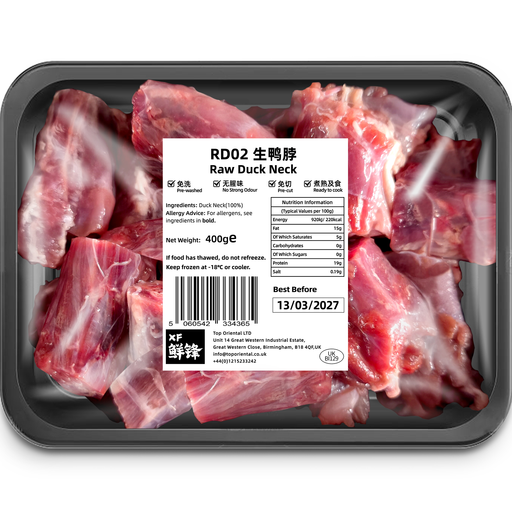
Why This Fits Their Persona: A 400g pack gives first-time buyers enough raw duck neck to try braising or spicy duck neck recipes without committing to a whole duck.
The listing identifies it as 100% raw duck neck, ready to cook, rather than an already seasoned snack.
Pre-washed and pre-cut; suitable for braising, marinating and spicy recipes.
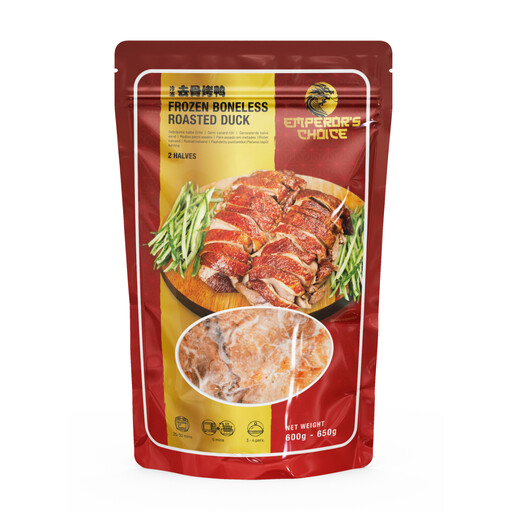
Why This Fits Their Persona: This pre-cooked half duck suits shoppers who want a prepared centrepiece for entertaining, wraps or stir-fries.
The product format is clearly stated as boneless and pre-cooked, with thawing and heating guidance included.
Duck content is listed as 98%; can be heated in an oven or microwave.
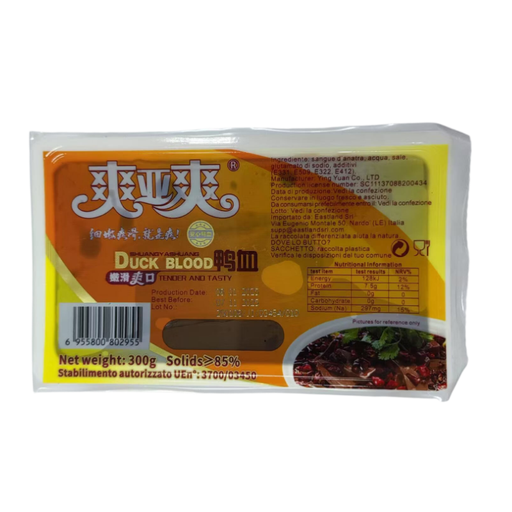
Why This Fits Their Persona: A practical choice for hot pot enthusiasts, soup preparation and Sichuan-style dishes such as Mao Xue Wang.
It is labelled pre-cooked and ready to use, so it is not mistaken for raw duck blood requiring extensive preparation.
300g pack; ingredients include duck blood, water and salt; designed to be added to boiling broth.
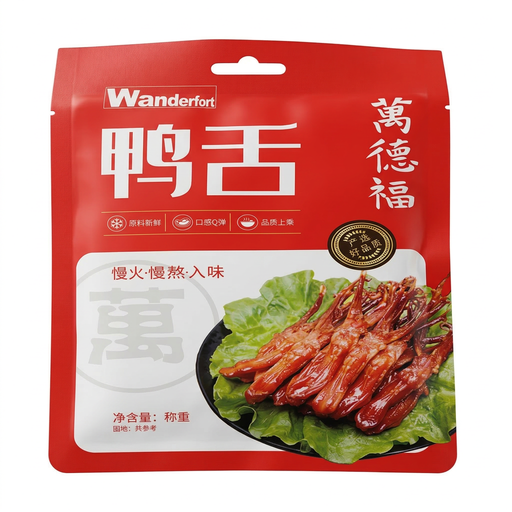
Why This Fits Their Persona: A small cooked portion suits casual snacking, lunchboxes or adding variety to a sharing platter.
The listing identifies the duck tongue as cooked, removing uncertainty about whether it is a raw cooking ingredient.
50g pack; spicy cooked format requires little preparation before serving.
We have compiled a complete, real-time list of products that fully satisfy these strict selection criteria and UK safety regulations.
Your choice can be narrowed further by cooking method:
Online Asian grocery ranges commonly include raw duck meat, frozen duck cuts, duck heads, duck wings, duck feet, duck tongue, duck gizzard and cooked duck delicacies. Check the product page for pack size, storage conditions, origin, allergens and cooking instructions before ordering.
Not necessarily. Pre-washed and pre-cut products such as duck neck, duck wings and duck gizzard reduce preparation work. They still need safe thawing, separate handling from ready-to-eat food and thorough cooking. Cuts such as duck feet and duck head may also require longer simmering to become tender.
Select ingredients based on the broth and cooking time. Duck blood curds and other pre-cooked items can be added near the end, while raw duck wings, feet or gizzard require sufficient time to cook through. Read the label carefully, as some seasoned products are designed for snacking rather than direct use in hot pot.