
24/7 Customer Support

Free returns

Same-day & Next-day Delivery

Quality Guaranteed

Unlock Your Welcome Offers: FREE Delivery | Up to 80% OFF | Free 30-day JoyPlus trial
Download the APP
Shopping for Asian food and snacks online in the UK can open up a wide choice of Chinese snacks, Korean instant pasta, seaweed snacks and Chinese food ingredients. However, attractive packaging and broad claims do not always tell you whether a product suits your household, diet or cooking routine.
The main buying risks are usually easy to overlook:
A more reliable approach is to compare the label, preparation method, pack size and intended use before placing an order.
Check whether the item is ready to eat, needs hot water or requires soaking. For example, seasoned kelp knots can be eaten directly, while dried kelp knots must be rehydrated. Konjac knots usually need draining, rinsing or blanching before adding to a dish.
Storage is equally important. Shelf-stable snacks should generally be kept in a cool, dry place. Once opened, products containing water or seasoning may need refrigeration and prompt consumption. Always follow the packaging rather than assuming that every seaweed or noodle product has the same storage requirements.
Nutrition panels help make fair comparisons between Chinese snacks, low-calorie Asian food and instant meals. YUHO Konjac Knots list 11 kcal per 100g, while Jinhailin Kelp Knots list 30 kcal per 100g. These figures can be useful when planning a lighter meal, but they do not make a complete diet recommendation.
Seasoned seaweed products may be low in energy yet relatively high in salt. LYY Crispy Kelp Knots list 4.0g salt per 100g, while Bestore Kelp Knots list 8.5g salt per 100g. Compare the actual amount you expect to eat, not just the front-of-pack description.
Instant pasta is more substantial. The vegan creamy mushroom protein pasta lists 425 kcal, 12g protein and 3.2g salt per 100g. It may suit a quick lunch, but the full nutrition panel should be considered when comparing it with a cooked meal.
Read the ingredients even when a product appears vegetarian or vegan. The Samyang Tangle creamy mushroom and bulgogi Alfredo varieties are described as vegan, but they contain wheat and, in the bulgogi version, soya beans. The manufacturer also provides a facility warning covering several other allergens.
For Chinese food ingredients, look for the main ingredient near the beginning of the list. Jinhailin Kelp Knots contain kelp, while YUHO Konjac Knots contain water, konjac flour and calcium hydroxide. These simpler ingredient lists may be easier to assess, although preparation and storage still matter.
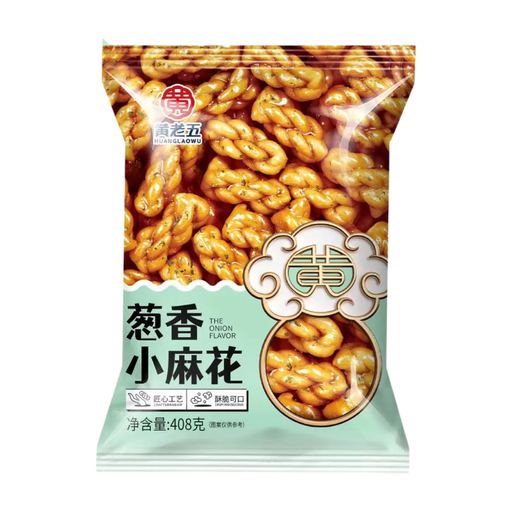
Why This Fits Their Persona: A shareable family pack suits tea breaks, film nights and gatherings without requiring cooking or additional ingredients.
The 408g net weight and approximate piece count make value easier to judge than relying on the packet size alone.
Ready to eat; scallion flavour; approximately 45–51 mini twists per pack.
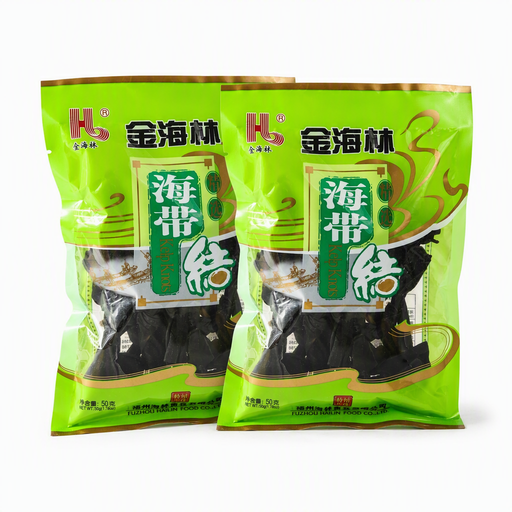
Why This Fits Their Persona: Suitable for shoppers wanting a straightforward kelp ingredient for soups, hot pots, salads or stir-fries.
The listing clearly states that it is not ready to eat and must be soaked, reducing preparation surprises.
Two 50g packs; one listed ingredient; 30 kcal per 100g.
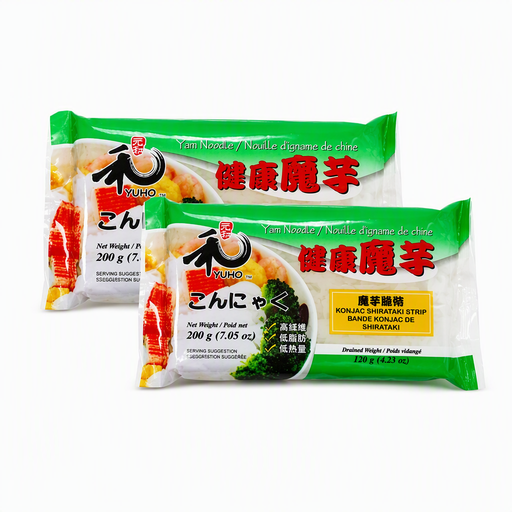
Why This Fits Their Persona: A practical staple for regular hot-pot meals, salads and stir-fries where a chewy, low-energy ingredient is useful.
Preparation is stated plainly: rinse or blanch before use, then refrigerate and consume soon after opening.
Two 200g packs; 11 kcal per 100g; no listed allergens.

Why This Fits Their Persona: A convenient cupboard option for work lunches, late meals or evenings when a cooked dish is impractical.
It includes preparation and packaging warnings, so buyers know it must be fully cooked and not eaten dry.
Vegan product description; pea protein isolate; 105g bowl format.
We have compiled a complete, real-time list of products that fully satisfy these strict selection criteria and UK safety regulations.
For ready-to-eat seaweed snacks, Guo Sheng Spicy Kelp Knots and LYY Crispy Kelp Knots offer seasoned formats, but their salt and allergen information differs. For a larger household pack, 7FRESH Kelp Knot Spicy Flavour is supplied in a 300g format. Those who prefer a dried Chinese food ingredient can consider Guo Sheng Preserved Seaweed Knot 60g, which requires soaking.
The wider knotted collection also includes adjacent lifestyle products, such as Good Boy Large Knotted Bone dog chews and a Celtic knot necklace. These are separate from food and should be assessed according to their own use instructions: supervise dogs with rawhide chews and check jewellery material details when buying a gift.
Online marketplaces can provide Chinese snacks, Korean instant pasta, kelp knots, konjac products and cooking ingredients in one place. Check the product page for UK responsible-party information, ingredients, allergens, net quantity, storage and preparation instructions before ordering.
YUHO Konjac Knots list 11 kcal per 100g, and the Konjac Small Knots listing gives 6 kcal per 100g. They can be used as a low-energy ingredient in hot pots, soups, salads and stir-fries, but sauces, oils and accompanying foods will affect the overall meal.
Dried kelp knots should be soaked in water according to the packaging instructions. They can then be added to soups, hot pots, salads or stir-fries. Do not treat a dried product as ready to eat and check storage guidance after opening.