
24/7 Customer Support

Free returns

Same-day & Next-day Delivery

Quality Guaranteed

Unlock Your Welcome Offers: FREE Delivery | Up to 80% OFF | Free 30-day JoyPlus trial
Download the APP
From a quick student meal to an office coffee supply, Asian food and drinks can make everyday shopping more varied and convenient. However, attractive packaging and low headline prices do not always tell you what you are actually buying.
The most useful approach is to compare pack size, ingredients, allergens, preparation style and storage requirements before adding products to your basket. The following guide highlights common pitfalls and shows how to match different Asian grocery products to real household needs.
A single 80g packet may look inexpensive, while a larger box may appear costly. For regular noodle eaters, however, price per serving is the more useful comparison. Bulk instant noodles can reduce repeat orders, but only if you genuinely enjoy the flavour and have enough dry storage space.
Check whether a multipack contains individual portions or smaller inner packs. A box such as a 40-pack may suit a shared household or office, but it can be excessive for someone trying a flavour for the first time.
“Mi Goreng” generally refers to a dry, stir-fried-style preparation. The noodles are boiled, drained and mixed with sauce, oil and seasoning. Curry-flavoured instant noodles are commonly prepared with water retained to create a broth.
This difference affects both taste and kitchen use. If you want a quick lunch that can be eaten from a bowl without much liquid, Indonesian food such as Mi Goreng may be suitable. If you want a warming meal for a cold evening, Malaysian noodles with curry seasoning may be more appropriate.
Marketing language does not replace the ingredient list. Many noodles contain wheat, soya, sesame or celery, while curry paste may contain shrimp or other crustaceans. Snack products can also contain nuts or be made in facilities handling other allergens.
For UK shoppers, always check the current packaging for highlighted allergens, nutrition information, country of origin, storage instructions and the best-before date. Recipes and import labels can change.
Choose a small pack when testing a new flavour and a multipack when the product is already part of your routine. A five-pack of instant noodles is more manageable for an individual or couple, while a 40-pack can work for a student house, family pantry or workplace kitchen.
Calculate the approximate cost per portion and consider cupboard space. Keep dry goods in a cool, dry place away from moisture and direct sunlight.
Look beyond the front of the packet. For example:
Products labelled halal should not be assumed to meet every individual dietary requirement, so read the full label before purchase.
Instant noodles are convenient, but they are not identical nutritionally. Compare salt, saturated fat, energy and portion size rather than relying on flavour descriptions.
For example, the listed nutrition for Indomie Mi Goreng Original is 445 kcal and 4.0g salt per 100g, while Maggi Curry Flavour Instant Noodles list 439 kcal and 2.6g salt per 100g. These figures are not directly interchangeable with a prepared meal, but they help you compare products consistently.
You can also make noodles more substantial by adding vegetables, tofu, egg or leftover cooked meat. Use only some of the seasoning if you prefer a milder or less salty result.
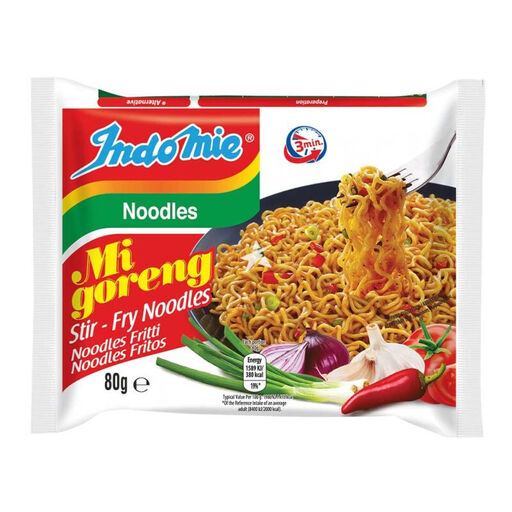
Why This Fits Their Persona: A single 80g portion lets students, first-time buyers and occasional noodle eaters try a familiar Indonesian flavour without committing to a large carton.
The portion and dry Mi Goreng preparation are clear, helping avoid buying a large soup-noodle case when you want a sauce-coated meal.
Includes seasoning sauce, oil and crispy fried shallots; cooks in minutes and stores at ambient temperature.
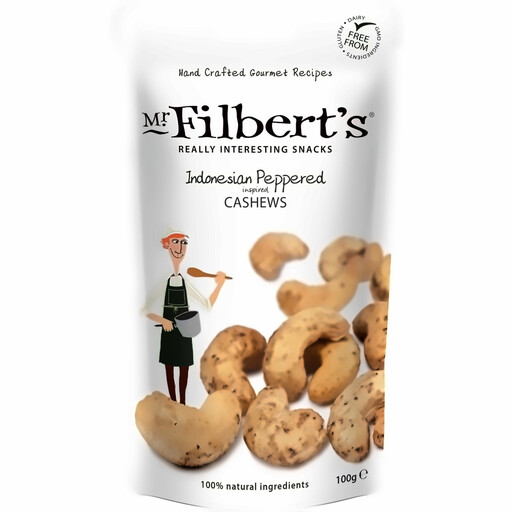
Why This Fits Their Persona: Suitable for shoppers looking for a prepared snack with a distinctive Indonesian pepper seasoning for entertaining or an elevated cupboard treat.
The 100g format avoids overbuying a flavoured snack before confirming that its pepper and chilli profile suits your household.
Contains 85% cashews and an Indonesian pepper blend; ready to serve with no preparation.
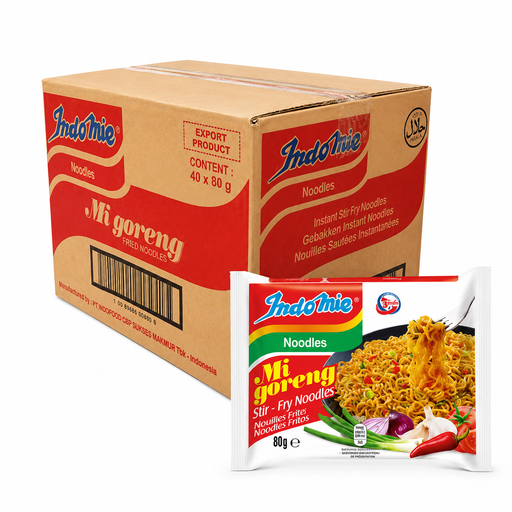
Why This Fits Their Persona: Designed for shared accommodation, office kitchens, larger households and shoppers who already know they want bulk instant noodles.
The pack count is stated clearly as 40 individual portions, making it easier to compare stock levels and approximate cost per serving.
Contains 40 x 80g packs with separate seasoning components; suitable for pantry stocking and group use.
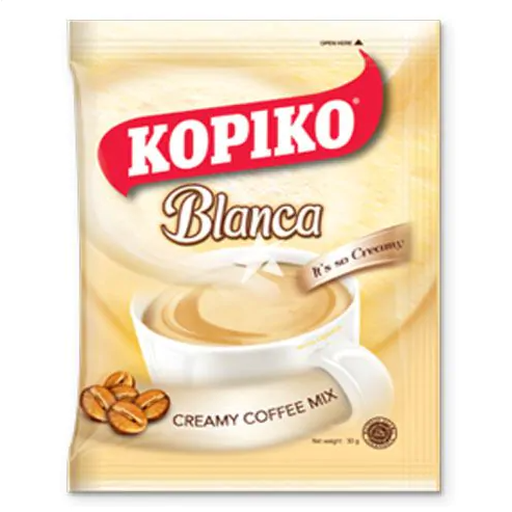
Why This Fits Their Persona: Individual instant coffee sachets are practical for desks, shared kitchens, travel bags and households without brewing equipment.
The 10 x 30g format shows the number of servings, while the label identifies sugar, creamer, coffee and milk allergen information.
Ready in hot water; each sachet provides a 30g serving and the product contains caffeine and milk.
We have compiled a complete, real-time list of products that fully satisfy these strict selection criteria and UK safety regulations.
Instant noodles are convenient because they need only boiling water and a few minutes of cooking. Mi Goreng varieties are drained and mixed with seasoning, while curry noodles are generally served with broth. Add an egg, vegetables or tofu when practical and check salt and allergen information before buying.
Keep unopened dry products in a cool, dry cupboard, away from direct sunlight, moisture and strong odours. Once opened, follow the packaging instructions. Prepared noodles should be eaten immediately, while opened nuts and biscuits should be resealed to reduce loss of texture.
Instant coffee sachets contain caffeine and some include milk-derived ingredients or non-dairy creamer. Check the label if you have an allergy or are sensitive to caffeine. Compare the serving nutrition, particularly sugar and saturated fat, rather than assuming every 3-in-1 coffee has the same formulation.