
24/7 Customer Support

Free returns

Same-day & Next-day Delivery

Quality Guaranteed

Unlock Your Welcome Offers: FREE Delivery | Up to 80% OFF | Free 30-day JoyPlus trial
Download the APP
Asian instant noodles can make a convenient lunch, late-night snack or cupboard staple, but choosing between Korean ramen, Chinese noodles, rice noodles and hot pot noodles is not simply a matter of picking the most colourful packet. The format, seasoning, allergens and serving size can make a noticeable difference to both value and enjoyment.
For UK shoppers, three common buying traps deserve attention:
Wheat noodles are common in Korean ramen and many Chinese instant noodles. They usually produce a springy, chewy texture and may be served in broth or coated in sauce.
Rice noodles and sweet potato vermicelli offer a different eating experience. Jian Shu Sichuan Sweet Potato Vermicelli uses sweet potato and tapioca starch and is designed for hot pot, stir-frying or cold salads. These noodles are useful if you want to build a meal around a separate broth rather than use a pre-seasoned instant noodle sachet.
Wide wheat noodle sheets, such as those used in Bai Jia A Kuan Hot & Sour Red Oil Noodle, are suited to soaking and mixing with oil, vinegar and seasoning. FRESHASIA Chongqing Noodles are another option for shoppers seeking a larger Chinese noodle format with a simple wheat-flour ingredient base.
Check whether the product is intended to retain cooking water. Soup noodles such as Nongshim Shin Ramyun typically use around 550ml of boiling water and cook in approximately four to five minutes. Kimchi Ramyun follows a similar method, with vegetable flakes and kimchi cabbage included in the sachets.
Stir-fry products need most of the water drained before the sauce is added. Nongshim Shin Ramyun Toomba and Samyang Buldak Carbonara are examples of creamy, sauce-coated Korean ramen rather than traditional soup noodles. Cup formats, such as Buldak Carbonara Small Bowl, can be practical for office lunches where access to a kettle is easier than access to a hob.
Self-heating hot pot noodles require additional care. Shoo Loong Kan Self-Heating Instant Hot Pot Noodles uses a heating pack, cold water and a 15-minute heating process. The heating pack must not be eaten, and steam burns are a possible hazard, so follow the packaging instructions closely.
Individual packs in the selection range from smaller 80g cups to 140g servings, while multipacks and bulk boxes are available for regular use. Compare the net weight per serving, not only the number of packets.
Instant noodles can contain significant amounts of salt. For example, the listed nutritional information gives 4.5g of salt per 100g for Nongshim Kimchi Ramyun and 3.7g per 100g for Nongshim Shin Ramyun. These figures should be read alongside the UK reference intake for salt, and additional salty toppings or sauces may increase the total.
Always read the current packaging for allergens. Common ingredients include wheat, gluten, soya and sesame, while some products also contain milk, mustard, almond, peanut, egg, celery, molluscs or sulphites. Recipes and labelling can change, so the product label should take priority over online descriptions.
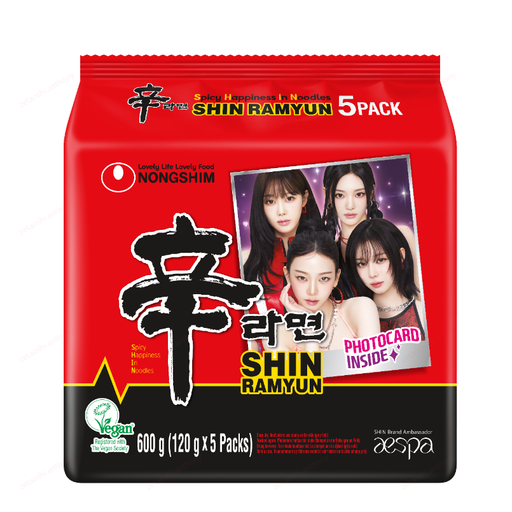
Why This Fits Their Persona: A five-pack gives students, flatmates and first-time buyers several individual servings without committing to a bulk box.
It is a soup-style Korean ramen with clearly listed 550ml water and four-to-five-minute hob instructions, rather than an unexpectedly dry stir-fry format.
Five 120g servings, wheat noodles, soup powder and vegetable flakes, with a familiar spicy broth format.

Why This Fits Their Persona: Suitable for shoppers who prioritise a thicker noodle texture and a creamy, sauce-based Korean meal rather than a conventional broth.
The listing clearly states that it is a stir-fry-style noodle, so buyers can select it for its intended preparation rather than expecting soup.
Five 137g servings with separate seasoning powder and paste; the stated nutrition lists 2.5g salt per 100g.

Why This Fits Their Persona: Designed for households, offices, food businesses or frequent noodle eaters who have suitable dry storage.
The quantity is explicit: 40 individual 120g packs. This makes the commitment and storage requirement clear before purchase.
4.8kg total quantity, individual packets and a stated four-to-five-minute cooking method.
We have compiled a complete, real-time list of products that fully satisfy these strict selection criteria and UK safety regulations.
For Sichuan-style flavour, A'Kuan Sichuan Fried Rice Noodles come in a three-pack with separate oil and powder sachets, allowing some adjustment to the seasoning. Bai Jia A Kuan Hot & Sour Red Oil Noodles use vinegar, chilli oil and Sichuan peppercorn for a tangy, numbing profile.
For a Korean heat-focused option, Samyang Buldak Original and Cheese five-packs are stir-fried rather than soup-based. The product information describes the Cheese version as extremely spicy and lists wheat, milk, soya and sesame allergens. If you prefer a milder serving format, consider using only part of the sauce sachet.
For hot pot, Jian Shu Sweet Potato Vermicelli and Shoo Loong Kan Self-Heating Instant Hot Pot Noodles serve different purposes: the former is a plain noodle ingredient, while the latter includes a spicy soup base, pickled bean sprouts and a self-heating system.
Most soup-style Korean ramen takes around four to five minutes after boiling water is added. Some soak-style Chinese noodles need five to six minutes, while self-heating hot pot noodles can take approximately 15 minutes. Always follow the instructions on the individual packet.
Heat tolerance varies, and products labelled extremely spicy may be unsuitable for children. Check the seasoning strength, allergen statement and salt information, and consider using less sauce or choosing a non-spicy noodle base.
Multipacks can reduce the cost per serving, but value depends on the pack price, serving weight and how often the noodles will be eaten. A five-pack is more flexible for occasional use; a 40-pack is more appropriate where regular consumption and dry storage are already planned.