
24/7 Customer Support

Free returns

Same-day & Next-day Delivery

Quality Guaranteed

Unlock Your Welcome Offers: FREE Delivery | Up to 80% OFF | Free 30-day JoyPlus trial
Download the APP
Asian instant noodles can be a practical cupboard staple for students, families, office workers, campers and food businesses. However, the shelf includes everything from Korean instant noodles and spicy ramen to Japanese instant noodles, stir-fry varieties and instant noodle cups. Choosing by packaging alone can lead to unsuitable spice levels, poor value or products that do not match your cooking setup.
This guide explains what to check before buying and compares suitable options for different UK shopping needs.
A large-looking multipack is not automatically economical. Compare the total net weight and number of servings, rather than relying on the box size. For example, a five-pack of 120g noodles provides 600g in total, while a 40-pack of the same size provides 4.8kg.
Also consider whether you will use the noodles before their best-before date. Bulk instant noodles can offer practical value for households, offices and catering, but a smaller pack may be more suitable for occasional buyers.
Bright packaging and phrases such as “hot chicken” do not provide a consistent heat measurement. Some spicy ramen products use a soup base, while others are stir-fry instant noodles coated in concentrated sauce. The latter can taste more intense because less water dilutes the seasoning.
If you are sensitive to chilli, start with mild ramen, sesame flavours or chicken ramen. If you regularly eat hot food, Korean options such as Shin Ramyun or Buldak may be more suitable, but check the preparation method and follow the product’s cautionary information.
Many Asian instant noodles contain wheat, soya or sesame, and some include milk, egg, celery, mustard or seafood-related ingredients. “Pork flavour” or “chicken flavour” also requires careful label checking if you have religious, ethical or dietary requirements.
Read the current packaging before consumption, particularly when buying online. Ingredients, allergen declarations, nutrition panels and responsible-person details should be available for products sold in the UK.
Soup-based products, such as Nongshim Shin Ramyun and many Japanese ramen packs, are cooked with a measured amount of water and served with broth. Stir-fry instant noodles, including Toomba and Buldak varieties, are usually boiled, drained and mixed with sauce. They are not intended to be prepared as soup unless the packaging specifically says so.
Instant noodle cups are convenient for desks, dormitories and travel because they need less equipment. Check whether the cup requires boiling water only or microwave use, and allow enough standing time for the noodles to soften.
Preparation times vary. Nissin Demae Ramen products specify approximately three minutes in boiling water, while Shin Ramyun products generally require around four to five minutes. Stir-fry products may require draining and further mixing or heating.
For camping or office use, select a cup or pack that matches the equipment available. A hob-based product may be less convenient if you only have a kettle.
Check the individual serving weight, number of packs and total weight. A five-pack is useful for trying a flavour or planning several meals, while a 30- or 40-pack is more appropriate for regular consumption or commercial kitchens.
Review the nutrition panel, especially salt and saturated fat. Values can vary considerably between recipes. For example, listed salt values include 3.7g per 100g for standard Shin Ramyun, 5.2g for Nissin Demae Iccho Sesame Oil and 6.1g for Ottogi Kimchi Ramen. These figures are presented per 100g on the supplied product information, so check the serving size before comparing bowls.

Why This Fits Their Persona: A five-pack format gives students, first-time buyers and occasional noodle eaters several servings without committing to a large bulk box. Each 100g pack is prepared in approximately three minutes with 500ml of boiling water.
The clearly stated five-pack and 500g total weight make the quantity easy to assess. Its sesame profile also provides an alternative to very spicy ramen.
Three-minute preparation; includes sesame seasoning oil; individually packed servings.
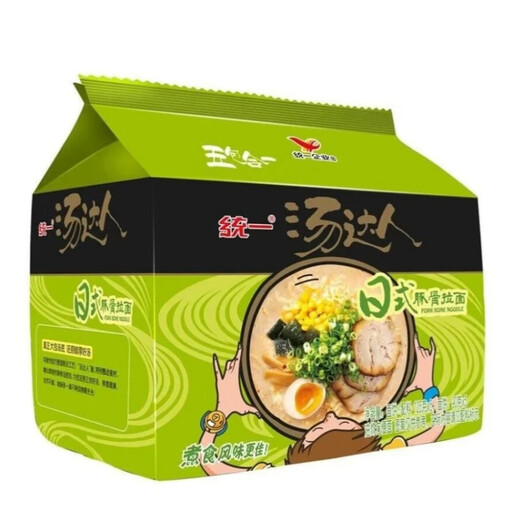
Why This Fits Their Persona: Shoppers looking for a fuller broth-style bowl may prefer the listed Japanese tonkotsu-style pork flavour, wheat noodles and separate vegetable packet. Five individually wrapped 125g servings suit planned meals at home.
The product description identifies the broth style, noodle texture and exact pack contents, helping you compare it with lighter sesame or chicken ramen.
125g servings; pork-flavour broth base; dried cabbage, spring onion, corn and carrot included.

Why This Fits Their Persona: The 40-pack is designed for households, office stock cupboards, catering use and regular spicy ramen consumption. It contains 4.8kg in total, with each portion prepared using approximately 550ml of boiling water.
The serving count and total weight are explicit, reducing uncertainty when comparing bulk instant noodles. The listed four-to-five-minute cooking time also helps with meal planning.
40 individually packed servings; soup format; dried pak choi, shiitake, carrot, chilli and onion included.
For a milder Korean soup, Ottogi Jin Ramen Mild comes in a five-pack. Kimchi ramen provides a spicy, tangy soup profile, while Ottogi Jin Jjajang Ramen uses black bean sauce rather than a conventional broth.
Spice-focused shoppers can compare Samyang Buldak Original, Cheese and Carbonara varieties. These are stir-fry products, so they require draining before the sauce is mixed through. The Carbonara option is also available as six individual cups, which can be practical for work lunches.
For Japanese flavours, Nissin Demae Ramen Chicken offers a savoury three-minute soup preparation, while the 30-pack Sesame Oil format suits frequent buyers. Those who prefer to create their own recipes can choose plain instant noodles, such as the 10-serving IBUMIE pack, and add vegetables, stock, eggs or sauces separately.
Store unopened dried noodles in a cool, dry place away from direct sunlight. Follow the label for cooking, allergen and best-before details, and consume prepared noodles immediately.
We have compiled a complete, real-time list of products that fully satisfy these strict selection criteria and UK safety regulations.
Yes, provided you have access to boiling water and a suitable bowl or cup. Instant noodle cups are convenient for desks, while packet noodles may require a microwave-safe bowl, saucepan or kettle. Check the preparation instructions before taking them to work.
Dried instant noodles normally have a best-before date printed on the packaging. Store them in a cool, dry cupboard and inspect the packaging before use. Do not rely on an old purchase date alone; check the current label and avoid damaged or leaking packs.
They can be, but compare the total price with the number of servings and total weight. A 30- or 40-pack may suit families, offices and food businesses, but a five-pack can reduce waste for occasional eaters. Also compare flavour preferences, preparation equipment and storage space before buying.