
24/7 Customer Support

Free returns

Same-day & Next-day Delivery

Quality Guaranteed

Unlock Your Welcome Offers: FREE Delivery | Up to 80% OFF | Free 30-day JoyPlus trial
Download the APP
Chewy desserts can be difficult to compare online. A product labelled “mochi” might be a chilled filled confection, a frozen ice-cream bite, a ready-to-eat rice-flour sweet or a dumpling that needs boiling. Asian mochi and glutinous rice desserts also vary considerably in sweetness, allergens, storage and portion size.
Before adding a pack to your basket, look beyond colourful packaging and flavour names. The following guide explains the main buying traps, the specifications worth checking and which options suit different households.
Japanese mochi, Taiwanese mochi and Chinese glutinous rice balls are related, but they are not interchangeable. Ready-to-eat mochi usually has a soft, chewy outer layer and a paste, fruit or creamy filling. Tang yuan, also called Chinese glutinous rice balls, are commonly frozen and cooked in boiling water before serving.
Frozen mochi desserts may contain ice cream inside, while fruity mochi may be thawed briefly before eating. Check the preparation instructions rather than relying on the word “mochi” alone.
“Peach”, “mango”, “matcha” or “strawberry” can refer to juice concentrate, powder, flavouring or a prepared filling. For example, Royal Family Fruity Mochi Peach contains peach juice concentrate, while the mango version lists mango juice at 9.63%. Ingredient lists provide a clearer picture than front-of-pack imagery.
Also check allergens carefully. Peanut sesame rice balls may contain peanuts, sesame, soya or wheat, while milk mochi contains milk and beef gelatine. A product described as plant-based should still be checked against its current packaging.
A frozen dessert is not automatically ready to eat straight from the freezer. Royal Family Fruity Mochi Peach 180g is ready to eat but should be thawed for 10–15 minutes for a softer texture. Little Moons Iced Latte Coffee Mochi Ice Cream is intended to rest for around five minutes before serving.
Frozen tang yuan must be cooked according to the pack directions and should not be eaten raw. Once a frozen item has defrosted, do not refreeze it unless the packaging specifically states otherwise.
Use the preparation method to predict the eating experience:
The outer layer may be made from glutinous rice flour, rice flour, tapioca starch or a combination. These ingredients affect elasticity and softness, but the filling and storage temperature also influence the final texture.
UK food labels highlight regulated allergens in bold, but always read the full ingredient list and precautionary statements. Relevant checks include:
For halal mochi, look for a stated certification rather than assuming that rice-based sweets meet halal requirements. Marukin Halal Michikon Double Chocolate is listed as halal certified and suitable for vegans. DEE Frozen Sticky Rice with Mango & Coconut Cream is also listed as halal certified and vegan friendly. Suitability can change with reformulation, so packaging remains the final reference.
A 180g or 210g ready-to-eat pack may suit sharing or several snack occasions, while individually wrapped pieces are more convenient for work, school or travel. Frozen rice balls are often sold by piece count: Synear Longjing Tea Glutinous Rice Balls contains 15 pieces in a 300g pack, and Synear Mellow Black Sesame Large Glutinous Rice Balls contains 15 pieces in 454g.
For family use, consider whether the pack needs cooking, whether all pieces can be used after opening and whether your freezer can maintain -18°C or below, as stated for several frozen products.
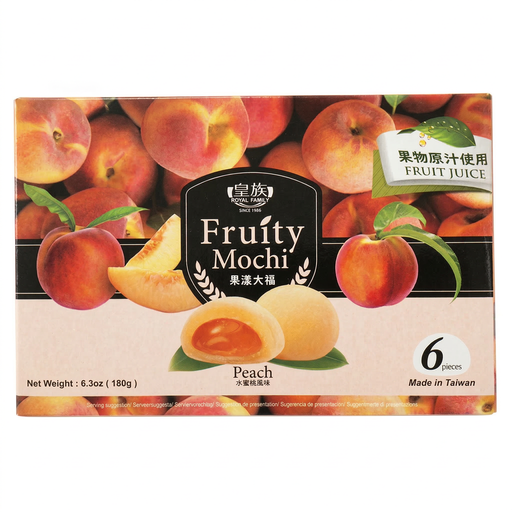
Why This Fits Their Persona: A straightforward entry point for shoppers who want a ready-to-eat fruity mochi without cooking. The 180g pack is practical for sharing or keeping for several snack occasions.
The label clearly states that it is frozen and ready to eat, with a 10–15-minute thawing instruction. It also lists sweetener warnings and storage guidance.
Peach juice concentrate is listed; the pack contains no declared allergens and stores at -18°C or below.

Why This Fits Their Persona: A giftable selection for hosts, afternoon tea or shoppers who prefer variety rather than one large flavour pack.
The contents are specified as four matcha, four sesame and four mango pieces, making the assortment clearer than a generic “mixed” description.
Three contrasting flavour profiles in 12 individually portioned 30g packs.
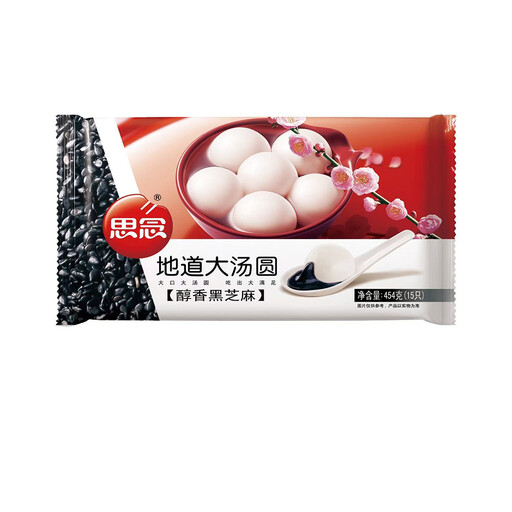
Why This Fits Their Persona: Designed for households that want a larger frozen pack for family desserts, festive meals or repeated servings.
It is clearly identified as a frozen product with 15 pieces and cooking instructions, so buyers can plan preparation rather than expecting a ready-to-eat snack.
454g pack with black and white sesame, peanut and a soft glutinous rice wrapper.
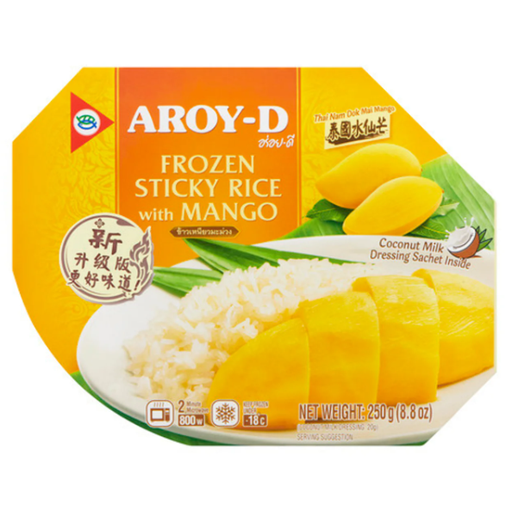
Why This Fits Their Persona: A convenient alternative to traditional mango sticky rice for shoppers seeking a portioned frozen dessert with stated halal and vegan suitability.
The product information states the certification and dietary suitability, while also identifying coconut as an allergen and advising full thawing before serving.
Contains Namdokmai mango, sticky rice and coconut cream; no preservatives are listed.
We have compiled a complete, real-time list of products that fully satisfy these strict selection criteria and UK safety regulations.
Cook frozen glutinous rice balls in boiling water according to the pack directions. They generally float when close to ready, but follow the stated cooking time and method. Do not eat products marked “cooking required” raw, and allow hot fillings to cool before serving.
Shelf life varies by product. Ready-to-eat mochi should generally be sealed and consumed promptly after opening, while frozen products must remain at the specified temperature until their best-before date. Once thawed, do not refreeze. Always use the date and storage instructions on the packaging as the controlling information.
They can have a firm, chewy texture and may present a choking risk, particularly for young children. Cut or supervise where appropriate, encourage careful chewing and follow any safety wording on the pack. Also check allergens, especially peanuts, sesame, milk, soya and wheat.