
24/7 Customer Support

Free returns

Same-day & Next-day Delivery

Quality Guaranteed

Unlock Your Welcome Offers: FREE Delivery | Up to 80% OFF | Free 30-day JoyPlus trial
Download the APP
A flavourful jar of Asian pickled vegetables can instantly elevate a simple meal of rice or noodles. Whether you're seeking the fiery kick of Korean kimchi or the savoury crunch of Chinese pickles, the right choice can transform your dining experience. However, the growing popularity of these ready-to-eat side dishes in the UK has led to a market filled with options that often miss the mark.
As a Joybuy Product Recommendation Officer, my role is to help you navigate the choices and find products that deliver on their promise of flavour and quality. Many shoppers find themselves disappointed by products that don't live up to their "authentic" labels. Let's look at a few common pitfalls to avoid.
To ensure you're getting a high-quality product, focus on a few key details on the packaging. These indicators will help you select flavourful and satisfying Asian pickled vegetables every time.
The ingredient list is your most reliable guide to a product's flavour. Don't just rely on the name on the front.
The type of vegetable and how it's prepared are crucial for texture and taste. The vast world of Chinese pickles and other Asian condiments includes a wide variety of bases.
How you plan to use your pickles should influence your choice of packaging.
Based on these criteria, here are a few recommendations tailored to different preferences and uses.

Why This Fits Their Persona: This is ideal for busy individuals or students needing a quick and easy flavour boost for a simple meal. The individual sachets are perfect for portion control and taking to the office without needing to carry a jar.
It sidesteps the "mushy texture" pitfall by using mustard stems known for their enduring crunch. The flavour is savoury and mild, not overly sweet or salty, delivering a consistent taste.
The primary advantage is the hygienic and convenient individual packaging. It offers a reliable, crunchy texture and a pleasant, savoury flavour.

Why This Fits Their Persona: This is for the foodie who wants an unapologetically bold and authentic flavour. It's perfect for those who already love the iconic Lao Gan Ma chilli oil and want that same complexity in a pickle.
It completely avoids the "bland flavour" trap. The use of the brand's signature fragrant chilli oil provides a deep, savoury and spicy taste that is far more complex than just heat. The mustard stems remain crisp.
Its main advantage is the globally recognised, rich flavour of Lao Gan Ma. It offers a perfect balance of spice, saltiness and crunch that is highly versatile.
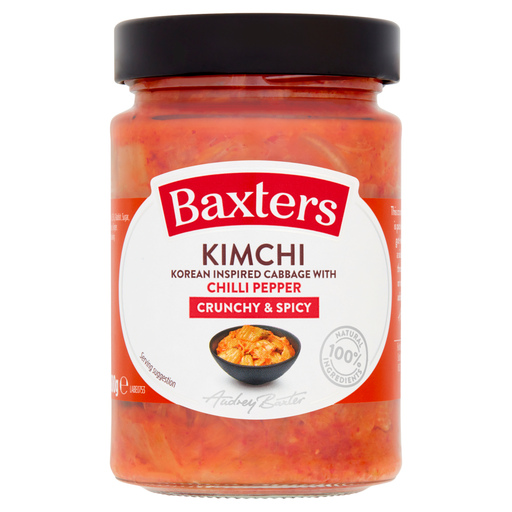
Why This Fits Their Persona: This is a great choice for those in the UK looking for a reliable, flavourful kimchi to use as a regular side dish or as an ingredient in cooking, such as in stews or fried rice.
This product directly targets the "texture disappointment" by highlighting its crunchy quality. The ingredient list, including fish sauce and ginger, suggests a more traditional flavour profile than overly westernised versions.
It offers a versatile, Korean-inspired kimchi with a focus on a satisfyingly crunchy texture. Being made in the UK by a known brand adds a layer of accessibility.
We have compiled a complete, real-time list of products that fully satisfy these strict selection criteria and UK safety regulations.
This depends on the type and packaging. For products in jars, it is generally advisable to keep them refrigerated and consume them within one to two weeks to ensure the texture and flavour remain at their peak. For single-serving sachets, they are designed for immediate consumption after opening. Always refer to the storage instructions on the product label.
Not at all. While many well-known varieties like Sichuan pickles and certain types of Korean kimchi are celebrated for their heat, there is a huge range of mild and non-spicy options. Products described as "fragrant," "savoury" or "sweet and sour" are often mild. For example, Japanese pickled ginger (gari) or many types of Chinese pickled radish offer a tangy, refreshing taste without the spice.
While both are delicious forms of preserved vegetables, their flavour profiles and preparation methods differ significantly. Korean kimchi is almost always fermented and gets its distinctive complex, sour and spicy flavour from a paste of gochugaru (Korean chilli powder), garlic, ginger and often a salted seafood component like fish sauce. Chinese pickles represent a much broader category. Sichuan pickles, for instance, are famous for their numbing-spicy (mala) flavour from chilli and Sichuan peppercorns, while other regional varieties might be preserved simply in salt brine, soy sauce or sweet vinegar.