
24/7 Customer Support

Free returns

Same-day & Next-day Delivery

Quality Guaranteed

Unlock Your Welcome Offers: FREE Delivery | Up to 80% OFF | Free 30-day JoyPlus trial
Download the APP
Asian rice cakes and mochi cover a wide range of products, from Korean rice cakes for spicy sauces to Japanese-style mochi with sweet fillings. However, similar-looking packs can have very different storage requirements, textures and cooking methods.
For UK shoppers, the main buying mistakes are usually not about flavour. They are about choosing the wrong format, overlooking preparation instructions or assuming that every rice cake is ready to eat. This guide explains the details worth checking before adding Korean rice cakes, Japanese mochi or other chewy Asian snacks to your basket.
Tteokbokki rice cakes, sliced rice cake and hot pot rice cakes are generally cooking ingredients. They may look soft in photographs but still require boiling, steaming, stir-frying or thorough cooking.
By contrast, many flavoured mochi products are ready to eat. Always check whether the pack says “cooking required” or “ready to eat”. For example, Chilkab King Rice Cake Topokki 400g must be thawed and cooked, while Royal Family Japanese Matcha Mochi 210g is listed as ready to eat.
A frozen rice cake needs freezer space and suitable delivery handling. Several products in this category specify storage at -18°C or below, and advise not to refreeze after thawing. Buying a large multipack without checking freezer capacity can lead to unnecessary waste.
Shelf-stable mochi is more convenient for cupboards, work bags and sharing, but it still needs to be stored away from heat, sunlight and humidity. Check the individual product page for the latest storage and best-before details before ordering.
Words such as “traditional”, “Japanese-style” and “Korean street food” can describe the product’s positioning, but they do not tell you whether it suits your recipe. A cylindrical Korean rice cake behaves differently from a thin sliced rice cake, while filled mochi is designed for snacking rather than simmering in soup.
Look at the shape, ingredients, country of origin, net weight and cooking method instead of relying on front-of-pack language alone.
For classic tteokbokki, stick or tube-shaped Korean rice cakes provide a substantial chewy bite and work well with thick sauces. Chilkab’s frozen stick/king-size format contains 99% rice according to its product information and can also be used in soups, stir-fries and grilled dishes.
Pre-sliced rice cakes are more adaptable when you want quick portions for hot pot, soup or pan-frying. Their flatter shape exposes more surface area to broth and seasoning. Sliced formats can also be easier to portion for a shared meal.
For desserts, focus on the outer layer and filling. Matcha mochi typically combines a glutinous rice skin with green tea paste, while milk mochi offers a creamy filling or flavour profile. Fruity mochi, such as mango or blueberry varieties, is intended as a sweet snack rather than a savoury cooking ingredient.
Rice cakes may contain rice, glutinous rice, water, salt or starch. Some flavoured products contain milk, wheat, soy, sesame or gelatine, so read the full ingredient list if you are buying for a household with allergies or dietary preferences.
For example, Royal Family Milk Mochi contains milk and beef gelatine. Yopokki Sweet and Spicy Topokki contains wheat and soy through its sauce ingredients. Do not assume that a plain-looking outer wrapper means the product is free from allergens.
Check whether the item is frozen or ambient, whether thawing is required and how quickly it should be consumed after opening. Some products can be added directly from frozen, while others need thawing first.
For household cooking, compare the pack size with your recipe. A 400g or 500g pack may suit family meals and batch cooking, whereas a 140g instant tteokbokki cup is more appropriate for one convenient portion. For sharing, individually wrapped mochi can simplify serving and storage.
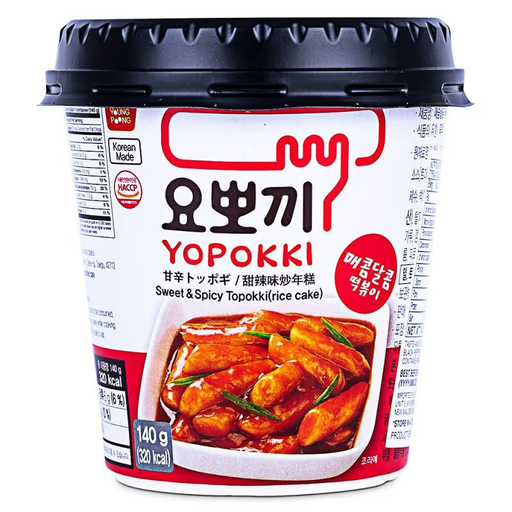
Why This Fits Their Persona: The single-serving cup format gives first-time shoppers a simple way to try tteokbokki without buying a larger frozen pack or stocking several sauces.
The pack clearly provides microwave timings of 2 minutes at 1000W or 3 minutes at 700W, reducing guesswork around preparation.
140g single-serving format; includes rice cakes and sweet-and-spicy sauce; prepared in a microwave.

Why This Fits Their Persona: Suitable for shoppers looking for a defined green tea flavour and a filled dessert to serve with tea or keep for occasional snacking.
Its product details identify green tea paste as 20% and green tea powder in the outer layer, rather than relying only on a flavour name.
210g pack; ready to eat; contains a specified green tea paste filling and glutinous rice.
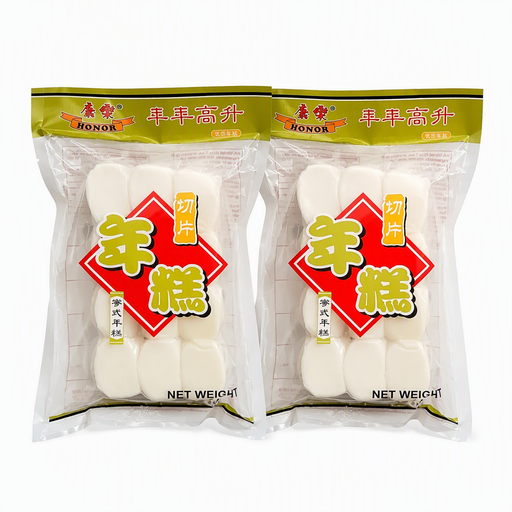
Why This Fits Their Persona: The two-pack suits households that regularly prepare hot pot, soups, stir-fries or tteokbokki and want a larger frozen supply.
The pieces are pre-sliced and the listing states the frozen storage requirement, making both portioning and planning clearer.
Two 454g packs; ingredients listed as glutinous rice and water; suitable for several savoury cooking methods.
We have compiled a complete, real-time list of products that fully satisfy these strict selection criteria and UK safety regulations.
They share rice-based ingredients and a chewy texture, but they are used differently. Korean rice cakes are commonly cooked in savoury dishes such as tteokbokki and hot pot. Japanese mochi and Japanese-style mochi are usually sweet, filled or flavoured snacks served ready to eat.
The usable period depends on the best-before date printed on the packaging and continuous storage at -18°C or below. Keep the pack sealed, thaw only the amount required and do not refreeze once thawed unless the packaging specifically permits it.
A single-serving instant product is convenient if you want a quick introduction. For home cooking and adjustable spice levels, choose plain Korean rice cakes such as a stick or chopped format, then add your preferred sauce, vegetables and toppings. Check whether the rice cakes need thawing before preparation.