
24/7 Customer Support

Free returns

Same-day & Next-day Delivery

Quality Guaranteed

Unlock Your Welcome Offers: FREE Delivery | Up to 80% OFF | Free 30-day JoyPlus trial
Download the APP
Choosing Asian rice noodles should be straightforward, but a crowded shelf can make the decision surprisingly difficult. Packaging may highlight “authentic” recipes or quick preparation while leaving out details that affect texture, cooking time and suitability for your diet.
Three common buying traps are worth avoiding:
The right product depends less on marketing language and more on its ingredients, dimensions, cooking method and intended dish.
Noodle thickness affects cooking time, texture and how well the noodles hold sauces.
Do not rely solely on terms such as “vermicelli” or “rice sticks”. Check the stated width where available, as naming conventions vary between manufacturers and cuisines.
Many gluten-free rice noodles are made with rice flour and water, while others include tapioca starch to create a more resilient or chewy texture. Tapioca is not a gluten-containing cereal, but the finished product should still be checked against your dietary requirements.
For a simple recipe, look for ingredients such as rice, rice flour and water. Some products may contain salt or tapioca starch. If you have coeliac disease or a serious allergy, review the complete UK packaging, including any “may contain” or shared-facility statement, rather than relying on front-of-pack wording.
Similarly, vegan rice noodles are usually made without animal ingredients, but always check the product label. Sauces, seasoning sachets and accompanying ingredients may not be vegan even when the noodles are.
Dried rice noodles can be soaked, boiled or added directly to broth, depending on their thickness and formulation. Over-soaking can make thin noodles fragile, while under-soaking may leave wider rice sticks firm in the centre.
A useful routine is:
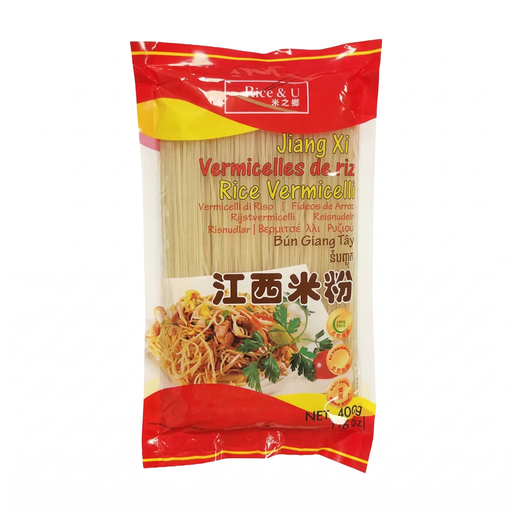
Why This Fits Their Persona: A 400g pack offers a manageable introduction to Jiangxi-style straight rice noodles for home cooks exploring soups, stir-fries and cold dishes.
The listed ingredients are rice, water and tapioca starch, with no preservatives stated. The product information also gives a clear 6–8 minute boiling method.
400g format; suitable for soups, stir-fries, cold salads and braised dishes; ingredients include 88% rice.
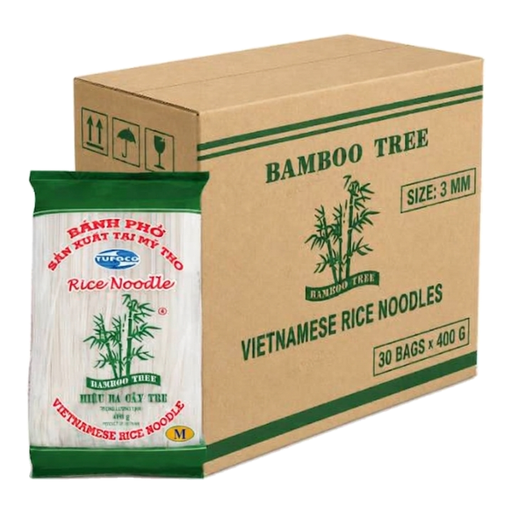
Why This Fits Their Persona: The individually sealed 400g packs suit organised home pantries, regular Asian food enthusiasts and buyers who want a substantial supply.
The 3mm width is clearly stated, helping buyers avoid choosing delicate vermicelli for dishes that need more structure. Individual sealed bags reduce repeated exposure to moisture.
30 x 400g commercial pack; Vietnamese-style bánh phở; listed as free from artificial additives and gluten.
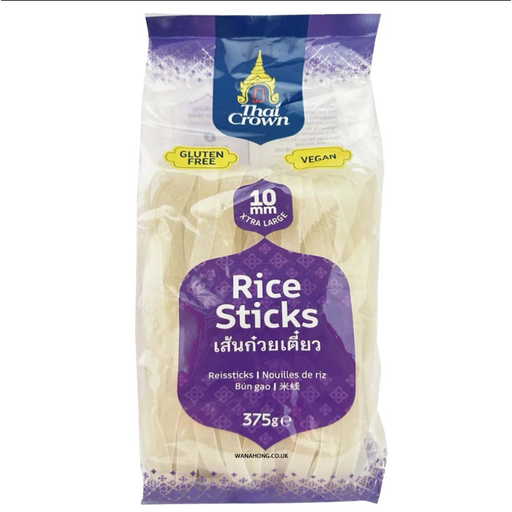
Why This Fits Their Persona: Wide rice sticks are suited to cooks preparing substantial stir-fries, curry-based dishes and meals where a pronounced noodle texture matters.
The extra-wide 10mm specification makes its intended use clear, avoiding the mismatch of using thin vermicelli in a robust wok dish.
Rice flour and water ingredients; suitable for soups, stir-fries and curries; the product information lists a 375g net weight.
We have compiled a complete, real-time list of products that fully satisfy these strict selection criteria and UK safety regulations.
Keep dried rice noodles in a cool, dry cupboard away from direct sunlight and moisture. Once opened, transfer them to an airtight container or reseal the original packaging. This is particularly important for large packs, where unused noodles may remain in storage for several weeks.
Check the packet before use and discard noodles showing unusual odour, mould, discolouration or moisture damage. Dried noodles are a raw ingredient and should not be eaten uncooked. Follow the manufacturer’s instructions, as soak times can range from a few minutes for fine vermicelli to 25–30 minutes for some wider Thai rice noodles.
Rice itself does not contain gluten, and several products in this category list rice flour, rice and water as their main ingredients. However, recipes vary and some products may be made in facilities handling wheat or other allergens. Always check the current UK label and allergen statement, particularly when buying for someone with coeliac disease.
Medium-width Vietnamese rice noodles, usually around 2.5mm to 3mm, are a practical choice for pho. They provide enough structure for hot broth without becoming as heavy as extra-wide rice sticks. Thin vermicelli is more commonly used in cold bowls, spring rolls and salads.
Soak the vermicelli until pliable, then drain and rinse briefly under cold water to limit sticking. Add it to the wok near the end of cooking, allowing the sauce and steam to finish softening the noodles. Avoid prolonged boiling, which can make thin strands break apart.