
24/7 Customer Support

Free returns

Same-day & Next-day Delivery

Quality Guaranteed

Unlock Your Welcome Offers: FREE Delivery | Up to 80% OFF | Free 30-day JoyPlus trial
Download the APP
Prepared by the Joybuy Product Recommendation Officer
Asian sausages can add sweet, smoky, savoury or spicy flavour to simple meals, from bento boxes and fried rice to hot pots and barbecues. However, choosing online is not always straightforward. Product photos may look similar while the storage requirements, meat content, preparation method and serving size differ considerably.
This guide explains what to check before you buy Asian sausages online in the UK, followed by recommendations for different shopping needs.
“Ready-to-eat” and “ready-to-cook” describe different products. A ready-to-eat sausage, such as a canned Vienna sausage or some smoked Japanese sausages, can be eaten without further cooking when handled according to the label. A frozen Taiwanese pork sausage, by contrast, still needs thorough cooking.
Always check the preparation instructions. Products labelled “cooking required” should not be eaten raw, even if they look smoked or cured. Follow the packaging guidance and ensure meat sausages are piping hot throughout. Where a temperature is provided, use a food thermometer rather than relying only on colour.
Frozen sausages need freezer space and should generally be stored at -18°C or below. Once thawed, many products must be refrigerated and consumed within 24–48 hours. Do not refreeze after thawing unless the packaging specifically permits it.
Chilled and ambient products have different requirements. A dry Chinese cured sausage may be suitable for a cool, dry cupboard while unopened, whereas fresh pork sausages require refrigeration. Check the delivery condition, pack size and best-before information before ordering several sausage bundles.
Asian sausages vary by cuisine and producer. Taiwanese sausages often have a sweet-savoury profile and may include pork fat, rice wine or aromatic spices. Japanese-style pork sausage is commonly mild, smoky and coarsely textured. Chinese cured sausage can be firmer, sweeter and more concentrated in flavour.
The word “authentic” does not tell you whether a product will suit your meal. Read the ingredients, meat percentage and flavour description to avoid buying a sausage that is too sweet, spicy, salty or rich for your intended use.
Check whether you want pork sausages, chicken sausages, a pork-and-chicken blend or a plant-based option. Meat percentage provides useful context, but it is not a complete quality assessment. Also review added pork fat, starch, soya protein, sugar and seasonings.
For example, the FRESHASIA Taiwan Roast Pork Sausage Original Flavour lists 88% pork, while the NH Japanese Style Pork Sausage Long 200g lists 88% pork. The Qi Shan Da Shan Chinese Sausage is plant-based and uses soya protein and konjac instead of animal ingredients. It contains soya and wheat, so it is not suitable for people avoiding those allergens.
UK food labels should clearly identify regulated allergens, but always read the current packaging because recipes and manufacturing arrangements can change. Common allergens in Asian sausages include soya, wheat, milk, mustard and sulphites.
Cheese-filled Taiwanese sausages contain milk, while Japanese-style products seasoned with soy sauce may contain soya and wheat. A product described as plant-based is not automatically gluten-free or allergen-free. Check the full ingredient list and “may contain” statement if you have an allergy or intolerance.
A 185g or 200g pack may suit one or two meals, while a 1kg pack containing approximately 50 pieces is more practical for families, catering or frequent bento preparation. Compare the net weight rather than the number of sausages alone, as sizes vary.
Nutrition panels are also worth checking. Some Chinese cured sausage products contain considerably more salt and sugar than mild Japanese-style options. This does not make one product universally preferable, but it helps you choose according to your eating habits and recipe.
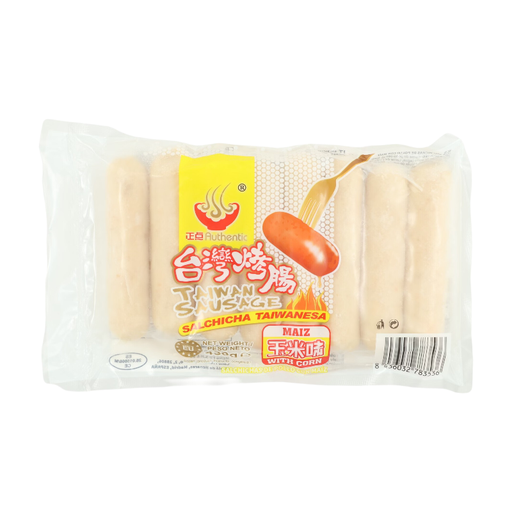
Why This Fits Their Persona: A practical introduction to Taiwanese sausages, with a 430g frozen pack suitable for family meals, snacks or first-time sampling.
The listing clearly states that it is frozen and requires cooking, helping shoppers distinguish it from ready-to-eat sausages.
Includes sweetcorn pieces; suitable for pan-frying, oven cooking, grilling, boiling or air-frying.
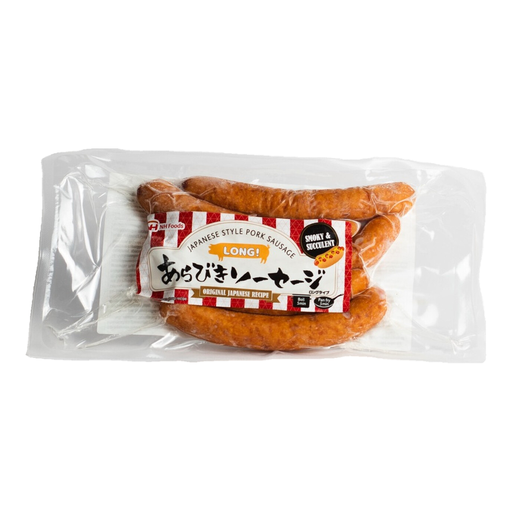
Why This Fits Their Persona: Suits shoppers seeking a coarse-textured Japanese-style pork sausage for bento boxes, barbecues, curries and stews.
It is presented as a frozen, cooking-required product, with storage and thawing instructions rather than an ambiguous “smoked” description.
Contains 88% pork; natural sheep casing; suitable for grilling, air-frying or pan-grilling.
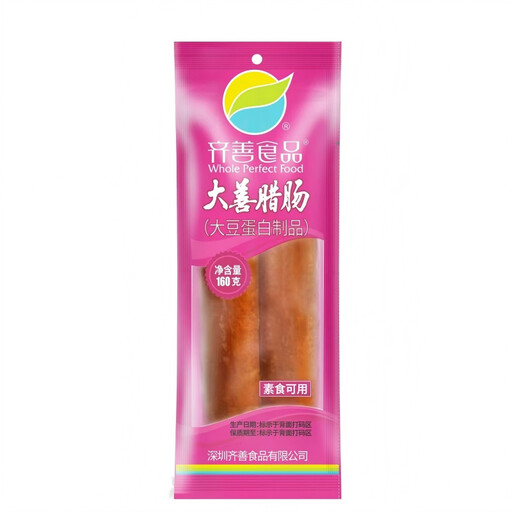
Why This Fits Their Persona: Designed for vegan shoppers who want a Chinese-style sausage for rice dishes, soups and vegetable stir-fries.
The ingredient information identifies it as plant-based while also clearly listing soya and wheat allergens.
Ambient storage; ready to eat; can be sliced into fried rice, hot pot, soup or stir-fries.
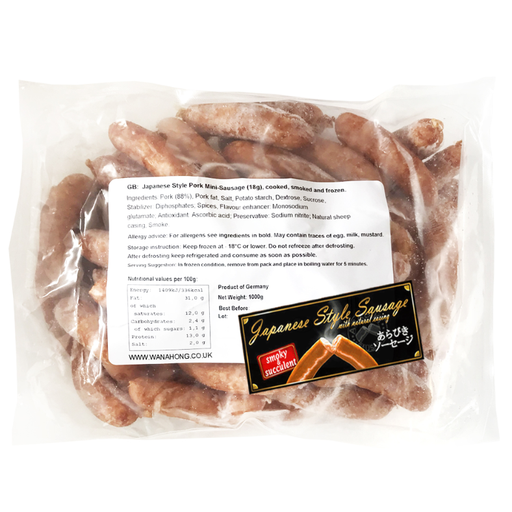
Why This Fits Their Persona: A bulk option for frequent bento preparation, family breakfasts, hot pots, parties and food-service-style portions.
The 1kg quantity is explicit, making it easier to assess freezer capacity and value before checkout.
Approximately 50 pieces per pack; made with 80% pork; multiple cooking methods are provided.
We have compiled a complete, real-time list of products that fully satisfy these strict selection criteria and UK safety regulations.
Some are, but not all. Canned Vienna sausages and specific cooked smoked Japanese sausages may be ready to eat. Frozen Taiwanese sausages, cheese-filled sausages and many Chinese cured sausage products require cooking. Check the label before serving.
The period depends on the product. Follow the stated temperature and use-by guidance. Once opened, some ready-to-eat products should be consumed within 48 hours, while certain cooked sausages allow two to three days. Frozen products should be used promptly after thawing and should not be refrozen.
Only when the product instructions allow it. Some Japanese-style sausages are designed to cook from frozen, while others require thawing first. Use the listed temperature and timing, leave space between sausages and confirm that the centre is fully cooked before eating.