
24/7 Customer Support

Free returns

Same-day & Next-day Delivery

Quality Guaranteed

Unlock Your Welcome Offers: FREE Delivery | Up to 80% OFF | Free 30-day JoyPlus trial
Download the APP
At-home hair removal devices can reduce regular shaving, waxing and salon appointments, but choosing the wrong type may leave you with an appliance that does not suit your skin tone, hair colour, routine or preferred comfort level.
The main decision is whether you want IPL hair reduction, which aims to slow regrowth over a treatment schedule, or an epilator, which mechanically removes visible hair from the root during each session. Neither option suits everyone and marketing language can make the differences less clear than they should be.
IPL devices are designed for gradual hair reduction, not guaranteed permanent removal. Results depend on factors such as hair colour, skin tone, treatment consistency and the body area treated. Even when a product description refers to smooth skin for a stated period, individual results may vary and maintenance sessions can be needed.
An epilator offers a more predictable short-term routine because it removes hair from the root, but regrowth still occurs. Claims such as “weeks of smooth skin” should be understood as an expected use benefit rather than a guarantee.
IPL works by directing light towards pigment in the hair. It generally suits naturally dark blonde, brown and black hair, but may not work effectively on white, grey, red or very light blonde hair. Some devices are also unsuitable for very dark skin tones because the required contrast between skin and hair pigment may be too low.
Always check the manufacturer’s compatibility guide before buying an IPL hair removal device. An automatic sensor helps adjust the light setting, but it does not make every device suitable for every user.
A large number of attachments does not necessarily make a device more practical. For IPL, check whether the supplied heads match your intended areas, such as legs, underarms, bikini line or upper lip. For an epilator, useful additions may include a shaver head, trimmer cap, massage cap or exfoliation brush.
Also check the power arrangement. Cordless operation is convenient in a UK bathroom, while a corded device avoids battery charging interruptions. A product supplied with a UK 2-pin plug may require a suitable adapter for a standard three-pin socket.
Look for a skin-tone sensor or SmartSkin-style reader that helps recommend or adjust light intensity. This is a guidance and control feature, not a replacement for reading the manual or carrying out any required skin test.
Check the permitted treatment areas carefully. Many home IPL devices are intended for the legs, arms, underarms, bikini line and selected facial areas. Restrictions can apply to male facial hair, genital areas, tattoos, moles, permanent make-up and recently sunburned or irritated skin.
IPL requires consistency. Product instructions may recommend an initial course followed by occasional maintenance treatments. App connectivity can make this easier to remember, but it cannot compensate for unsuitable hair or skin characteristics.
Corded IPL models provide continuous power and are often practical for full-body sessions. Cordless or corded-and-cordless models offer more flexibility around hard-to-reach areas. Consider where you will use the device, how long a session takes and whether you are likely to keep it charged.
For a women’s epilator, check the number of tweezers, minimum hair length and head movement. Models with around 40 tweezers and a flexible or pivoting head can cover body contours more easily than a narrow fixed head. A SmartLight can help reveal fine hairs.
A wet and dry epilator may feel more comfortable in a warm shower or bath, while a dry-only model needs careful use on clean, dry skin. Cordless epilators are convenient, but check the stated runtime and charging time. Washable heads and included cleaning tools are useful for maintaining hygiene between sessions.
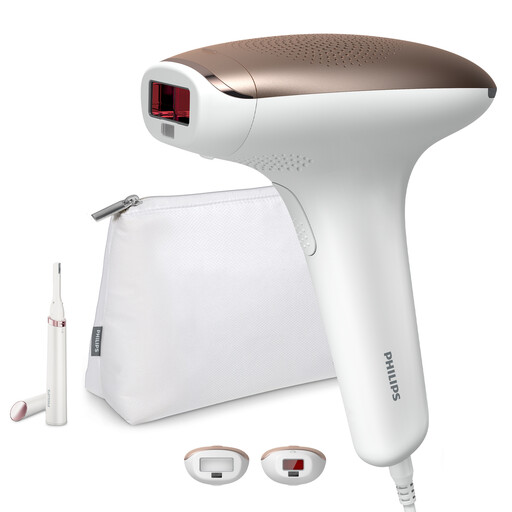
Why This Fits Their Persona: A corded IPL option for shoppers who want a straightforward home IPL hair removal routine without relying on battery charge.
Its SmartSkin sensor helps guide intensity selection, while the compatibility guidance makes it easier to check whether your hair and skin are suitable before purchase.
Includes body and precision attachments, five light intensity settings and a corded power supply.
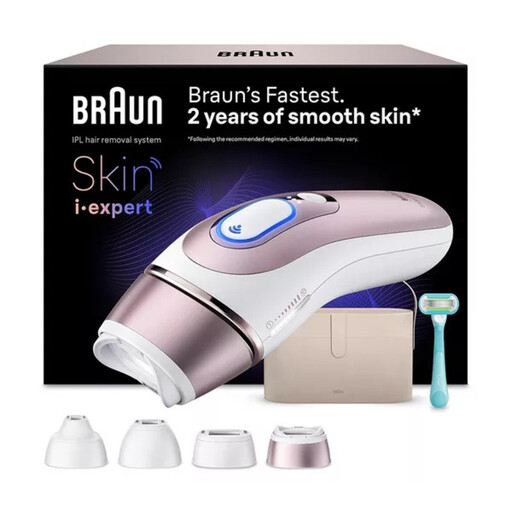
Why This Fits Their Persona: Suits shoppers who value app guidance, treatment tracking and dedicated heads for a structured full-body routine at home.
The companion app provides treatment guidance and coverage tracking, helping reduce missed areas and irregular scheduling.
Features automatic skin-tone detection, three intensity settings, a Smart Flex head and three additional treatment heads.
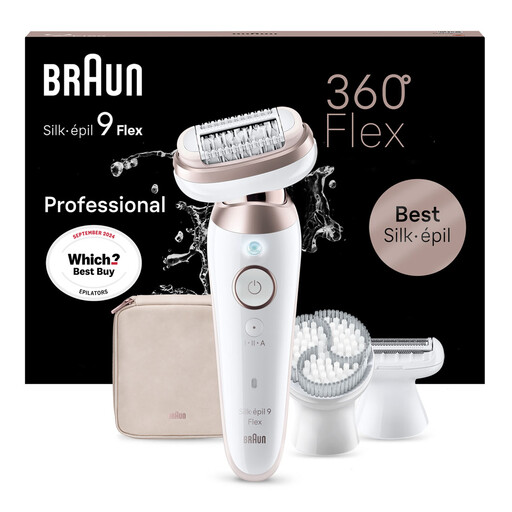
Why This Fits Their Persona: A practical choice for users who want immediate body hair removal, wet and dry flexibility and cordless use rather than an IPL schedule.
It does not depend on IPL compatibility or repeated light treatments; the 40 tweezers remove short hairs directly during use.
Offers a flexible 3D head, wet and dry operation, up to 50 minutes of cordless use and shaver, trimmer and skin-contact attachments.
For IPL, shave the area first unless the manual says otherwise, then make sure the skin is clean, dry and free from oils, deodorant or self-tanning products. Start with the recommended intensity and follow the treatment timetable. Avoid tattoos, dark moles, irritated skin and recent sunburn, and stop if significant discomfort occurs.
For an epilator, hold the skin taut and glide the device slowly against the direction of hair growth. Do not press heavily. A massage cap or wet use may make the process more comfortable, while gentle exfoliation between sessions can support smoother-feeling skin. Clean the head after every use and never share the appliance.
IPL and laser use different light technologies. An IPL hair reduction device can be a convenient home option for suitable users, but it should not be described as identical to professional laser treatment. Check compatibility and follow the supplied instructions.
Many IPL devices use a built-in lamp without routine replacement bulbs. The main ongoing costs are electricity, occasional replacement accessories if required and any shaving products used before treatment. Corded models avoid battery replacement, while cordless models may eventually need battery servicing depending on the design.
Lifespan depends on frequency of use, cleaning, charging habits and storage. Models with washable heads should be cleaned according to the manual and batteries should be charged safely. A corded epilator can be useful for users who prefer not to manage battery runtime.