
24/7 Customer Support

Free returns

Same-day & Next-day Delivery

Quality Guaranteed

Unlock Your Welcome Offers: FREE Delivery | Up to 80% OFF | Free 30-day JoyPlus trial
Download the APP
The appeal of an at home pottery kit is clear: it offers a chance to switch off, get your hands dirty and create something uniquely yours. Whether you're looking for a mindful new hobby or a source of thoughtful handmade gift ideas, a good kit can provide hours of creative satisfaction. However, the market is filled with options that can lead to frustration rather than relaxation. Many promising-looking boxes hide disappointing flaws that can turn a fun project into a chore.
As a Joybuy Product Recommendation Officer, my role is to help you see past the marketing and focus on what truly matters. Before you buy, be aware of these common pitfalls that can trip up even the most enthusiastic beginner.
To ensure you get a kit that delivers a great experience, focus on these core components. These are the non-negotiable features that separate a worthwhile purchase from a box of disappointment.
The centrepiece of any no kiln pottery kit is the clay itself. You are looking for a clay that is soft and easy to condition (knead) but firm enough to hold its shape. It should feel smooth, not gritty, and allow for easy joining of pieces. Crucially, a quality air-dry clay will have minimal shrinkage as it dries, which is the primary cause of cracking. Check product details for descriptions like "pliable," "smooth" and "low-shrinkage." The amount of clay is also important; a 500g block is a good starting point for several small projects like trinket dishes or coasters.
A proper pottery kit for beginners should equip you for the entire process. While you don't need a professional-grade arsenal, a few key tools are essential for a good result. Look for a clay modelling kit that includes:
Tools made from wood or with metal tips are generally more durable than all-plastic alternatives.
Creating the shape is only half the journey. A truly comprehensive DIY craft kit for adults will include everything needed to finish your piece. This means it should contain sandpaper for smoothing the dry surface, a selection of paints and brushes for decoration and a sealant. The sealant is particularly important; it adds a protective layer that gives your creation a finished look and provides a degree of water resistance (though it will not make it food-safe or waterproof).
Based on these criteria, here are some recommendations matched to different creative needs.
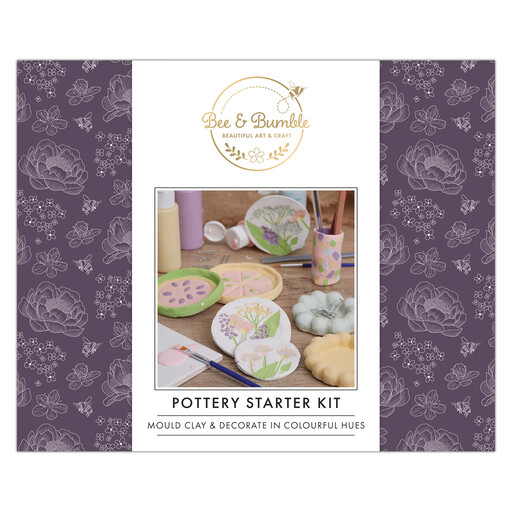
Why This Fits Their Persona: This kit is ideal for anyone in the UK wanting a stress-free introduction to pottery. It’s perfect for a relaxing weekend project, a screen-free evening or creating a personalised trinket dish or coaster as a handmade gift.
It directly counters the "incomplete kit" trap by providing high-quality air-dry clay, a set of essential sculpting tools and paints with brushes—everything needed from start to finish.
The all-in-one nature removes the guesswork for beginners. The inclusion of paints allows for immediate customisation, turning your creation into a finished decorative piece without needing to buy extra supplies.
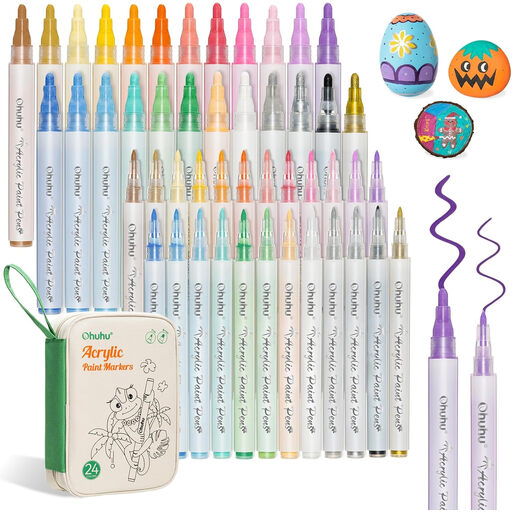
Why This Fits Their Persona: For the crafter who has already moulded their piece and now wants to add intricate, vibrant and lasting designs. This is for taking the decoration stage to the next level beyond the basic paints included in some starter kits.
This set provides a high-quality, specialised solution for decoration, addressing the potential limitations of a basic paint set and giving you the tools for professional-looking detail work.
The dual-tip design (fine and reversible chisel/round) offers excellent versatility. The water-based acrylic ink provides good coverage on dried clay and is waterproof once cured, protecting your designs.
We have compiled a complete, real-time list of products that fully satisfy these strict selection criteria and UK safety regulations.
No, the vast majority of beginner-focused kits available in the UK use air-dry clay. This type of clay is specifically designed to harden at room temperature over a period of 24 to 72 hours, depending on the thickness of your piece. This makes it a convenient and accessible option for anyone, as it requires no specialist, expensive equipment like a kiln.
This is a critical safety point: no. Air-dry clay is not food-safe, even after it has been sealed. The clay itself is porous and can harbour bacteria, and the sealants are typically not rated for contact with food or drink. These kits are intended for creating decorative items only, such as trinket dishes, sculptures, ornaments or pots for house plants.
Cracking is a common frustration, but it can usually be minimised with the right technique. First, knead the clay thoroughly before you start to remove air bubbles and create a uniform consistency. When working, use water sparingly—too much water can lead to cracking as it evaporates. Finally, allow your piece to dry slowly and evenly, away from direct heat sources like radiators or sunny windowsills. If you need to take a break, wrap your project loosely in a damp cloth or plastic to keep it from drying out too quickly.