What matters when choosing?
Start with where people will sit and what else the desk will sound like. Then decide whether quick standalone capture is enough or whether the sessions call for separate microphones.
| Concern |
What to check |
Who this matters to |
| Speech clarity around desk noise |
Test placement away from keyboards and desk contact. If needed, compare mono pickup and low-cut controls; neither removes every unwanted sound. |
If typing or nearby conversation competes with a reading, I want the words to remain intelligible. Around 36% of consumers would put that clarity need first. |
| Coverage of several readers |
Check selectable front, rear, side, stereo or mono patterns, or adjustable A-B/X-Y microphones, against the actual seating arrangement. |
When readers take turns from different sides of the desk, I need to hear each one without moving the recorder for every take. That coverage is the primary concern for around 27% of consumers. |
| Quick capture and review |
Try the recording and playback controls, and check storage and the method for transferring files. |
For short practice readings, I would rather start promptly and listen back than manage an elaborate setup. Around 27% of consumers would make that simple workflow their main priority. |
| Room to expand |
Check the required microphone inputs, monitoring connections and simultaneous tracks before planning a separate-mic setup. |
If I will record sessions regularly, I may want each reader on a separate microphone and be prepared to edit the tracks. Around 10% of consumers would put that expansion need first. |
Joybuy voice recorders
These two compact voice recorders are relevant to straightforward spoken-word capture and review. For readings with people on different sides of a shared desk, check microphone coverage for the intended layout before choosing either one.
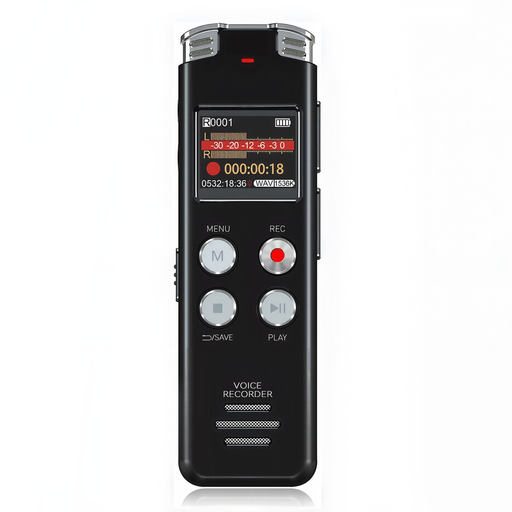 Image unavailable
Rexsun L357 128GB digital voice recorder
A compact option to consider for recording a nearby reader and reviewing a take. Check that its microphone pickup covers everyone you intend to record at the desk.
128GB; LCD screen; grey finish.
View on Joybuy
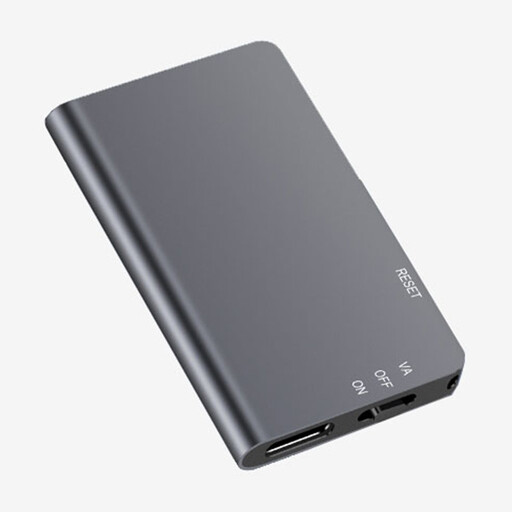 Image unavailable
Rexsun L810 64GB digital voice recorder
One-touch recording suits a quick take from a nearby reader. If several people will sit around the desk, check pickup coverage and make a test recording in the intended position.
64GB; one-touch recording; grey finish.
View on Joybuy
Questions about recording readings
Do I need 32-bit float recording for a poetry reading?
Not necessarily: it is most useful when a reader’s volume may change unexpectedly and nobody can keep watching the levels. Zoom and Tascam describe reduced advance level-setting on their cited 32-bit-float recorders, but the format does not remove room reflections, keyboard noise or desk vibration.
Which microphone pattern should I use for two readers?
Choose the pattern against where both readers actually sit, then test a few lines from each position. Zoom lists front, rear, side, stereo and mono choices for the H2essential; a focused mono setting may reduce surrounding sound but may not cover both readers equally.
Can a handheld recorder also be used with a computer?
Some can: Zoom lists USB microphone use for the H1essential and H2essential, while Tascam lists USB audio-interface use for the DR-07XP. Check the intended computer, cable and recording-software requirements for the exact model before buying.
How should I plan storage for repeated sessions?
Check the recorder’s internal capacity or compatible memory-card requirements alongside your file-transfer routine. Sony lists 4GB of internal storage and microSD expansion for the ICD-UX570; if considering a Tascam DR-05XP, consult Tascam’s tested-media guidance for that specific model rather than applying it to another recorder.


