
24/7 Customer Support

Free returns

Same-day & Next-day Delivery

Quality Guaranteed

Unlock Your Welcome Offers: FREE Delivery | Up to 80% OFF | Free 30-day JoyPlus trial
Download the APP
As a Joybuy Product Recommendation Officer, my role is to help you navigate the crowded market of pet technology. An automatic cat feeder can be a fantastic tool for busy UK cat owners, offering peace of mind and a consistent feeding schedule for your feline companion. However, not all feeders are created equal. Many are plagued by design flaws that can lead to frustration for you and missed meals for your pet.
Before you invest, it's crucial to understand the common pitfalls. Many owners find themselves with a device that is more trouble than it's worth, often due to one of these three overlooked issues:
To ensure you choose a reliable and practical device, focus on these core specifications. Getting these right will save you money and ensure your cat is fed safely and consistently.
The first question to ask is: what food will you be using? While most feeders handle standard dry kibble, many owners are now incorporating different food types into their cat's diet.
If you use or plan to use a freeze dried food cat feeder, you must check the product's specifications. Look for feeders with a robust dispensing mechanism and a clear statement on the maximum food size they can handle, often specified in millimetres (e.g., up to 12mm). This ensures the feeder can accommodate a variety of food textures and shapes without jamming.
Your lifestyle will determine the level of control you need. A basic cat feeder with timer uses a simple digital clock to dispense meals at set times. This is a straightforward solution for creating a routine while you are at home.
However, for greater flexibility, a WiFi cat feeder is a significant step up. These models connect to your home's 2.4Ghz WiFi network and are managed via a smartphone. A good app control cat feeder allows you to:
This level of control makes a smart pet feeder an invaluable tool for managing a cat's diet, especially for weight control or medical feeding schedules.
The feeder's capacity, measured in litres, determines how long it can go between refills. A 3L cat feeder is a common size, typically holding enough food for an average-sized cat for one to two weeks, depending on their diet.
More importantly, always check for a dual power system. A reliable feeder should operate via a USB or mains adapter as its primary source but also have a compartment for backup batteries. This ensures that even if your home loses power, your cat’s feeding schedule continues without interruption.
We've matched a product from our selection to a common user profile, highlighting how its specific features address the pitfalls and meet the needs of a modern UK cat owner.
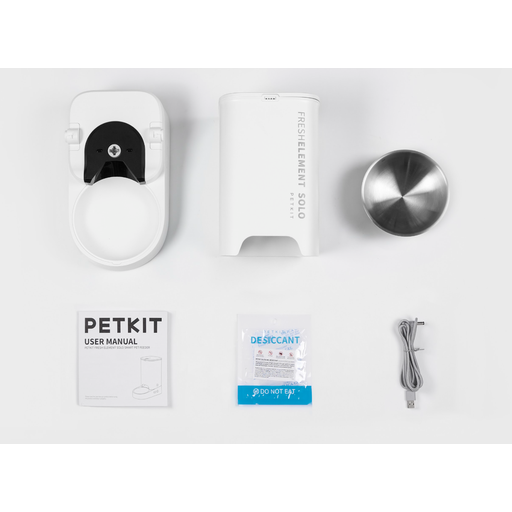
Why This Fits Their Persona: This feeder is ideal for the owner who wants precise control over their cat's diet. The app control allows for granular scheduling of up to 10 meals a day, perfect for managing weight or feeding smaller, more frequent portions. Its modern design and smart features appeal to a tech-forward household.
It directly addresses all three common pitfalls. It features a dual power supply (USB and battery backup), a hygienic and easy-to-clean stainless steel bowl and a dispensing system specifically designed to be compatible with both dry kibble and freeze dried food up to 12mm.
The combination of the versatile PETKIT app for remote management and its proven compatibility with varied food types provides exceptional flexibility and reliability for health-conscious pet owners.
While a feature-rich model like the one above is excellent for those seeking comprehensive control, your needs might be different. For those on a tighter budget or who only require a simple, timed schedule for when they are home, a non-WiFi model with a digital timer can be a perfectly suitable and cost-effective choice. Similarly, for households with multiple cats, a feeder with a larger capacity (5L or more) might be the primary consideration.
We have compiled a complete, real-time list of products that fully satisfy these strict selection criteria and UK safety regulations.
The food bowl should be cleaned as frequently as you would a standard bowl—ideally daily, but at least every two days. The main food hopper and the internal dispensing mechanism should be wiped clean each time you refill it, or at minimum once a month. This prevents the buildup of food oils, which can turn rancid and deter your cat from eating. Models with removable, dishwasher-safe parts make this task much easier.
Most feeders are designed exclusively for dry, solid kibble. If you feed a specialised diet, such as veterinary prescription food or freeze dried food, it is essential to verify compatibility. Check the product description for the maximum food piece diameter it can handle. Attempting to use wet food, moist food or oversized kibble in a standard feeder will cause it to clog and fail.
Reputable brands of smart pet feeders use secure, encrypted connections for their apps. To ensure security, always use a strong and unique password for your feeder's app account. Furthermore, make sure your home 2.4G WiFi network is protected with a WPA2 or WPA3 password. This prevents any unauthorised access to your device's settings and your pet's feeding schedule.