
24/7 Customer Support

Free returns

Same-day & Next-day Delivery

Quality Guaranteed

Unlock Your Welcome Offers: FREE Delivery | Up to 80% OFF | Free 30-day JoyPlus trial
Download the APP
For many cat owners, the daily ritual of scooping the litter tray is the least glamorous part of sharing a home with a feline friend. It’s a necessary chore, but one that can be time-consuming and a constant source of household odours. If you're looking for a way to reclaim your time and maintain a fresher home, an automatic cat litter box could be the solution.
These modern devices, also known as self-cleaning or robotic litter boxes, handle the scooping for you, depositing waste into a sealed compartment. This guide is designed to help you understand the key features to look for and to present some of our top recommendations for 2026, helping you make an informed choice for you and your cat.
Navigating the market for a smart cat litter box can feel overwhelming. To simplify the process, we've identified a few crucial factors to consider based on what matters most to UK cat owners: safety, cleanliness and convenience.
The primary concern for any cat owner is their pet's safety. Reputable automatic litter boxes are equipped with sophisticated sensor systems. Look for models with a combination of weight sensors, which detect when your cat is inside, and infrared sensors that can spot movement near the entrance. These features ensure the cleaning cycle will not start or will immediately pause if your cat is in or near the unit. Also, consider the size of the box, especially if you have a larger breed or are looking for an automatic litter box for multiple cats. A spacious interior and a low, wide entrance can help even timid cats adapt more easily.
The main purpose of a self-cleaning cat litter box is to automate waste removal and manage smells. Different models use various mechanisms, such as a rotating drum or a raking system, to sift clumps from clean litter. An effective odour control litter box will also feature a fully sealed waste drawer to trap unpleasant smells. Some advanced models incorporate carbon filters or automated deodorising sprays that activate after each use, providing an additional layer of freshness.
For those who appreciate smart home technology, an app controlled litter box offers a new level of convenience. A companion app allows you to monitor your cat's habits, receive notifications when the waste bin is full and manually trigger a cleaning cycle from anywhere. Certain models even use their sensors to track your cat's weight and frequency of use, providing data that can be a useful indicator of their general health and well-being.
Based on features that prioritise convenience, hygiene and safety, here are a couple of standout models to consider.
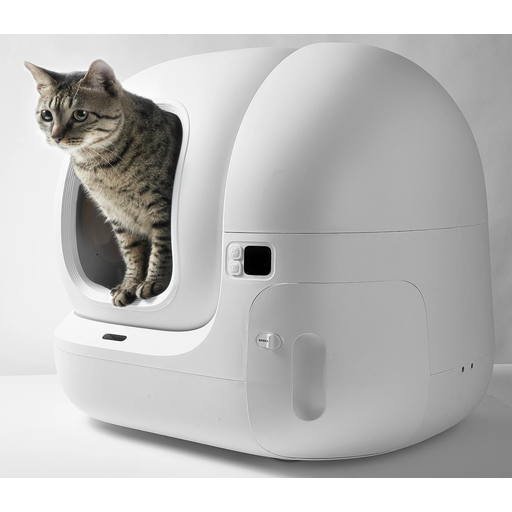
Why It Stands Out The PETKIT Pura Max 2 is a feature-rich option designed for households that value both automation and insight into their pet's health. Its xSecure system combines multiple sensors for safety, while the PETKIT app provides detailed tracking of your cat's weight and toilet habits. The integrated Pura Air Smart Spray offers automated odour removal, tackling smells at the source.
Pros
Who is it for? This model is particularly well-suited for owners of multiple cats or larger breeds, thanks to its generous size. It's also an excellent choice for those who want to keep a close eye on their cat's health metrics through smart data tracking.

Why It Stands Out The Blinkit MSP-01 focuses on providing a quiet, safe and exceptionally odour-free experience. Its standout feature is the 3-stage odour lock system, which uses a physical seal, negative pressure circulation and molecular purifiers to dismantle odours. Combined with its ultra-quiet operation and a 7-layer safety detection system, it’s designed to blend seamlessly into any living space.
Pros
Who is it for? This is an ideal choice for cat owners living in flats or smaller homes where noise levels and odour control are top priorities. Its robust safety features also provide peace of mind for cautious pet parents.
While a robotic litter box does an excellent job of containing waste and odours, some households—especially those with multiple cats or in smaller spaces—may appreciate an extra layer of odour management. Pairing your automatic system with a dedicated deodoriser can help maintain an even fresher environment.
For an added layer of freshness, you might consider exploring our range of specialised litter deodorisers.
Yes, modern automatic litter boxes are designed with safety as a top priority. They typically include a combination of weight sensors, infrared motion detectors and anti-pinch mechanisms that stop the cleaning cycle if a cat enters or is detected nearby. It is always important to check the manufacturer's guidelines for minimum cat weight and age to ensure suitability.
This depends on the specific model. Most are optimised for use with high-quality clumping clay litter, as this allows the mechanism to effectively separate waste. However, many newer models, including those mentioned above, are compatible with a wider variety of litters such as tofu, mineral or mixed litters. Always consult the product's specifications to ensure you are using a compatible litter for optimal performance.
The frequency depends on the model's waste compartment capacity and the number of cats using it. A large capacity cat litter box might only need emptying every one to two weeks for a single cat. Most smart models will send a notification to your phone via their app when the waste drawer is full, taking the guesswork out of maintenance.