
24/7 Customer Support

Free returns

Same-day & Next-day Delivery

Quality Guaranteed

Unlock Your Welcome Offers: FREE Delivery | Up to 80% OFF | Free 30-day JoyPlus trial
Download the APP
As a Joybuy Product Recommendation Officer, my role is to help you navigate the crowded market of pet technology. An automatic cat litter box promises to free you from the daily chore of scooping, but choosing the wrong one can lead to frustration, wasted money and a device that gathers dust in a corner.
Many models on the market look impressive but fail to deliver on their core promises. Before you invest, it's crucial to understand the common pitfalls that many buyers fall into.
To make a sound choice, focus on the functional specifications rather than the marketing hype. Here are the core parameters that determine a product's real-world performance.
The heart of any automatic cat litter box is its cleaning system. Most fall into two categories: rotating sifting systems or automated rakes. Rotating globes tend to be more effective at separating clumps without breaking them, leading to a cleaner litter bed.
Crucially, you must check which types of litter are compatible. Most are designed for high-quality clumping clay litter. Using non-clumping, silica or certain types of plant-based litters can jam the mechanism, void the warranty, or damage the motor. Always verify that the machine works with the litter you prefer to use.
Do not underestimate the importance of size. Look for two key capacity numbers:
Also, consider the entry height. A low-entry point is essential for kittens, senior cats or those with mobility issues.
A modern smart cat litter box offers more than just automated cleaning. An app-controlled litter box connects to your home Wi-Fi (usually 2.4 GHz) and provides valuable insights.
The most useful feature is cat health monitoring. By using precise weight sensors, the device can track each cat's weight, frequency of use and duration of visits. Sudden changes in these patterns can be early indicators of potential health issues, allowing you to act quickly. The app can provide real-time alerts and historical data, turning the litter box into a passive health monitoring tool.
We have matched some promising models to the needs of different UK cat owners.
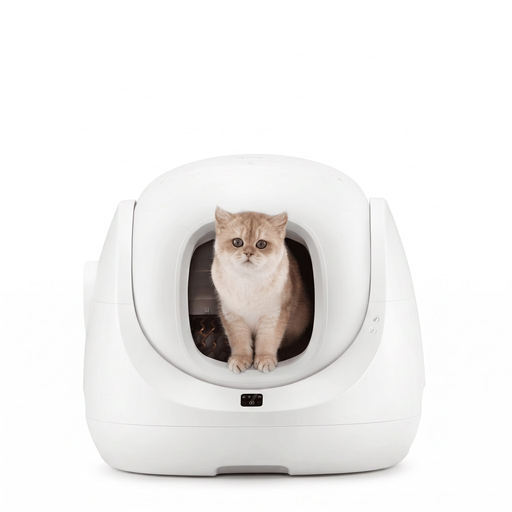
Why This Fits Their Persona: This user needs a robust, data-driven solution to manage multiple cats with minimal effort. The app's ability to identify individual cats and track their weight and toilet habits provides peace of mind and actionable health insights.
It directly counters the "One-Size-Fits-All" trap with its extra-large 70-litre capacity and the "Unreliable Sensors" trap with a 6-point safety system that includes infrared and gravity sensors.
The standout feature is its AI-powered multi-cat monitoring, which generates individual health reports. The low-entry design also makes it accessible for cats of all ages.
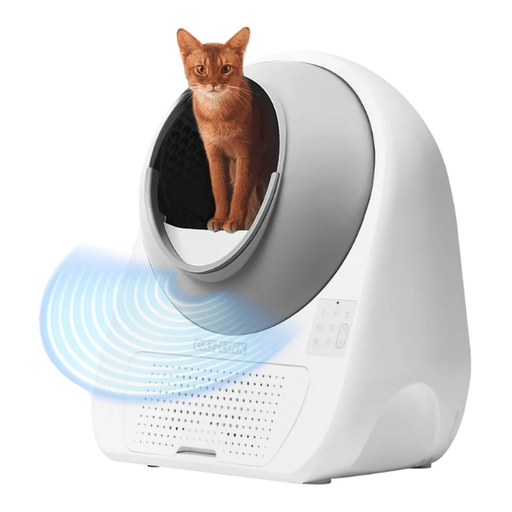
Why This Fits Their Persona: This user prioritises a completely hands-off and odour-free experience. They are willing to invest in advanced technology that not only cleans but actively purifies the air, integrating seamlessly into a modern, clean home.
It directly tackles the "Odour-Proof Illusion" with a 3-layer intelligent deodorisation system that uses an activated carbon filter, UV light and active oxygen, going far beyond a basic passive filter.
Its primary advantage is the advanced deodorisation and sterilisation system. The large 13-litre waste bin also extends the time between disposals, enhancing the hands-free experience.
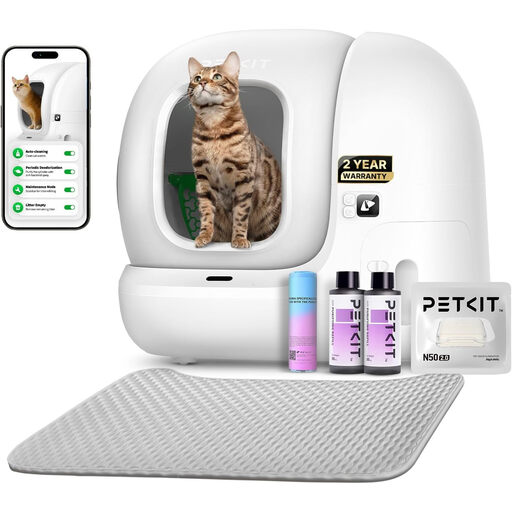
Why This Fits Their Persona: This user's main concern is finding a unit that is genuinely large enough. The Pura Max 2's generous 76-litre interior provides ample room for larger cats to use it without feeling cramped, which is critical for their comfort and consistent use.
It solves the "One-Size-Fits-All" problem by offering one of the largest internal capacities on the market. Its multi-sensor xSecure system also addresses safety concerns for cats of all sizes (up to 8kg).
The extra-large 76-litre capacity is the main draw. It is also compatible with a wide range of clumping litters, offering more flexibility than some competitors.
For those concerned with aesthetics, a litter box enclosure like the Feandrea Cat Litter Box Enclosure can be an excellent addition. It hides the unit from view, further contains odours and reduces litter tracking, all while blending in as a piece of furniture.
We have compiled a complete, real-time list of products that fully satisfy these strict selection criteria and UK safety regulations.
Transitioning can take patience. Place the new unit next to the old litter box but do not turn on the automatic cleaning cycle for the first few days. Let your cat explore it at their own pace. Once they start using it, you can remove the old box and activate the self-cleaning mode. Using the same type of litter they are familiar with can also help significantly.
The main ongoing costs are electricity, litter and waste bags. Electricity consumption is generally very low, similar to a small smart home device. The biggest variable is whether the unit requires proprietary, branded waste bags and liners, which can be more expensive than standard bin bags. Some models, like the PETKIT Pura Max 2, are designed to be compatible with generic bags, which can reduce long-term costs.
The lifespan depends on the build quality, motor and how well it is maintained. A well-built device from a reputable brand, when cleaned regularly according to the manufacturer's instructions, can be expected to last for several years. Cheaper, less robust models may experience motor or sensor failures much sooner. Always check the warranty period offered by the manufacturer.