
24/7 Customer Support

Free returns

Same-day & Next-day Delivery

Quality Guaranteed

Unlock Your Welcome Offers: FREE Delivery | Up to 80% OFF | Free 30-day JoyPlus trial
Download the APP
For anyone who loves the aroma of freshly baked bread or the satisfaction of a homemade pizza, the process of kneading dough can be both a joy and a chore. It’s time-consuming, physically demanding and getting the consistency just right takes practice. An automatic dough maker promises to solve all this, but navigating the market can be tricky. Many machines over-promise and under-deliver, leaving you with a costly kitchen gadget that gathers dust.
As the Joybuy Product Recommendation Officer, my role is to help you see past the marketing clutter. Before you invest in a new electric dough kneader, let’s look at the common traps that catch out many UK buyers.
The "Powerful Motor" Myth: Many brands advertise high wattage as a sign of performance. However, a high-wattage motor doesn't guarantee effective kneading. If the internal gearing is poor or the motor lacks sufficient torque, it can strain and overheat when working with dense doughs like wholemeal or large batches. This can lead to an inconsistent texture or even motor burnout within months. The true measure is a machine's ability to handle a specified dough weight smoothly and without labouring.
The Capacity Deception: You see a machine advertised with a large 5-litre bowl and assume it can make a huge amount of dough. This is a frequent misunderstanding. The listed bowl volume is not the same as its functional dough capacity. A 5L dough maker can typically handle a maximum of around 1.5kg of dry flour, which yields about 2.5kg of dough. Buying a machine based on bowl size alone often results in a unit that’s too small for a family’s baking needs, forcing you to make multiple batches.
The "One-Touch Wonder" Trap: The most basic models are often little more than a motor with a timer. They will mix your ingredients, but that's where the automation ends. A true automatic dough fermentation machine offers much more. It should provide a controlled, low-heat environment to ensure a perfect, consistent rise every time. Without this feature, you are left to proof your dough elsewhere, defeating the purpose of a convenient, all-in-one appliance.
To ensure you get a machine that genuinely saves you time and effort, focus on these non-negotiable specifications.
The heart of any dough kneading machine for home is its motor and mechanism. Look for models with a DC motor, which generally provides higher torque and quieter operation compared to older AC motor designs. This allows it to handle heavier doughs without straining. The kneading action is also critical. A machine that simulates manual kneading with a robust, well-designed hook will develop the gluten structure more effectively than a simple spinning paddle, resulting in a better crumb for your bread or a chewier base for your pizza.
Before purchasing, verify the machine's maximum flour capacity, not just its bowl volume. A good manufacturer will state this clearly in the specifications. For a family of four, a machine that can handle at least 1kg of dry flour is a practical starting point. The bowl itself should be made from food-grade 304 stainless steel. This material is durable, non-reactive, easy to clean and won't retain odours or stains from ingredients.
This is the feature that elevates a simple bread dough mixer to a complete baking solution. An effective automatic dough fermentation machine will have a dedicated setting that maintains a constant, gentle temperature (typically around 25-30°C). This creates the ideal environment for yeast to activate, ensuring a reliable and even rise. This hands-free function is invaluable for busy home bakers or those whose kitchens are often cool, making it a key feature for achieving consistent results with every bake.
After filtering the market based on these practical criteria, we've identified a machine that aligns with the needs of dedicated home bakers.
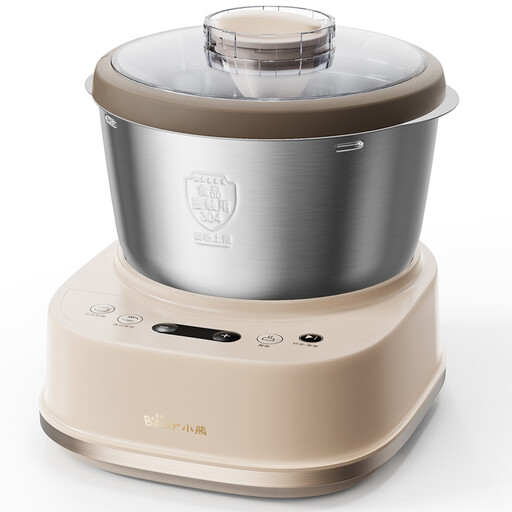
Why This Fits Their Persona: This is ideal for the baker who regularly makes bread, pizza or other dough-based foods for their family. The 5L capacity is genuinely useful, handling up to 1.6kg of dry flour—enough for two large loaves or several pizza bases. It automates the entire process from mixing to proofing, freeing up valuable time.
It features a dedicated constant temperature fermentation function, avoiding the "one-touch" trap. Its specifications clearly state the flour capacity and the 200W DC motor provides ample torque for its size, side-stepping the power and capacity myths.
The main benefit is its integrated kneading and proofing system, making it a true hands-free dough kneader. The microcomputer controls and 304 stainless steel bowl provide consistency and durability.
Once your dough is perfectly prepared by a reliable pizza dough maker machine, you can focus on the fun part. Rolling it out on a non-slip surface like the Maxcook Silicone Baking Mat and baking it in a quality pan such as the PURECOOK Carbon Steel Cake Mold will help ensure your final creation is as good as it can be.
We have compiled a complete, real-time list of products that fully satisfy these strict selection criteria and UK safety regulations.
Yes, these machines are highly versatile. They are excellent for preparing dough for pizza, chapatis, pasta and enriched doughs for brioche or cinnamon buns. The consistent kneading action is suitable for a wide range of recipes, making it a valuable tool for any home baker.
Most home models are very energy-efficient. A typical 200W machine uses minimal electricity. A full cycle of 15 minutes of kneading and an hour of fermentation will likely cost only a few pence on your energy bill, making it a very economical appliance to run regularly.
Cleaning is generally straightforward. The removable stainless steel bowl and kneading hook can usually be washed in warm, soapy water. The main body of the machine should never be submerged in water; simply wipe it down with a damp cloth. Always unplug the appliance before cleaning any parts.