
24/7 Customer Support

Free returns

Same-day & Next-day Delivery

Quality Guaranteed

Unlock Your Welcome Offers: FREE Delivery | Up to 80% OFF | Free 30-day JoyPlus trial
Download the APP
Keeping up with a pet's feeding schedule can be a challenge amidst busy workdays, travel or simply the unpredictability of daily life. An automatic pet feeder offers a reliable solution, ensuring your cat or small dog receives their meals on time, every time. This consistency not only provides peace of mind for you but also supports your pet's health through routine and portion control.
Navigating the market for a scheduled pet food dispenser can be complex, with a wide array of features and functions to consider. This guide is designed to help you understand the key considerations and explore some dependable options, making it easier to find a feeder that suits your lifestyle and your pet's needs.
Before choosing, it's helpful to analyse what features will bring the most value to you and your pet. Here are a few key points to consider.
The primary difference in modern feeders lies in how you program them. A timed cat feeder is typically programmed using buttons and an LCD screen directly on the unit. These are straightforward, set-and-forget devices. In contrast, a smart pet feeder connects to your home's Wi-Fi, allowing you to schedule and adjust feedings, monitor status and receive notifications via a smartphone app from anywhere. Some advanced models even include a wifi pet feeder with camera, letting you check in on your pet during mealtimes for added reassurance.
A key benefit of an automatic feeder is precise meal management. A good portion control dog feeder allows you to dispense specific amounts of food, helping to maintain your pet's ideal weight. Check the portion sizes the machine can dispense and ensure they are suitable for your pet's dietary plan. The overall capacity (measured in litres) determines how long the feeder can operate before needing a refill, an important factor for those who travel or have busy schedules. Also, ensure the feeder is compatible with your pet's kibble size to prevent jams.
A feeder is only useful if it's reliable. Look for models with a dual power supply—mains power with a battery backup—to ensure feedings are not missed during a power cut. For hygiene, a removable, dishwasher-safe stainless steel bowl is a practical feature that simplifies cleaning. Other indicators of a well-designed machine include secure-locking lids to keep curious paws out, freshness seals with desiccant bags to keep food from going stale and infrared sensors that prevent jams and overflowing bowls.
Here are a few models that offer a range of features to suit different needs, from smart connectivity to straightforward reliability.
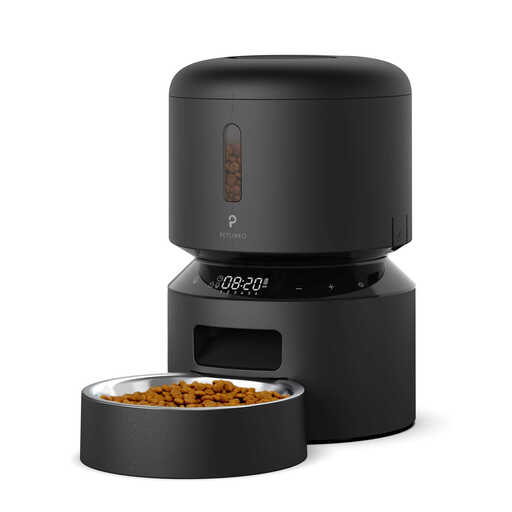
Why It Stands Out This model strikes a great balance between smart functionality and dependable design. With app control via Wi-Fi, it offers the flexibility to manage your pet's feeding schedule remotely, while its robust build and freshness-focused features ensure meals are delivered reliably.
Pros
Who is it for? This is a strong choice for pet owners who want the convenience of a smart pet feeder to manage feeding schedules from their phone, without needing advanced features like a camera. It's well-suited for an automatic feeder for small dogs or cats.
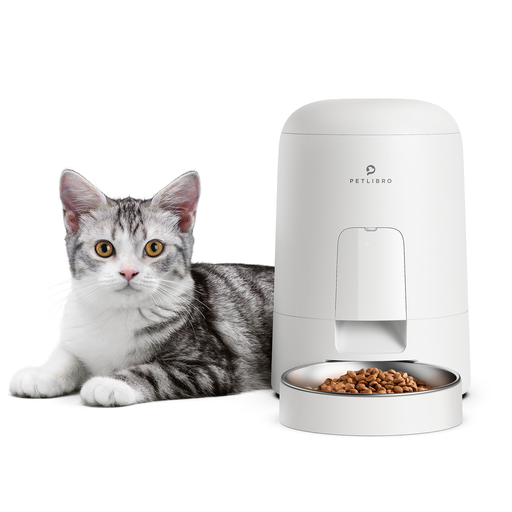
Why It Stands Out The PETLIBRO Air focuses on simplicity and reliability. As a non-connected, timed cat feeder, it removes the complexity of apps and Wi-Fi, offering a straightforward solution for automated feeding that is easy to set up and maintain.
Pros
Who is it for? Ideal for pet owners who prefer a dependable, set-and-forget device without the need for internet connectivity. Its simple operation makes it a great starting point for anyone new to automatic feeders.

Why It Stands Out This feeder is packed with advanced technology for the highly engaged pet owner. The integrated 1080P HD camera, two-way audio and AI-powered food detection offer unparalleled monitoring and interaction, while the dual-chamber design allows for dietary variety.
Pros
Who is it for? This is designed for the tech-savvy pet parent who wants maximum visibility into their pet's eating habits and the ability to interact with them remotely. The dual-food feature is also a great benefit for pets on varied diets.
The right automatic feeder depends on your specific circumstances and your pet's unique personality. If the models above aren't quite what you're looking for, there are many other options available with different capacities, features and designs.
Explore our full range of Automatic Food Feeder products to find the perfect match for your home.
Most automatic feeders dispense food into a single bowl, making them best suited for a single pet or pets that are not competitive over food. If you have multiple pets with different dietary needs or feeding times, using separate feeders for each animal is often the most effective approach.
The feeders discussed in this article are designed exclusively for dry or freeze-dried kibble within a specific size range (typically 2-15mm). Using wet food can cause clogs in the dispensing mechanism and presents a food safety risk due to spoilage. Specialised feeders for wet food are available, which usually feature chilled compartments and different dispensing systems.
Introduce the new feeder gradually. Place it next to their old food bowl for a few days without turning it on. You can put a few treats in the feeder's bowl to create a positive association. Once your pet is comfortable, you can start using the feeder for one meal a day, slowly transitioning all meals to the new device. Using a model with a voice recording feature to call your pet at mealtime can also help them adapt.