
24/7 Customer Support

Free returns

Same-day & Next-day Delivery

Quality Guaranteed

Unlock Your Welcome Offers: FREE Delivery | Up to 80% OFF | Free 30-day JoyPlus trial
Download the APP
Juggling a busy work schedule, social life and the occasional weekend away can make it challenging to maintain a consistent feeding routine for your pet. Whether you're concerned about your cat's portion control or need to ensure your dog is fed on time while you're out, an automatic pet feeder can provide peace of mind and structure.
However, the market is filled with options, from simple timed dispensers to advanced smart devices. This guide is designed to help you understand the key features to look for and to highlight a few models that cater to different needs, so you can make a practical choice for you and your furry companion.
Before diving into specific products, it's helpful to consider what features matter most for your situation. Focusing on these three areas will help you narrow down your options.
The most fundamental job of a feeder is to dispense food reliably. A primary consideration is its power source. Mains-powered units are consistent, but what happens during a power cut? For this reason, many owners prefer a battery operated pet feeder or, even better, a dual-power model that uses a mains adapter as its primary source with batteries as a backup. This ensures your pet’s meal schedule continues uninterrupted, even if the electricity doesn't.
The technology in pet feeders ranges from basic to highly advanced. A simple cat feeder with timer allows you to 'set and forget' meal times and portions using a built-in digital interface. These are often very reliable and straightforward to use.
On the other hand, a smart pet feeder connects to your home's network, allowing you to control and monitor feedings from a smartphone app. More advanced models may even include a wifi pet feeder with camera, letting you see and talk to your pet from anywhere. This is ideal for owners who want extra reassurance or enjoy checking in on their pet during the day.
The feeder's capacity, measured in litres, determines how much food it can hold and how often you'll need to refill it. A larger capacity is useful for bigger dogs or for when you plan to be away for several days.
Equally important is the ability to customise meal sizes. A good portion control cat feeder or automatic dog feeder will allow you to schedule multiple small meals throughout the day. This is particularly beneficial for pets on a weight management plan or those who tend to eat too quickly. This type of electronic pet food dispenser helps promote healthier eating habits.
Based on their features, design and user-friendliness, here are a few standout options to consider.
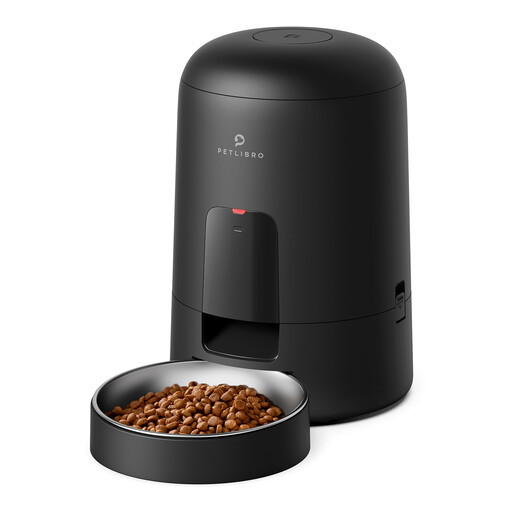
Why It Stands Out: The Petlibro Air focuses on core reliability and convenience. Its most notable feature is its impressive 180-day battery life, which offers incredible placement flexibility without worrying about cables or proximity to a socket. It’s a classic timed pet feeder that prioritises function over complex smart features.
The design includes thoughtful details like a covered control panel to prevent curious paws from changing the settings and a press-to-lock lid to keep food secure. Its freshness system, with a sealing strip and ant-resistant design, helps keep kibble fresh and protected.
Pros:
Who is it for? Pet owners who value simplicity, reliability and long-term battery power over smart connectivity. It's an excellent choice for single-pet households, renters, or anyone needing a dependable feeder without the fuss of WiFi setup.
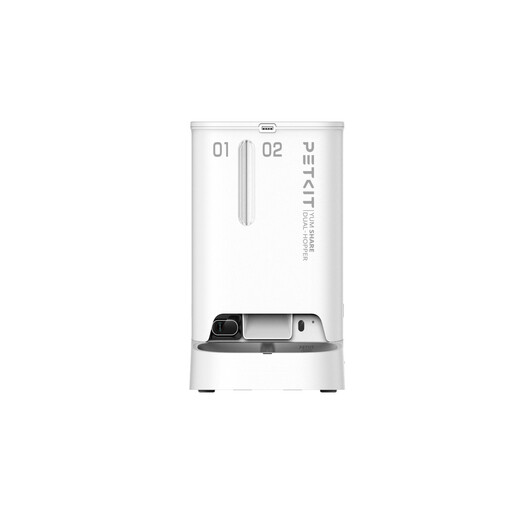
Why It Stands Out: The PETKIT YumShare is a feature-rich solution for the tech-savvy pet owner. Its main differentiator is the dual-hopper design, which allows you to store and dispense two different types of food. This is perfect for offering a mix of kibble, accommodating two pets with different diets, or providing a special treat.
The integrated 1080HD camera and two-way audio allow you to monitor your pet and interact with them remotely via the PETKIT app. The app also provides full control over feeding schedules and sends alerts, while an anti-jam rotor mechanism adds to its reliability.
Pros:
Who is it for? Owners who want maximum connectivity and monitoring. It’s ideal for those who travel, work long hours and miss their pet, or manage multiple pets with distinct nutritional needs.
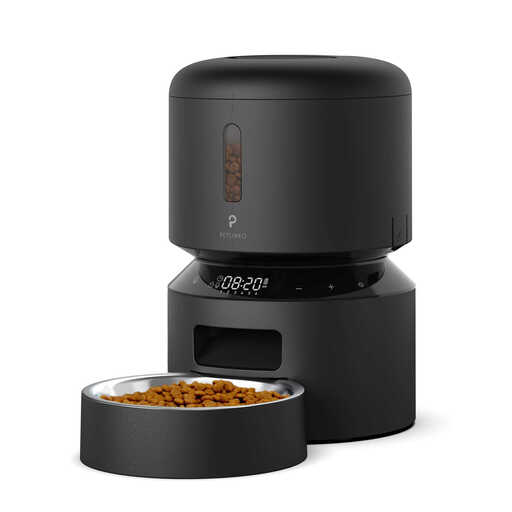
Why It Stands Out: The Petlibro Granary strikes a balance between smart functionality and practical design. It offers the convenience of a smart pet feeder with app control, allowing you to set and adjust feeding schedules from your phone, but without the added complexity of a camera.
Its 3L capacity is suitable for most cats and small-to-medium dogs. Key features include an infrared sensor that detects low food levels and prevents jams, a secure twist-lock lid and a desiccant bag to maintain freshness. The ability to record a 10-second meal call adds a personal touch to feeding time.
Pros:
Who is it for? Pet owners who want the convenience of remote scheduling and monitoring via an app but do not require a camera. It’s a solid all-rounder for managing a pet’s diet with modern technology.
While these three models cover a range of common needs, every pet and owner is unique. If you're looking for a different capacity, feature set, or design, there are many other feeders available.
To see a wider selection of models, including different sizes and styles, feel free to explore our full range of cat feeders.
Explore All Cat Feeders on Joybuy
No, nearly all electronic pet feeders are designed exclusively for dry food (kibble). Using wet food can cause clogs in the dispensing mechanism, lead to spoilage and create a difficult-to-clean mess that may attract bacteria. Always stick to the manufacturer's guidelines and use only dry pet food.
Introduce the new feeder gradually. Start by placing it next to their current food bowl without turning it on, allowing them to get used to its presence. After a day or two, you can put some of their food in the feeder's bowl. Use the manual feed button to dispense a small amount of food while they are watching to create a positive association. Over a few days, transition them fully to the new feeder.
This is a common concern, which is why many feeders come with backup systems. Models with a dual power supply (mains and battery) will automatically switch to battery power during an outage, ensuring the feeding schedule is not interrupted. For smart feeders, the programmed schedule is typically stored on the device itself, so it will continue to dispense food on time even if the WiFi connection is lost. However, you will not be able to make changes remotely or receive notifications until the connection is restored.