
24/7 Customer Support

Free returns

Same-day & Next-day Delivery

Quality Guaranteed

Unlock Your Welcome Offers: FREE Delivery | Up to 80% OFF | Free 30-day JoyPlus trial
Download the APP
An automatic self-cleaning cat litter box can reduce daily scooping, contain waste and make multi-cat household routines easier. However, the wrong model may create new problems, including difficult cleaning, unreliable app features or an entrance that does not suit your cat.
Before buying, focus on how the unit works in your home rather than relying on phrases such as “advanced”, “odour-free” or “AI-powered”. A practical choice should match your cats’ size, age, litter preference, Wi-Fi setup and the amount of maintenance you are prepared to do.
Some automatic litter trays look substantial but have a restricted internal globe or narrow entrance. This can discourage larger cats and make turning around uncomfortable. Check the usable litter chamber, entrance dimensions and overall footprint, not just the headline capacity.
A 70-litre housing capacity may offer more internal room, while a 10-litre waste bin refers to collected waste rather than available litter space. These measurements serve different purposes.
Most automatic systems need litter that forms firm clumps so the mechanism can separate waste from clean litter. Non-clumping litter, oversized pellets or litter that becomes sticky when damp may affect the cleaning cycle or place additional strain on moving parts.
Always check the manufacturer’s instructions. For example, the CATLINK BayMax models specify clumping litter, while the BayMax SE Lite product information lists compatibility with bentonite, mixed and tofu litter.
A cat litter box with app control, camera or health-monitoring function can record visits, weight trends or images. It cannot replace regular cleaning or professional veterinary advice. App alerts may be useful for noticing changes in routine, but they should not be presented as a diagnosis.
Also check your home network before ordering. Several models require 2.4GHz Wi-Fi, while some camera-equipped options support both 2.4GHz and 5GHz connections.
For a self-cleaning litter box for multiple cats, consider both the waste drawer and the litter chamber. A larger waste bin can reduce emptying frequency, but usage varies according to the number of cats, their size and how often the unit cycles.
Measure the intended floor space, including room for your cat to approach and for you to remove the waste drawer. If you have a senior cat, kitten or cat with limited mobility, look for a low-entry cat litter box or a model with a ramp. Confirm the permitted weight and age range: the BayMax SE Lite is listed for adult cats weighing approximately 1.59kg to 9.98kg and is not suitable for kittens under six months or below 1.5kg.
A rotating or motorised mechanism should pause when a cat approaches or enters. Look for clearly described features such as infrared sensing, gravity sensors, anti-pinch protection and motor-stall protection. A model described as an anti-pinch cat litter box should still be introduced gradually and supervised during first use.
Useful cleaning modes include automatic, scheduled and manual operation. A soft-stool setting may be helpful where available, but no setting removes the need to inspect and clean the tray.
Before use, place the unit on a stable, level surface and keep cords away from pets. Check the product instructions and UK electrical information, including the supplied adapter and any applicable conformity marking, rather than assuming that a product is suitable for every household installation.
An odour-control cat litter box may use a sealed lid, waste drawer, gasket, deodorising gel or activated carbon filter. These features can limit exposure to smells, but they do not eliminate the need to empty waste regularly.
Look for removable parts and accessible sensors. Electronic bases should not be immersed in water. Camera lenses need gentle cleaning, and moving parts should be checked for litter obstructions. Include the ongoing cost of waste bags, deodoriser, filters, replacement parts and electricity when comparing models.
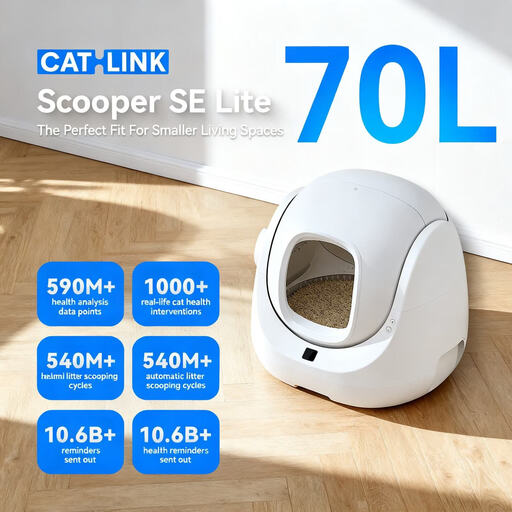
Why This Fits Their Persona: A practical starting point for owners wanting automated cleaning, app monitoring and a spacious design without prioritising camera features.
Its specifications state four cleaning modes, an 8-fold safety system and a 70L litter box capacity, helping you compare practical functions rather than vague automation claims.
70L internal capacity; 2.4GHz app connection; automatic, scheduled, manual and emptying modes.
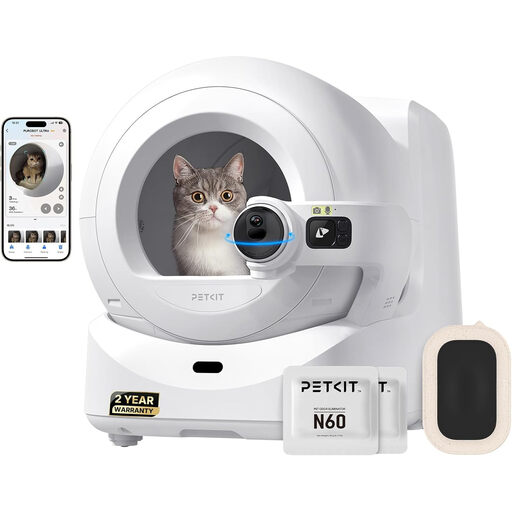
Why This Fits Their Persona: Suits owners who value visual monitoring, a sealed waste system and detailed usage records for individual cats.
The listing specifies a 10-litre sealed waste bin, 360-degree waste-bin sealing and a camera lens that can be cleaned separately.
180-degree rotating camera; 10-litre waste bin; 2.4GHz and 5GHz Wi-Fi support.

Why This Fits Their Persona: Designed for multi-cat homes needing extra internal space, odour containment and individual usage records.
Its description identifies infrared, gravity and motor-stall protection, alongside a sealed lid, door and waste drawer for odour management.
70L capacity; 7L waste drawer; removable step ramp and app-based cat usage and weight records.
We have compiled a complete, real-time list of products that fully satisfy these strict selection criteria and UK safety regulations.
Place the new unit beside the existing tray and use a small amount of familiar litter. Keep the automatic cycle off initially, allowing your cat to investigate at its own pace. Once the cat is using it confidently, activate automatic cleaning and supervise the first cycles.
Lifespan depends on cleaning frequency, litter type, sensor care, motor use and replacement-part availability. Empty the waste drawer regularly, wipe accessible surfaces, clean sensors and unplug the machine before thorough maintenance. A model with readily removable components may be easier to keep in service.
Running costs typically include electricity, clumping litter, waste bags, deodoriser or carbon filters and occasional replacement parts. Multi-cat households may empty the drawer more often than product estimates suggest. Check the required consumables and Wi-Fi needs before purchase, then compare the likely monthly cost with your current litter routine.