
24/7 Customer Support

Free returns

Same-day & Next-day Delivery

Quality Guaranteed

Unlock Your Welcome Offers: FREE Delivery | Up to 80% OFF | Free 30-day JoyPlus trial
Download the APP
An automatic self-cleaning cat litter box can reduce daily scooping, improve waste management and help busy UK households keep track of litter-box use. However, convenience comes with practical considerations: power, Wi-Fi, compatible litter, cleaning routines and ongoing consumable costs.
Whether you need a smart cat litter box for a technology-focused home, a multi-cat litter box for several pets or a low-entry cat litter box for an older cat, the right choice depends on more than the number of app features listed on the box.
A sealed drawer may hold waste for several days, but the interval depends on the number of cats, their size, litter type and how frequently they use the tray. Some product descriptions quote periods of up to 7–14 days or longer under specific conditions. These figures should not be treated as a guarantee for every household.
You will still need to:
Many automatic units require clumping litter so that the mechanism can separate used material from clean litter. Other designs use a dedicated crystal litter and disposable tray system. Using the wrong material may reduce cleaning performance or cause a blockage.
Always check compatibility before ordering. For example, the PETKIT PUROBOT CRYSTAL DUO is specified for PETKIT Crystal Cat Litter only, while the other referenced models use clumping litter such as suitable bentonite or tofu-based options.
An AI camera cat litter box or app may record toilet frequency, visit duration, weight trends and, in some cases, individual cat usage. These records can help you notice changes, but they do not establish a medical condition.
Look for clear information about what the system measures, how alerts work and whether cats can be identified separately. If your cat shows a persistent change in toilet habits, appetite or behaviour, contact a qualified veterinary professional rather than relying on an app notification.
Measure the available floor space and the entrance before buying. An extra-large opening may suit bigger cats, while a low-entry cat litter box or removable ramp may be more practical for senior cats or cats with limited mobility.
Check the stated pet restrictions carefully. The CATLINK Pro-X Luxury is listed for cats weighing 1.5–10 kg and is not suitable for kittens under six months or below 1.5 kg. The Catlink SE Baymax is marketed for multi-cat homes, but the product details do not replace your responsibility to confirm that each cat can enter comfortably and safely.
A reliable automatic cat toilet should detect when a cat enters and pause or prevent operation during use. Useful features include radar, infrared sensing, weight detection and anti-pinch or motor-stall protection.
No sensor system removes the need for sensible setup. Place the unit on a flat, stable, non-slip surface, keep cables away from chewing pets and supervise initial use. Choose a model with adjustable delay or manual controls if your cat needs time to leave the area after using it.
Most app-controlled cat litter boxes in this selection use 2.4 GHz Wi-Fi, so check your router settings before installation. An app may offer cleaning schedules, status alerts, camera viewing and usage records, but these functions depend on a stable connection and continued app support.
For odour control, assess the actual system rather than relying on phrases such as “odour-free”. Sealed waste drawers, activated carbon filters, deodorising gels and enclosed waste doors can help contain smells, but regular emptying remains important. If odour control is your main priority, browse the wider odourless cat litter box range.
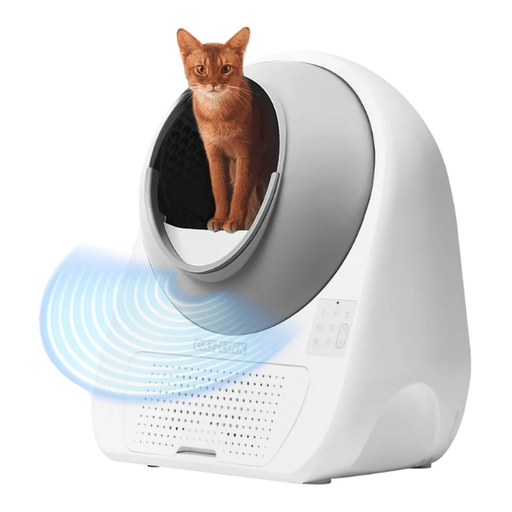
Why This Fits Their Persona: A practical option for owners moving from a conventional tray to app-controlled cleaning, with manual, automatic, timer and empty modes.
Its specifications state the compatible cat weight range and 2.4 GHz Wi-Fi requirement, making key limitations easier to check before purchase.
13-litre waste bin, built-in ramp and app records covering weight, usage time, temperature and humidity.
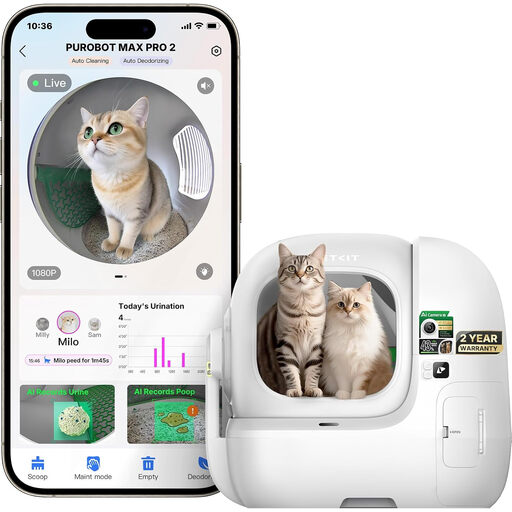
Why This Fits Their Persona: Suits owners who want camera access, app controls and a spacious open entrance in one connected system.
The product information lists infrared sensing, anti-pinch protection, a sealed waste bin and regular sensor cleaning requirements.
HD camera monitoring, app-based cleaning controls, health reports and an open 210-degree entrance design.
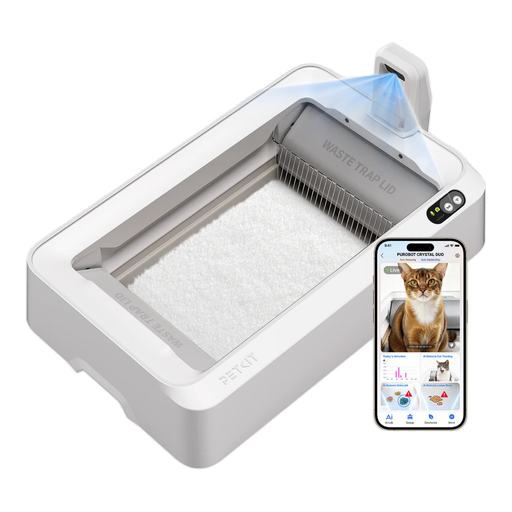
Why This Fits Their Persona: Designed for a single-cat household that is comfortable buying compatible disposable crystal trays and prioritising reduced scooping.
Its dedicated tray system makes litter compatibility clear; the trays are single-use and must not be washed or reused.
AI camera monitoring, four safety sensors and a stated maintenance cycle of up to 30 days without scooping for one cat.

Why This Fits Their Persona: Its 70-litre body, app records and removable ramp are suited to households managing several cats or easier access requirements.
The product lists a six-point sensor system, soft-stool cleaning mode and a 7-litre waste drawer, giving a clearer maintenance picture.
Individual-cat recognition is listed alongside usage and weight tracking; the removable step ramp supports easier entry.
We have compiled a complete, real-time list of products that fully satisfy these strict selection criteria and UK safety regulations.
Before placing an order, confirm:
A quiet automatic litter box may reduce household disturbance, but motor noise can vary by cycle and placement. Keep the unit away from sleeping areas initially and allow your cat time to adjust.
Not always. Some models have minimum weight or age restrictions. For example, the CATLINK Pro-X Luxury is listed for adult cats weighing at least 1.5 kg and is not suitable for kittens under six months. Check the individual product instructions before use.
Running costs include electricity, clumping litter or crystal litter, waste bags, filters, deodorising products and replacement trays where required. A disposable-tray system may reduce washing but create a recurring tray cost, while a clumping-litter model may need more regular cleaning. Compare consumables as well as the purchase price.