
24/7 Customer Support

Free returns

Same-day & Next-day Delivery

Quality Guaranteed

Unlock Your Welcome Offers: FREE Delivery | Up to 80% OFF | Free 30-day JoyPlus trial
Download the APP
An automatic self-cleaning cat litter box can reduce daily scooping, but choosing the wrong design may create new problems: poor odour control, difficult cleaning or a tray that your cat refuses to use. This guide focuses on the practical details that matter in UK homes, including space, cat size, safety, litter compatibility and ongoing costs.
Manufacturers may highlight the total globe or interior volume, but the entrance, floor height and internal shape determine whether a cat can turn around comfortably. A large cat, Ragdoll or Maine Coon may need more than a compact opening. Senior cats may also struggle with a high step.
Check the entry dimensions, internal floor area and access height rather than relying only on a headline capacity such as 70 or 76 litres.
An odour-control cat litter box can reduce smells through sealed waste drawers, activated carbon, deodorising gels or filters. However, performance still depends on the litter used, how often the drawer is emptied and whether the interior is cleaned.
A sealed bin may hold waste for several days, but multi-cat households will usually need more frequent emptying. Treat storage claims as estimates, not a promise.
An app-controlled cat litter box may offer cleaning schedules, usage records, alerts and health monitoring. Yet many models require a 2.4 GHz Wi-Fi connection, a compatible app and replacement filters, bags, deodoriser or proprietary litter.
Before buying, check whether your preferred litter is supported and calculate the cost of consumables. For example, a crystal-litter system may have a different long-term cost from a standard clumping-litter tray.
Always match the product’s stated weight range to every cat in your household. Some units are intended for adult cats over approximately 1.5 kg, while others are not suitable for kittens under six months.
A low-entry cat litter box can be more practical for senior or less mobile cats. Removable ramps may also reduce the step height and help limit litter tracking. For larger cats, look for an open entrance and sufficient turning room rather than choosing solely by waste-bin capacity.
A rotating or sifting mechanism should pause when a cat approaches or enters. Look for clearly described infrared sensors, weight or gravity sensors, motor-stall protection and anti-pinch mechanisms.
No automatic cat litter tray should be treated as entirely risk-free. Place it on a stable, level, non-slip surface, supervise initial use and follow the supplied instructions. Unplug the unit before removing obstructions or carrying out deeper cleaning.
Most automatic systems work with clumping litter, but compatibility varies. Some accept bentonite, tofu or mixed litter; others are designed only for a specific crystal-litter tray system. Non-clumping litter can prevent effective waste separation and may damage the mechanism.
For a multi-cat litter box, compare the waste drawer size with the number of cats using it. A 7-litre drawer, 8-litre compartment or 10-litre sealed bin will not provide the same service interval in a busy household. Also check whether washable components can be removed without exposing the electrical base to water.
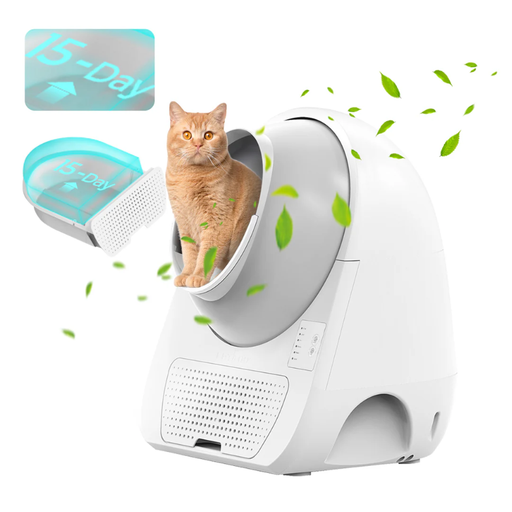
Why This Fits Their Persona: A straightforward choice for owners who want automatic cleaning without Wi-Fi or app pairing. It suits homes looking for a simpler introduction to hands-free litter maintenance.
It avoids unnecessary app features and uses infrared sensing and anti-pinch protection. The raised entrance and included mat address tracking around the tray.
57-litre interior, dual filtration system, automatic cleaning and a litter-trapping mat.
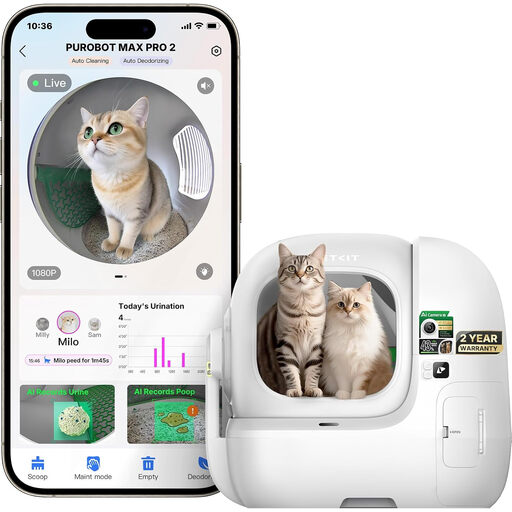
Why This Fits Their Persona: Designed for technology-focused pet parents who want camera access, app control and an open entrance alongside automatic waste handling.
The specification lists infrared sensing and anti-pinch protection rather than relying on app functions alone. Its activated carbon filter and sealed waste bin support routine odour management.
210-degree wide-angle opening, camera monitoring, app scheduling and usage, duration and weight records.
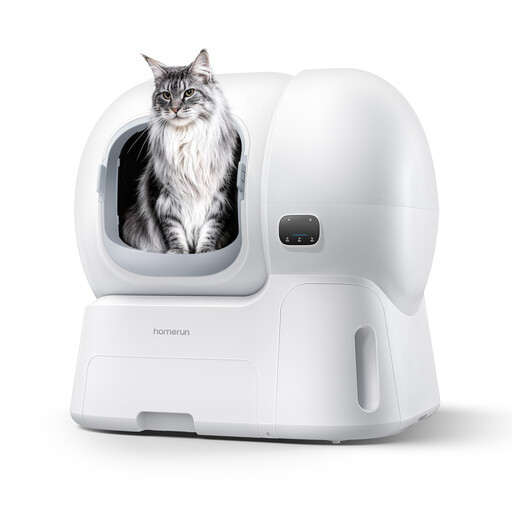
Why This Fits Their Persona: A practical match for larger cats or households with several cats that need extra interior capacity and automatic litter replenishment.
Its stated 106-litre XL format and refill system address the capacity problem, although the waste compartment still needs regular checks for blockages and filling.
Suitable for cats up to 11.3 kg, supports up to four cats and includes automatic litter refill.
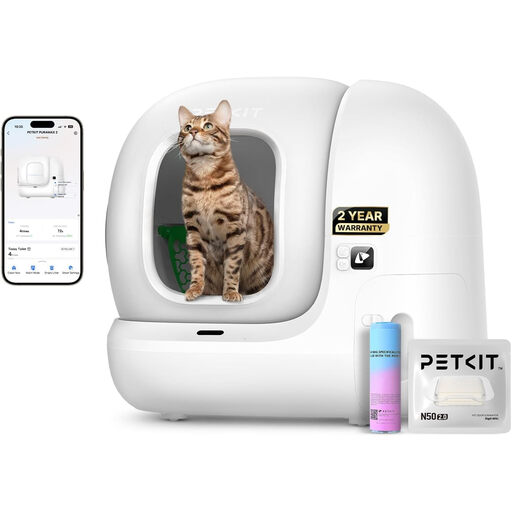
Why This Fits Their Persona: The low entrance and app-based monitoring make it suitable for owners prioritising easier access and visibility of litter-box usage.
The stated 20 cm entrance height is easier to assess than a vague “easy access” claim. Safety sensors pause operation when the cat approaches.
76-litre internal capacity, 7-litre waste bin, 2.4 GHz Wi-Fi app control and automatic, timed or manual cleaning.
We have compiled a complete, real-time list of products that fully satisfy these strict selection criteria and UK safety regulations.
Some are designed for multi-cat households and provide larger interiors, larger waste drawers or individual usage monitoring. Check the permitted cat weight, recommended number of cats and cleaning interval. A multi-cat litter box still requires regular waste removal and litter top-ups.
Running costs include electricity, clumping litter, waste bags, filters, deodoriser and possible replacement trays. Models using proprietary crystal trays may have a different recurring cost from units using standard clumping litter. Compare consumables over several months, not just the purchase price.
The interval depends on the number of cats, waste-drawer size and litter usage. Product claims such as several days or up to two weeks are estimates. For welfare and hygiene, check the drawer, litter level, app alerts and machine condition regularly rather than relying solely on the stated capacity.