
24/7 Customer Support

Free returns

Same-day & Next-day Delivery

Quality Guaranteed

Unlock Your Welcome Offers: FREE Delivery | Up to 80% OFF | Free 30-day JoyPlus trial
Download the APP
Buying automotive hand tools can look straightforward until a socket slips, a spanner does not fit a vehicle fastener or a bulky case leaves half the set unused. For UK DIY enthusiasts, home mechanics, motorcycle owners and tradespeople, the right choice depends less on impressive packaging and more on sizing, access, material and storage.
This guide explains the features worth checking before buying, common marketing traps to avoid and suitable options for different types of mechanical work.
A high piece count does not automatically mean better coverage. Some sets include many duplicate bits, adapters or imperial sizes when your vehicle mainly uses metric fasteners. Before buying, check whether the set contains the sizes you actually use.
For general UK vehicle maintenance, a useful starting point may include 8–19 mm metric spanners, while a broader metric spanner set can extend from 6 mm to 22 mm. A socket set with both metric and imperial sockets may be more suitable if you work on older imported vehicles, machinery or household equipment.
Polished chrome may be easy to wipe clean, but the shape of the tool matters more during use. A fixed spanner with a 15-degree offset can provide finger clearance around obstructions. A stubby spanner may fit where a standard-length tool cannot. For confined engine bays, a ratchet handle with a small operating angle can reduce the amount of movement needed.
Marketing descriptions often highlight surface appearance while giving less attention to access, drive size and mechanism design. These practical details can have more impact on day-to-day usability.
A standard ratchet should not automatically replace a torque wrench when a vehicle manufacturer specifies a tightening torque. Similarly, ordinary pliers are not a suitable substitute for a wire rope cutter, as they may crush cable ends or become damaged.
Always match the tool to the task, follow the vehicle or component manufacturer’s instructions and inspect tools before use.
Many automotive and mechanic tools use chrome vanadium steel, commonly abbreviated as Cr-V. It is frequently used for spanners, sockets and ratchet bodies because it can be heat-treated to provide a balance of strength and wear resistance.
The material alone does not tell you everything. Look for clear information about:
For Torx socket sets, the bit material may differ from the socket material. For example, S2 alloy steel bits paired with chrome vanadium sockets are a common combination. Check the stated sizes carefully, as Torx ranges can vary significantly between sets.
A combination wrench set normally combines an open end with a ring end on each spanner. For UK cars, vans, motorcycles and bicycles, metric sizes are often the most practical starting point, but always check your specific vehicle.
Consider whether you need:
A ratchet handle’s tooth count affects its working swing arc. A 90-tooth ratchet handle with a stated 4-degree operating angle can be useful in restricted spaces because it needs less movement before the next engagement. A 72-tooth flex-head ratchet spanner may provide a different balance between access and leverage.
For controlled tightening, check the range and drive sizes of a torque wrench set. The MoveCrab set listed here covers 5–220 N·m across three wrenches, with 1/4-inch, 3/8-inch and 1/2-inch extension rods. Treat the stated accuracy and calibration information as product specifications and follow the supplied instructions for setting, releasing and storing the wrench.
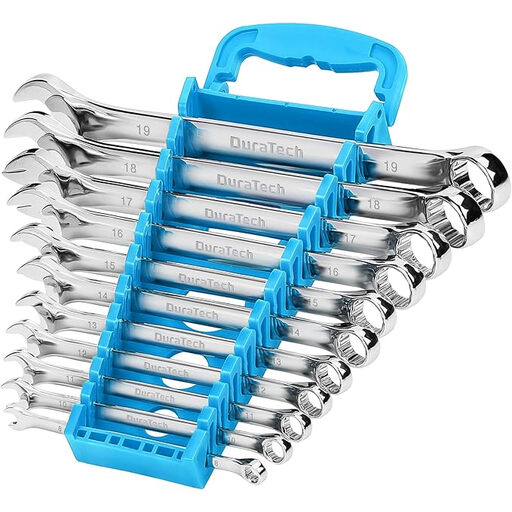
Why This Fits Their Persona: A practical metric spread for home garages, routine car servicing and beginner DIY work, with a storage pouch for keeping the set together.
It lists 12 specific metric sizes from 6 mm to 22 mm, rather than relying on a high but unclear piece count. The 15-degree offset is also stated clearly.
Chrome vanadium steel, DIN 3113 compliance stated by the product listing, 12-point ring ends and labelled pouch.
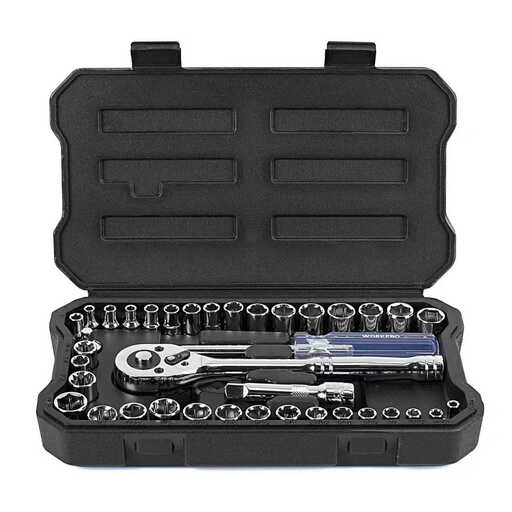
Why This Fits Their Persona: Suitable for buyers wanting one organised kit for automotive repairs, household maintenance and mixed metric and imperial tasks.
The listing specifies the 1/4-inch and 3/8-inch drives, metric and imperial sockets, included accessories and case dimensions.
Heat-treated Cr-V construction, quick-release ratchet, extension bar and compact plastic storage case.
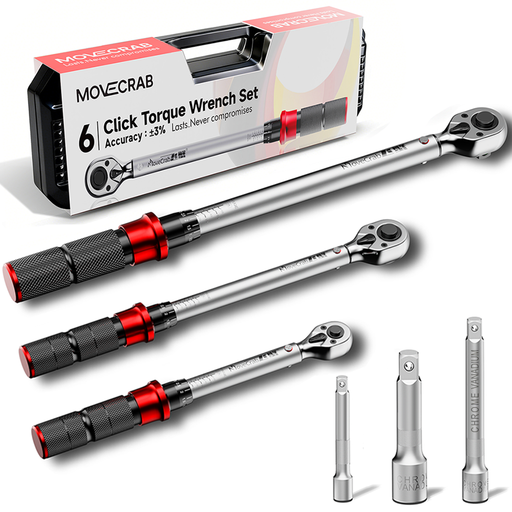
Why This Fits Their Persona: Designed for users working across bicycles, motorcycles, cars and industrial maintenance tasks where different torque ranges are required.
It separates lower and higher torque work across three wrench ranges, rather than presenting one broad scale as suitable for every fastener.
Stated 5–220 N·m coverage, three drive extension rods and numbered calibration certificates listed with the product.
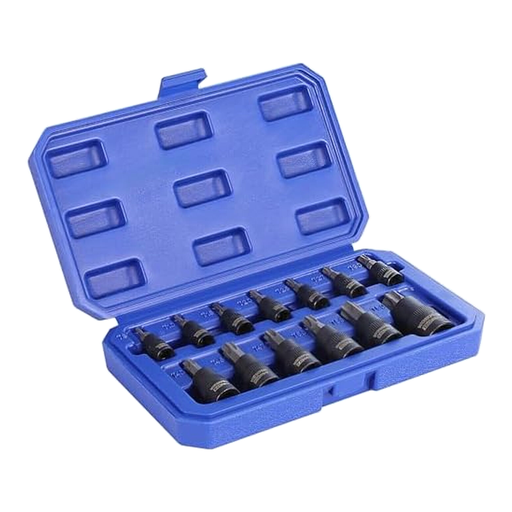
Why This Fits Their Persona: A focused addition for star-shaped fasteners found in vehicles, bikes, lawn equipment and household assemblies.
The set clearly identifies sizes from T8 to T60 and assigns them to 1/4-inch, 3/8-inch and 1/2-inch drives.
S2 steel bits, Cr-V sockets, stamped size markings and a reinforced storage box.
We have compiled a complete, real-time list of products that fully satisfy these strict selection criteria and UK safety regulations.
Good maintenance can help preserve your automotive hand tools and reduce replacement costs.
Many modern vehicles use metric fasteners, so a metric spanner set and metric socket set are sensible starting points. However, imperial sizes may still be useful for older vehicles, imported models, machinery and household repairs. A mixed set can offer broader coverage if you regularly work across different equipment.
A 1/4-inch ratchet handle suits smaller fasteners and confined spaces. A 3/8-inch model is a versatile option for general vehicle maintenance, while a 1/2-inch drive is normally selected for larger fasteners requiring more leverage. Check that the drive size matches your sockets and the torque demands of the job.
Follow the supplied instructions, avoid dropping it and keep it clean and dry. Many mechanical torque wrenches should be returned to their lowest marked setting after use, but not below that point. Periodic calibration may be appropriate for tools used frequently or where accurate tightening is important.