
24/7 Customer Support

Free returns

Same-day & Next-day Delivery

Quality Guaranteed

Unlock Your Welcome Offers: FREE Delivery | Up to 80% OFF | Free 30-day JoyPlus trial
Download the APP
Buying automotive, power tool and outdoor equipment often looks straightforward until hidden compatibility issues, incomplete bundles or exaggerated performance claims turn a sensible purchase into an expensive inconvenience. Whether you need a dash cam for a daily commute, a cordless circular saw for renovation work or garden equipment for autumn clean-up, the specification sheet deserves closer attention than the headline feature.
Three common shopping traps appear across this category:
Start by confirming whether the product is a complete kit or a tool-only purchase. The Greenworks 24V circular saw, for example, is supplied with a 165 mm carbide-tipped blade and guide, but battery and charger are not included. It is intended for use with a compatible Greenworks 24V battery.
The cordless leaf blower and vacuum uses two 24V 4Ah batteries, operating as a 48V system. The listed package includes both batteries and a dual-slot charger, which makes it a different proposition from a bare tool.
For automotive equipment, check voltage and installation. A 7-inch reversing camera kit can accept 12V or 24V, making it suitable for many vans, trucks, buses, caravans and RVs. Its two camera inputs and 10-metre aviation connector cable may help with larger vehicle layouts, but cable routing and mounting space still need to be measured before ordering.
Technical figures are useful when interpreted alongside the intended task:
Look for practical protection rather than relying on broad marketing language. A dash cam with a G-Sensor can lock impact-related footage, while loop recording manages unlocked clips when the memory card is full. However, important recordings should still be copied to another device rather than left permanently on the card.
For power tools, remove the battery before blade changes or cleaning, secure the workpiece and use suitable eye, hearing and respiratory protection. For jump leads, verify engine suitability: the supplied 3 m x 16 mm jump leads are specified for petrol engines up to 2 litres and include insulated connectors plus a storage bag.
For batteries used in an RV, boat or solar installation, check the charger profile, terminal arrangement, enclosure ventilation and low-temperature charging requirements. The built-in BMS on the listed LiFePO4 model provides protection features including overcharge, over-discharge, overcurrent and short-circuit protection, but it does not replace correct system design.
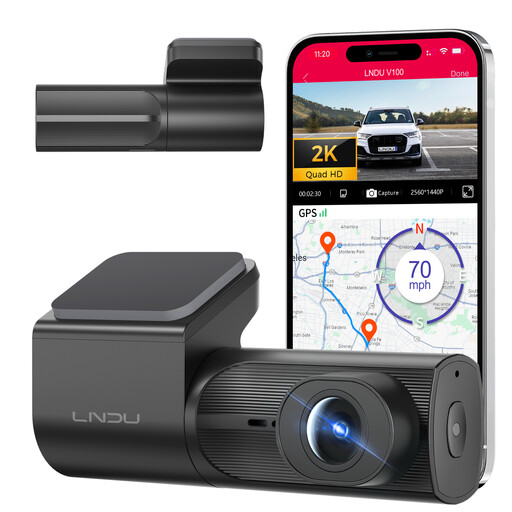
Why This Fits Their Persona: A compact front-facing option for UK motorists wanting app access and recording functions without a built-in screen.
The listing clearly states that the 24-hour parking function requires a separately purchased hardwire kit, avoiding an incomplete-installation surprise.
2K recording, WiFi app control, F1.8 lens, G-Sensor emergency locking and loop recording.
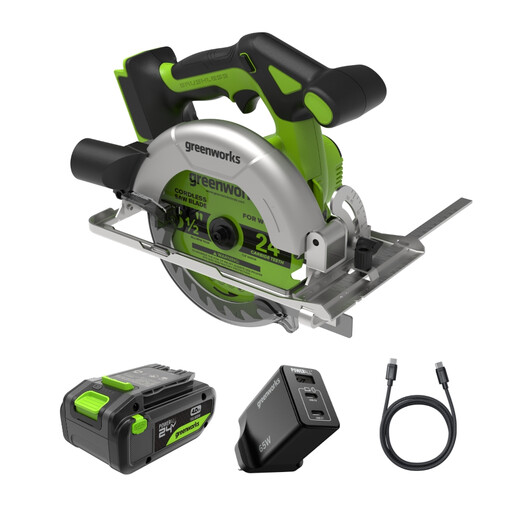
Why This Fits Their Persona: Suitable for DIY renovators and woodworkers who value adjustable cutting geometry and a cordless workspace.
The tool-only status is stated clearly, so buyers can budget for a compatible battery and charger rather than discovering the omission after delivery.
Brushless motor, 5,000 RPM no-load speed, LED light, dust port and 57 mm cutting depth at 90°.
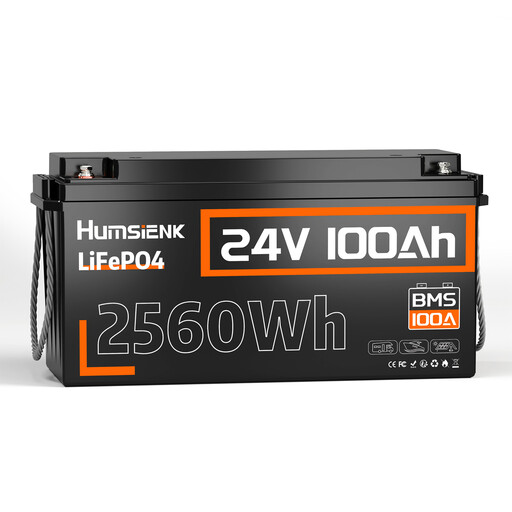
Why This Fits Their Persona: Designed for RV, marine, solar and off-grid users who need substantial stored capacity in a 24V system.
Its 100A Smart BMS and stated protection functions provide specification details to check against the planned charger and inverter.
24V 100Ah capacity, 100A BMS, approximately 19.4 kg listed weight and low stated self-discharge.

Why This Fits Their Persona: A practical match for larger gardens, driveways and repeated seasonal clearing where cordless mobility is useful.
The two-battery requirement is explicit, and the package lists both 24V batteries, charger, shoulder strap and 45L collection bag.
322 km/h air speed, 9 m³/min airflow, six speed settings and dry-leaf mulching to one-tenth of original size.
A set of jump leads with storage bag is worth keeping in the boot, provided the cable rating matches the vehicle. Colour-coded, insulated connectors can make connection easier, but always follow the supplied sequence and inspect cables for damage.
For larger vehicles, the dual-camera waterproof rear-view camera system offers an IP67 camera housing, 18 IR LEDs, a 7-inch 800 × 480 monitor and 12V–24V operation. It can operate as a reversing monitor or a full-time rear-view display, depending on wiring.
RC hobbyists may prefer a 4WD RC drift car with adjustable gyro control, two speed modes, interchangeable drift and racing tyres, suspension and remote-controlled LED lights. Before use, check the battery charging instructions and operate in an open area away from roads and public spaces.
We have compiled a complete, real-time list of products that fully satisfy these strict selection criteria and UK safety regulations.
A front camera normally connects to the vehicle’s 12V power socket using the supplied car charger. WiFi setup is completed through the relevant app. For a 24-hour parking mode car camera, a compatible hardwire kit is generally required, and installation should be completed with the vehicle switched off and the wiring secured away from pedals or airbags.
Runtime depends on appliance wattage, inverter efficiency, battery temperature and the usable discharge limit. As a simple guide, divide available watt-hours by the appliance’s wattage, then allow for conversion losses. A 24V 100Ah battery has approximately 2,400 nominal watt-hours, but the practical figure will be lower.
Cordless equipment avoids petrol storage, fuel mixing and engine servicing, but electricity and replacement battery costs still apply. Running cost depends on charging frequency, tariff and battery condition. For occasional domestic use, compare the complete kit price, included batteries, charger type, noise specification and expected workload rather than focusing only on the purchase price.