
24/7 Customer Support

Free returns

Same-day & Next-day Delivery

Quality Guaranteed

Unlock Your Welcome Offers: FREE Delivery | Up to 80% OFF | Free 30-day JoyPlus trial
Download the APP
Choosing automotive repair tools is not simply a matter of adding the largest set to your basket. The right equipment depends on torque range, access space, measurement accuracy, storage and the type of vehicle or machinery you maintain. A tool that suits a car enthusiast may be unsuitable for bicycle components, brake lines or delicate engineering work.
A box containing dozens of pieces may still lack the sizes or drive types you use most often. Before buying, check whether the set includes the required metric sizes, drive adaptors and specialist profiles. For example, Torx fasteners are common in vehicles and machinery, while flare nut spanners are designed for line fittings that ordinary open-ended spanners may not grip securely.
A standard ratchet can become awkward around engine bays, suspension assemblies and motorcycle frames. Marketing descriptions may focus on tooth count or handle length but overlook the tool’s head profile and movement range. A swivel head ratchet, slim electric ratchet wrench or suitable extension can make a meaningful difference in confined spaces.
Torque tools are not one-size-fits-all. A bicycle stem bolt, motorcycle fastener and wheel-related automotive application can require very different settings. A wrench designed for 2–20 Nm is useful for low-torque assemblies but cannot replace a 17–340 Nm automotive torque wrench. Always compare the tool’s range with the manufacturer’s specified torque for the component.
For fastening work, the stated torque range should cover your intended applications without operating constantly at the extreme ends. Digital models may display Nm, ft-lb, in-lb or kgf·cm, which is useful when working from manuals using different units.
A digital torque wrench with visual, audible and vibration alerts can be easier to monitor in a noisy workshop or poorly lit garage. However, it still needs correct setup and careful handling. Do not exceed the stated capacity, use a torque wrench as a breaker bar or leave a mechanical model under tension when stored.
For bicycle maintenance, a bicycle torque wrench generally needs a lower range and small drive size. Check whether the supplied bits cover hex, Phillips and Torx fasteners used on your handlebars, seat post, brakes and drivetrain components.
Common drive sizes include 1/4", 3/8" and 1/2". A 1/4" drive is suited to smaller fasteners and low-torque work; 3/8" is a versatile choice for many vehicle and motorcycle jobs; 1/2" is more appropriate for higher-torque automotive applications.
For restricted access, look for a 72-tooth ratchet, a small working arc and a release mechanism that holds sockets securely. An electric ratchet can speed up repetitive removal and installation, but it should not automatically be used for final torque tightening unless the tool and procedure specifically allow it.
Look for clearly marked sockets, corrosion-resistant finishes and a handle that provides a controlled grip. S2 alloy steel bits and chrome vanadium sockets are frequently used in tool sets, but material wording alone does not guarantee suitability for every high-load task.
A case or pouch helps prevent missing sizes and protects precision tools from moisture. UK garages can be damp, so wipe tools dry after use and store torque equipment away from direct heat, excessive humidity and contaminants. For electrical tools, check battery type, charging equipment, LED lighting and safe handling instructions.
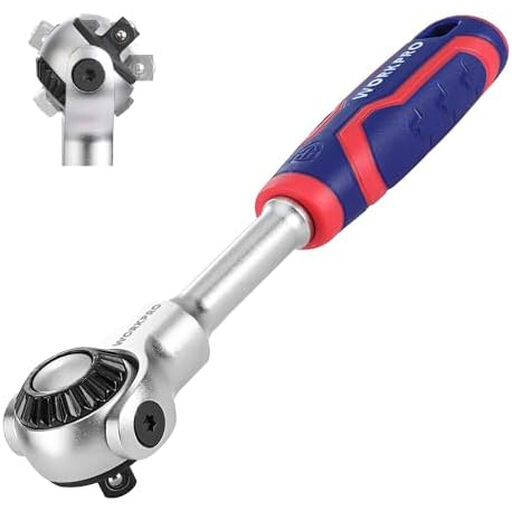
Why This Fits Their Persona: A compact manual ratchet suits DIY users building a practical tool kit for household, bicycle and light automotive repairs in a UK garage or shed.
Its 270° flexible head addresses restricted access, while the 1/4-inch drive makes the intended lighter-duty use clear.
72-tooth mechanism, 5° working arc, quick-release function and 140 g listed weight.
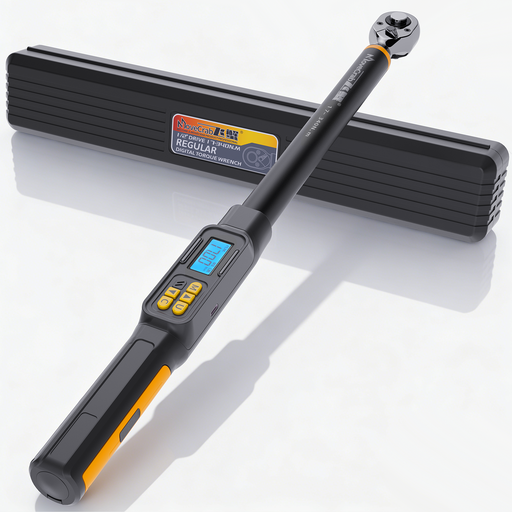
Why This Fits Their Persona: Suitable for users who want visible torque readings and repeatable settings across automotive, motorcycle and selected bicycle tasks.
The 17–340 Nm range makes its application clearer than an unspecified general-purpose tool, while triple alerts reduce reliance on seeing a screen alone.
Listed ±2% accuracy, 10 preset values, two-way ratchet head and track and peak modes.
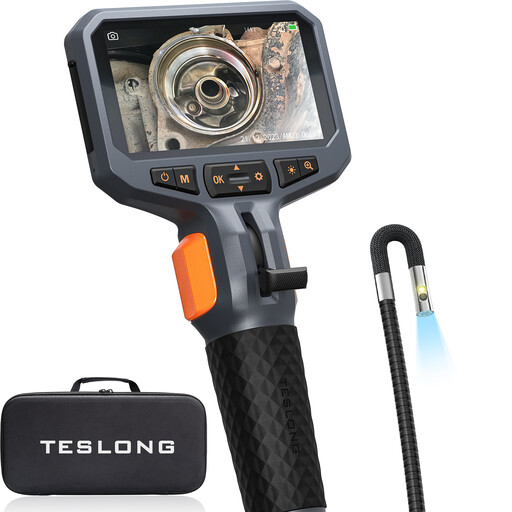
Why This Fits Their Persona: Useful for mechanics, maintenance teams and serious DIY users who need to inspect engine spaces, wall cavities or brake areas without extensive dismantling.
The 8.5 mm probe diameter and articulated tip provide defined access information rather than a vague claim of fitting everywhere.
4.5-inch IPS display, 1.55 m semi-rigid probe, photo and video recording and up to 210° tip movement.
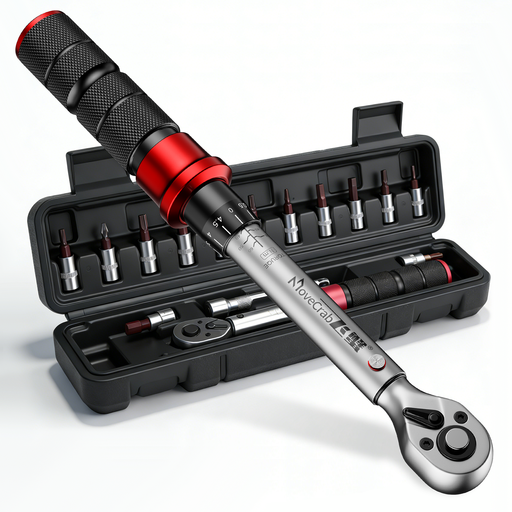
Why This Fits Their Persona: Designed around lower-torque bicycle work, it also suits owners carrying out careful motorcycle or workshop adjustments where compatible bits are required.
Its 2–20 Nm range prevents buyers from mistaking a low-torque bicycle tool for a high-load automotive wrench.
0.2 Nm micro-adjustment, bidirectional operation and included hex, Phillips and Torx bits.
For vehicle and motorcycle repair tools, a Torx socket set can cover internal, external and tamper-resistant profiles. The WORKPRO 60-piece set includes E4–E24 external sockets, T6–T70 Torx bits, tamper-proof versions and Torx Plus sizes in 1/4", 3/8" and 1/2" drives.
Brake-line work calls for a flare nut spanner set. The DURATECH three-piece set covers 10–17 mm combinations and uses offset ends for access around line connections. Select the correct size carefully and avoid forcing a damaged fitting.
For repetitive fastener removal, an electric ratchet wrench can save hand movement. The DURATECH 12 V model lists a 60 Nm torque figure, 180 RPM, two batteries, LED lighting and supplied sockets. A smaller 45 Nm EAFC model may suit narrower spaces and lighter work. Neither should replace a calibrated final-torque procedure where one is required.
A combination square is also useful beyond vehicle work. The WORKPRO 300 mm combination square has metric and imperial scales, a bubble level, scriber and 90° and 45° measurement functions for engineering, carpentry and construction tasks.
We have compiled a complete, real-time list of products that fully satisfy these strict selection criteria and UK safety regulations.
Start with metric sockets, a reversible ratchet, extensions, screwdrivers, pliers and a suitable torque wrench. Add specialist tools such as a Torx socket set, inspection camera or flare nut spanner only when your vehicle or project requires them.
Follow the manufacturer’s guidance and keep records if the tool is used professionally. Avoid drops, overloads and unsuitable storage. If readings seem inconsistent or the tool has been heavily used, arrange an appropriate calibration check before relying on it for critical fastening.
No. They are useful for speeding up removal and installation, particularly in confined areas, but maximum torque, socket size, battery condition and access should all be considered. Stubborn or corroded fasteners may require a manual breaker bar, while final tightening should follow the vehicle or component instructions.