
24/7 Customer Support

Free returns

Same-day & Next-day Delivery

Quality Guaranteed

Unlock Your Welcome Offers: FREE Delivery | Up to 80% OFF | Free 30-day JoyPlus trial
Download the APP
A suitable set of automotive tool sets can make routine maintenance more manageable, whether you are changing a battery, replacing a wheel, servicing a motorcycle or carrying out repairs in a home garage. However, a large box and a high piece count do not automatically mean better value.
The wrong car repair tool kit may contain duplicate bits, incompatible socket sizes or ratchets that cannot handle the job. Before buying, focus on the tools you are likely to use, the drive sizes provided and how safely the set can be stored.
A 450-piece mechanics tool set may sound comprehensive, but the total can include small screwdriver bits, adapters and repeated sizes. Check the actual socket range, drive sizes and included accessories rather than relying on the headline number.
For many UK cars, a useful starter selection should include metric sockets, while imperial sockets can be helpful for older vehicles, imported cars, motorcycles and general workshop tasks. A kit containing both measurement systems may reduce the need for additional purchases.
A 1/4-inch drive is useful for smaller fasteners and restricted spaces. A 3/8-inch drive offers a practical middle ground for many vehicle maintenance tasks, while a 1/2-inch drive is more suitable for larger fasteners and higher-torque applications.
A common mistake is buying a socket set with the right sizes but without suitable extension bars, universal joints or adapters. These accessories can make a considerable difference when working around engine bays, suspension components and recessed bolts.
Chrome-vanadium steel, polished finishes and heat treatment are useful product features, but they do not automatically make a socket safe for powered impact tools. Unless the product information specifically states impact compatibility, use it with a manual ratchet or the intended handle.
For wheel nuts and seized fasteners, use the correct tool and follow the vehicle manufacturer’s instructions. Avoid using damaged sockets, improvised extensions or excessive force, as these can cause slipping or tool failure.
For most modern UK vehicles, metric and imperial sockets should be selected according to the fasteners on the vehicle. Confirm the exact sizes included rather than assuming that a mixed set covers every requirement.
If you regularly work on different vehicles, a larger set with 1/4-inch, 3/8-inch and 1/2-inch drives can offer more flexibility. For occasional household or car maintenance, a compact 1/4-inch and 3/8-inch set may be easier to carry and organise.
A ratchet wrench set with a quick-release button allows sockets to be changed without pulling hard on the connection. Fine-tooth ratchets can be useful in confined spaces because they require a smaller swing arc, although the correct operating force still matters.
Look for clearly marked sockets and a case with individual positions. This reduces the chance of losing a frequently used size and helps you identify whether a piece is missing after a repair.
A torque wrench set is designed to help apply a specified tightening force. This is particularly relevant for wheel nuts and components where the vehicle manufacturer provides a torque setting. Set the wrench according to the vehicle handbook and use a compatible socket.
Torque specifications are not universal. They vary by vehicle, wheel type and component, so do not rely on a generic setting. A torque wrench should also be stored and maintained according to its instructions.
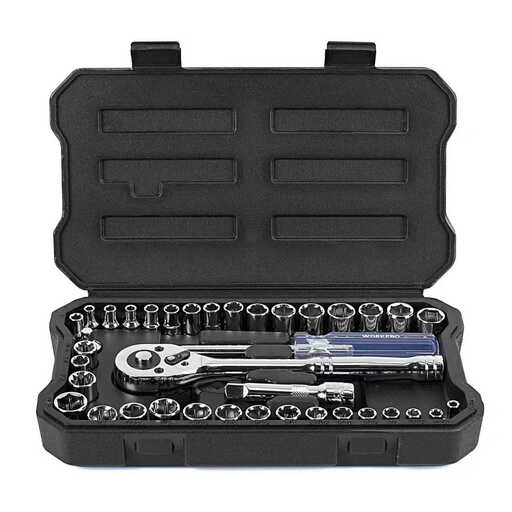
Why This Fits Their Persona: A compact option for motorists handling basic servicing, household fixes and occasional car repairs without carrying a large workshop case.
It states the two drive sizes and includes both metric and imperial sockets, making the contents easier to assess than a set promoted mainly by piece count.
Cr-V steel construction, quick-release ratchet, extension bar and compact storage case.
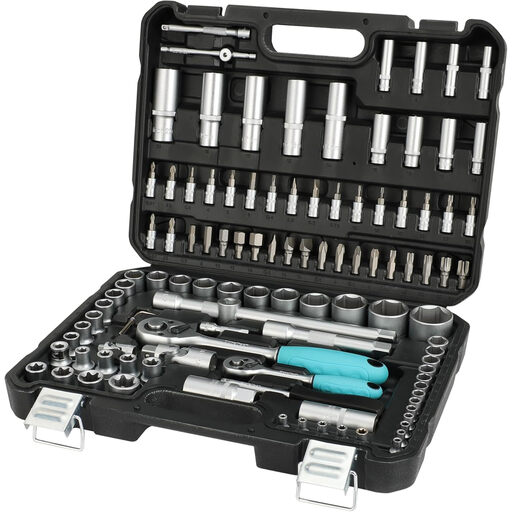
Why This Fits Their Persona: Suitable for a home garage or regular DIY work where a wider accessory selection and organised storage are priorities.
The listing identifies 1/4-inch and 1/2-inch drives, universal joints, extension bars and marked sockets, rather than leaving compatibility unclear.
Heat-treated Cr-V sockets, S2 bits, 72-tooth ratchets and a blow-moulded case.
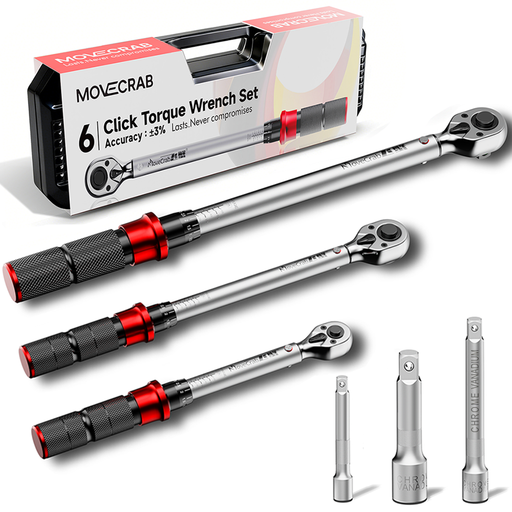
Why This Fits Their Persona: A practical match for users who regularly work on bicycles, motorcycles, cars or machinery and need controlled fastening across different ranges.
It provides three torque ranges from 5–220 N·m and includes 1/4-inch, 3/8-inch and 1/2-inch extension rods, helping buyers match the tool to the task.
Three wrenches, extension rods and a listed ±3% deviation specification with calibration certificates.
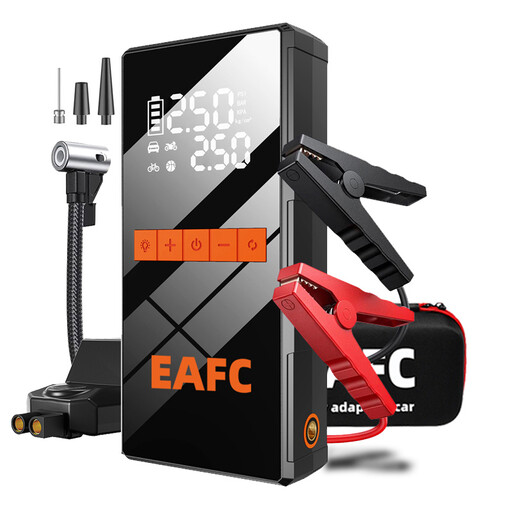
Why This Fits Their Persona: Useful for motorists preparing for long journeys, winter conditions or remote driving where access to assistance may take time.
The stated compatibility is limited to 12V vehicles up to 4.0L petrol or 2.0L diesel, so buyers can check engine suitability instead of assuming universal use.
1200A peak current, 150 PSI compressor, USB power bank and LED torch in one portable unit.
We have compiled a complete, real-time list of products that fully satisfy these strict selection criteria and UK safety regulations.
A broad mechanics tool set may not cover every specialist job. Depending on your vehicle, consider adding:
Always support a raised vehicle with suitable axle stands; never rely on a jack alone. Keep tools clean and dry, inspect ratchets and sockets for damage, and follow the vehicle handbook for tightening values and service procedures.
Some larger sets provide a broad range of sockets and accessories for workshop tasks, but suitability depends on the job, frequency of use and manufacturer specifications. Check whether individual tools are intended for manual or impact use, and consider specialist tools where required.
Wipe tools after use, remove moisture and return each item to its marked position. Store the case in a dry location and occasionally apply suitable light lubrication to moving ratchet components. Do not use corroded or visibly damaged tools.
A compact jump starter, torch, tyre inflator, reflective equipment and basic socket or ratchet tools can be useful additions. Check the jump starter’s voltage and engine-size compatibility, charge it before first use and recharge it at the interval stated in the product instructions.