
24/7 Customer Support

Free returns

Same-day & Next-day Delivery

Quality Guaranteed

Unlock Your Welcome Offers: FREE Delivery | Up to 80% OFF | Free 30-day JoyPlus trial
Download the APP
Buying automotive tools can save money on routine maintenance, but the wrong kit can create frustration, damaged fasteners or unnecessary repeat purchases. Whether you maintain a family car at home, prepare a motorcycle for the road or equip a small garage, focus on compatibility and practical specifications rather than impressive piece counts alone.
A 450-piece mechanic tool set may sound comprehensive, but the headline number can include duplicate bit sizes, small accessories and pieces that do not suit your vehicles. Before buying, check the drive sizes, socket range and whether the set includes metric measurements. Metric sockets and spanners are generally the most relevant starting point for UK vehicles, although some imported vehicles and equipment may use imperial fasteners.
A cordless electric wrench rated at 200N.m is not automatically suitable for every wheel nut or seized suspension bolt. Torque requirements vary by vehicle and fastener. A power wrench can help remove or run down a bolt, but final tightening should follow the vehicle manufacturer’s specified torque using an appropriate torque wrench where required. Never assume that a high figure replaces correct procedure.
A tool that cannot reach a recessed bolt is of limited use. Large ratchet heads may struggle in tight engine bays, while a long handle may be difficult to position around pipework. Storage is also important: loose tools are easy to lose in a boot or garage. A case, pouch or toolbox protects equipment from damp, dirt and accidental damage while making size selection quicker.
Common automotive drive sizes include 1/4-inch, 3/8-inch and 1/2-inch. A 1/4-inch drive suits smaller fasteners and confined spaces. A 3/8-inch ratchet wrench is a useful middle option for general car and motorcycle work. A 1/2-inch drive is more appropriate for larger fasteners and higher-load applications.
Check that sockets lock securely onto the ratchet or impact tool. Hand sockets and impact sockets are not interchangeable in every situation. If using a cordless electric wrench, select impact-rated sockets of the correct size and confirm the tool’s drive specification.
For regular car repair tools, chrome vanadium steel is widely used for hand tools because it combines hardness with resistance to wear. Heat treatment, drop forging and a polished or plated finish are useful details, but they do not remove the need for sensible use and dry storage.
A chrome finish can make grease easier to wipe away. It is still sensible to clean tools after use, particularly after contact with road salt, brake dust or engine oil.
Match the tool to the job:
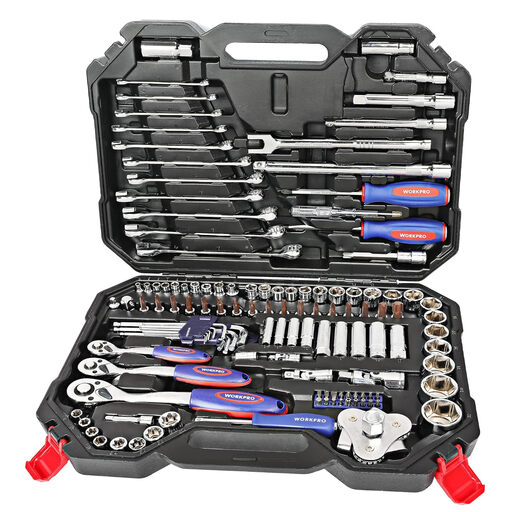
Why This Fits Their Persona: A practical starting point for UK car owners who want one organised kit for basic vehicle maintenance, household repairs and roadside tasks.
The contents are specified rather than relying only on a large headline count, with 1/4-inch, 3/8-inch and 1/2-inch drive tools, sockets, spanners and hex keys in a storage case.
Triple chrome-plated finish; locking blow-moulded case; includes a ratchet wrench, screwdrivers, bits and a voltage tester.
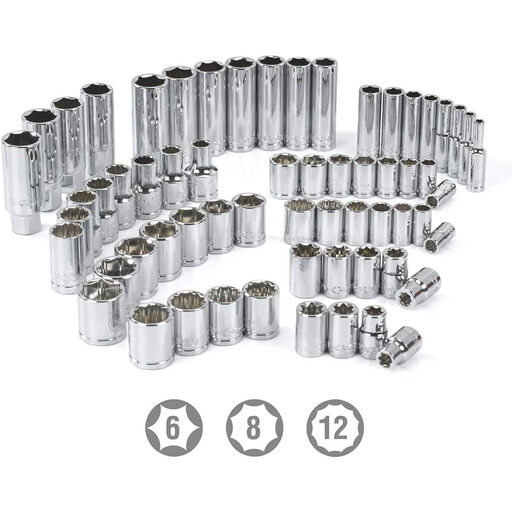
Why This Fits Their Persona: Suits a home mechanic, tradesperson or garage workshop building a broad collection for cars, machinery and general maintenance.
The four-tray case separates tools by type and size, reducing the risk of buying separate ratchets, spanners and bit sets without a storage system.
Includes three drive sizes; quick-release ratchet wrench; metric and imperial sockets; combination spanners and bits.
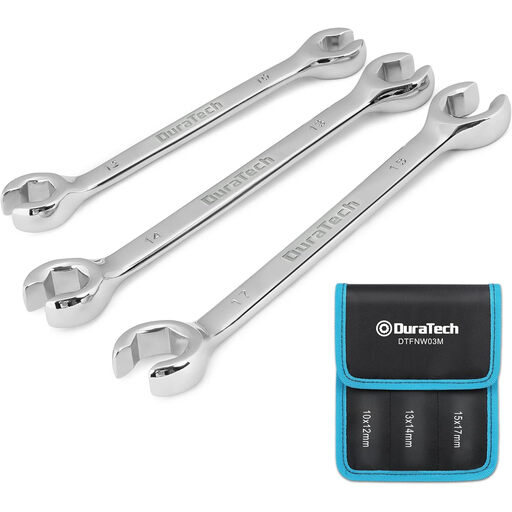
Why This Fits Their Persona: Designed for users who regularly work on brake lines, hydraulic connections or other tubing nuts where a standard open-ended spanner may provide less surrounding contact.
The flare-nut design is made for line connections, while the stated metric sizes help buyers avoid relying on an approximate fit that may damage a nut.
Includes 10x12mm, 13x14mm and 15x17mm sizes; chrome vanadium steel; supplied with a labelled storage pouch.
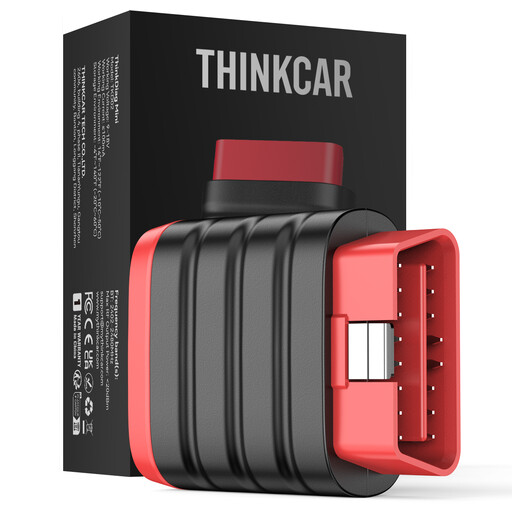
Why This Fits Their Persona: Useful for owners of compatible vehicles who want to read vehicle information through an iOS or Android phone before deciding whether further investigation is needed.
The listed functions are clear: full-system scan, diagnostic trouble code reading and clearing, live data, battery voltage testing and VIN detection. It does not claim maintenance resets or special functions.
Bluetooth 5.0; iOS and Android support; compatible with many OBDII vehicles; compact 60 × 48.5 × 22.5mm design.
We have compiled a complete, real-time list of products that fully satisfy these strict selection criteria and UK safety regulations.
For wheel work and larger fasteners, the EAFC 200N.M Cordless Electric Wrench offers a cordless format, forward and reverse control, LED lighting and a 21V rechargeable battery. Its stated application includes M10–M24 screws and wheel-lug removal, but it is not intended for bolts requiring more than 200N.m.
For narrow spaces, the EAFC 12V 45NM Electric Ratchet Wrench has a 3/8-inch drive, 45N.m maximum torque, a 3cm slim head and a stated weight of 0.78kg. It is suited to light-duty fastening in cars, motorcycles and household equipment rather than high-load loosening.
An adjustable DURATECH oil filter wrench set covers filters from 63–103mm and includes a 12-inch plier plus a three-jaw tool. For general storage, the STANLEY 19-Inch Essential Toolbox provides a 16.8-litre volume, an 8kg maximum load and a removable tote tray.
Start with a metric socket set covering 1/4-inch and 3/8-inch drives, a ratchet wrench, combination spanners, screwdrivers, pliers, a torch and suitable vehicle lifting and support equipment. Add an OBD2 car diagnostic tool if your vehicle is compatible and you want to read fault codes.
They can reduce effort and speed up repeated fastening, particularly for wheel or motorcycle maintenance. Check torque, battery format, drive size and socket compatibility. Use the tool within its stated limits and follow the vehicle manufacturer’s torque requirements for final tightening.
Keep tools dry, wipe away oil and brake dust, and return each item to a labelled case, pouch or toolbox. Avoid leaving metal tools exposed to damp garages or vehicle boots for long periods, especially during wet and salty winter conditions.