
24/7 Customer Support

Free returns

Same-day & Next-day Delivery

Quality Guaranteed

Unlock Your Welcome Offers: FREE Delivery | Up to 80% OFF | Free 30-day JoyPlus trial
Download the APP
By Joybuy Product Recommendation Officer
Whether you maintain a daily driver on a driveway, repair motorbikes in a home garage or equip a professional workshop, the right automotive tools can make routine work more controlled and efficient. The challenge is separating useful specifications from broad marketing claims.
A low-priced tool may appear attractive until its size range is too limited, its markings wear away or its handle cannot provide enough leverage. Before buying car repair tools, focus on fitment, materials, working limits and storage rather than the number of pieces alone.
A 100-piece set is not automatically more useful than a smaller, carefully selected kit. Some sets contain duplicated sizes, adapters you will rarely use or components unsuitable for your vehicle. Check the actual sizes, drive formats and included accessories before comparing prices.
Specialist vehicle service tools are often designed for specific dimensions. A wheel bearing removal tool for an 85 mm bearing, for example, should not be treated as a universal kit. Confirm the bearing diameter, vehicle generation, hub design and whether the job can be completed with the hub or strut attached.
The same applies to oil filter wrenches, spark plug sockets and locking wheel nut removers. “Universal” normally means adjustable within a stated range, not suitable for every vehicle.
A torque wrench is purchased for controlled tightening, not simply for loosening seized fasteners. A cordless impact wrench also needs correctly rated impact sockets and its maximum torque should not be confused with the torque required for a particular wheel bolt.
Read the operating instructions, check the stated range and use a manufacturer-approved torque setting for safety-critical fasteners. Do not use excessive force on threaded bearing tools or operate them with a jackhammer when the instructions specify a hand wrench.
For frequently used automotive hand tools, chrome vanadium steel is common for sockets and spanners because it offers a practical balance of strength and durability. S2 alloy steel is often used for driver bits where hardness and resistance to wear are important. Heat treatment can improve hardness, while black oxide or phosphate finishes provide a protective surface against corrosion.
A finish does not make a tool immune to rust. Wipe tools dry after use, especially if they have been exposed to water, road salt or oily residue and store them in a dry case or cabinet.
Check whether a socket set uses 1/4-inch, 3/8-inch or 1/2-inch drive. Smaller drives are convenient for confined areas and lighter fasteners; larger drives are generally suited to higher-load applications, provided the socket and ratchet are correctly rated.
For tight engine bays, angled tips, offset spanners, flexible jaws and extension bars can be more valuable than extra socket sizes. A pry bar set with several lengths can also help match leverage to the available working space, but it should never be used as a substitute for a correctly specified puller.
For jobs requiring a specified tightening value, check the torque range, measurement units and adjustment or digital controls. A wrench covering 4.2–85 Nm, for example, is aimed at lighter and medium-duty applications rather than every fastening task on a commercial vehicle.
Look for clear readings, a secure setting mechanism and a suitable storage case. Digital models may offer preset modes and peak readings, but they still require careful handling, dry storage and correct socket selection.
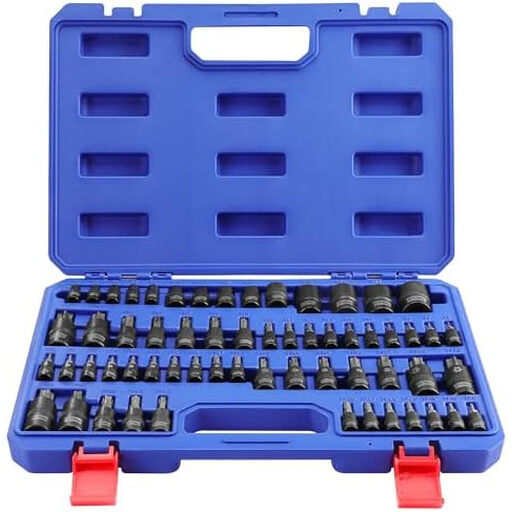
Why This Fits Their Persona: A practical starting point for UK car owners who encounter Torx fasteners during servicing, interior work, bike repairs and household maintenance.
The set lists its sizes clearly and includes Torx, tamper-proof Torx, Torx Plus and external E sockets instead of relying only on a headline piece count.
S2 alloy steel bits, Cr-V sockets, three drive sizes and a marked storage case provide broad organisation for DIY automotive tools.
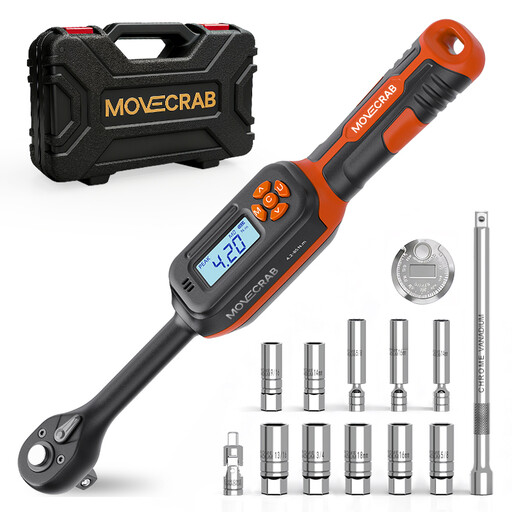
Why This Fits Their Persona: Suits mechanics and careful home users who want measurable tightening for spark plug replacement and light-to-medium automotive maintenance.
Its stated 4.2–85 Nm range and four selectable units make the working limits visible before purchase, rather than presenting torque control as a vague feature.
The 14-piece kit includes magnetic spark plug sockets, extension components, a gap gauge, preset modes and peak-value recording.
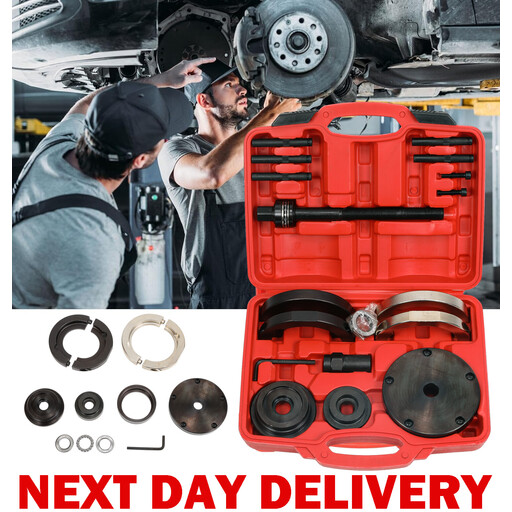
Why This Fits Their Persona: Designed for workshops and experienced vehicle owners handling compatible Volkswagen T5 Transporter or specified Touareg wheel bearing work.
The 85 mm specification and listed vehicle applications make fitment easier to verify. Buyers should still match the exact part and vehicle before ordering.
Carbon steel components with a black oxide finish, pressure pieces and a blow-moulded case are supplied for removal and installation work.
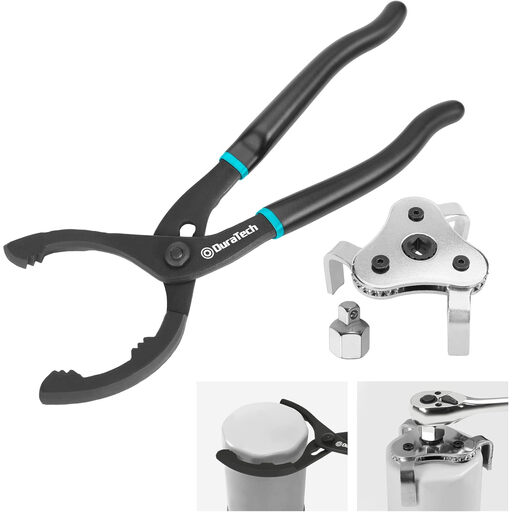
Why This Fits Their Persona: A useful addition to a home garage or service bay where oil filters vary between cars, motorbikes, vans and light trucks.
The adjustable three-jaw wrench states a 63–103 mm capacity, helping buyers compare the tool with their filter size before purchase.
The two-piece set includes 12-inch pliers, a three-jaw wrench and adapters for 3/8-inch or 1/2-inch drive use.
For most UK DIY users, prioritise tools according to the jobs you actually perform:
Protective equipment and safe vehicle support are equally important. Use axle stands on a firm, level surface where appropriate, follow the vehicle handbook and avoid working beneath a vehicle supported only by a jack.
We have compiled a complete, real-time list of products that fully satisfy these strict selection criteria and UK safety regulations.
Start with a metric socket set, combination or ring spanners, screwdrivers, pliers, a torch, vehicle-safe lifting equipment and a torque wrench. Add specialist car maintenance tools only when a planned job requires them.
Compare the wrench’s torque range with the values specified by your vehicle manufacturer. A 3/8-inch model is commonly convenient for lighter automotive tasks, while larger fasteners may require a different drive size and range. Do not use a torque wrench outside its stated limits.
Clean oil and dirt from tools after use, dry them before storage and keep cases closed in a low-humidity area. Release adjustable torque wrenches to their recommended storage setting, avoid immersing digital tools in water and inspect threaded pullers for damage before applying load.