
24/7 Customer Support

Free returns

Same-day & Next-day Delivery

Quality Guaranteed

Unlock Your Welcome Offers: FREE Delivery | Up to 80% OFF | Free 30-day JoyPlus trial
Download the APP
As a professional technician or a dedicated DIY enthusiast, you know that the right tool not only makes the job easier but also protects the vehicle from damage. Yet, the market for automotive tools and accessories is filled with products that promise professional performance but deliver frustration. Choosing incorrectly can lead to stripped bolts, diagnostic dead-ends or even safety hazards on the road. This guide cuts through the marketing clutter to focus on what truly matters, helping you select reliable equipment for your workshop or garage.
Before you invest in your next piece of kit, be aware of these common purchasing traps:
To avoid these pitfalls, focus on the functional specifications that directly impact performance and safety. When analysing your options, prioritise these three areas.
When working with engine components, suspension or wheels, torque specifications are not suggestions—they are critical safety parameters. For any digital torque wrench, the most important specification is its accuracy rating. Look for a stated accuracy of ±2% or better for clockwise rotation. Furthermore, in a noisy workshop, a single audible 'click' can be easily missed. A quality wrench should feature a triple-alert system: a loud beep, a clear vibration felt through the handle and a bright LED light to signal that the target torque has been reached. This ensures you never over or under-tighten a critical fastener.
For internal inspections, the physical dimensions and capabilities of an articulating borescope are paramount. First, check the probe diameter. A slim probe of 5.5mm can access extremely tight areas, while a more common 8.5mm probe is suitable for most spark plug holes. Second, assess the articulation range. A probe that can articulate at least 180 degrees allows you to look backwards and around corners, which is essential for inspecting cylinder walls or valve seats. Finally, the display matters. A high-resolution IPS (In-Plane Switching) screen on a car inspection camera provides a much clearer and more colour-accurate image from wider viewing angles than a standard LCD.
The brightness of LED headlight bulbs is directly linked to their ability to manage heat. An extremely bright LED chip will quickly overheat and fail without an effective cooling system. Look for bulbs constructed from aviation-grade aluminium combined with an active cooling fan, often rated in RPM (e.g., 16,000RPM). This combination draws heat away from the LED, ensuring a consistent light output and a long service life. For modern vehicles, also confirm the bulbs are CANbus ready to prevent flickering or dashboard error codes, a common issue with incompatible aftermarket car parts.
Instead of providing a generic list, we have matched specific tools to the professionals and enthusiasts who will get the most value from them.
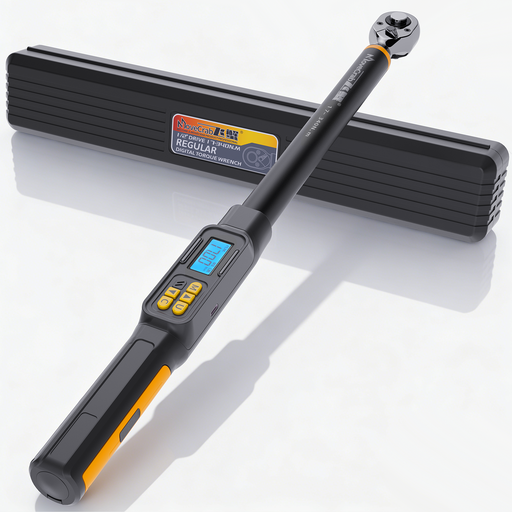
Why This Fits Their Persona: For the professional mechanic or serious DIYer whose work on engines, transmissions and chassis components demands absolute precision. The wide torque range covers everything from engine bolts to wheel lugs.
This wrench directly counters the inaccuracy trap with a certified ±2% accuracy and a triple-alert system (vibration, sound and light) that makes it impossible to miss the target torque, even in a loud workshop.
The digital screen provides a real-time torque reading, and the ability to preset 10 common values significantly speeds up repetitive tasks. It offers both Peak and Track modes for advanced applications.
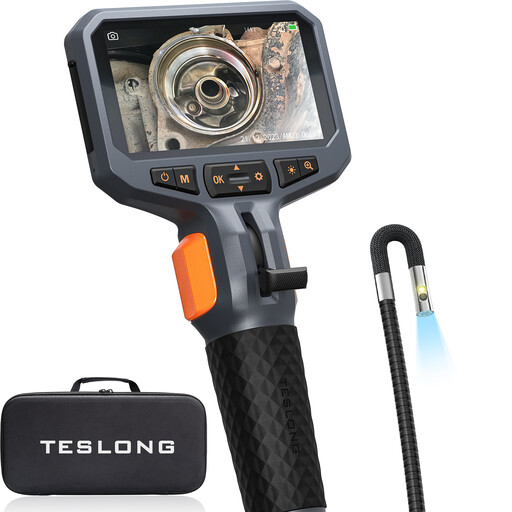
Why This Fits Their Persona: Essential for technicians who need to diagnose internal engine problems, inspect for corrosion in hidden chassis areas or trace leaks without extensive disassembly.
It sidesteps the "useless camera" trap by providing a large 4.5-inch IPS screen for a clear image, a probe with a 210-degree articulation controlled from the handle and a dual-lens system for forward and side views.
The ability to switch between a forward-facing and a 90-degree side-facing camera is a significant advantage for comprehensive inspections, such as checking cylinder walls for scoring after viewing the piston crown.
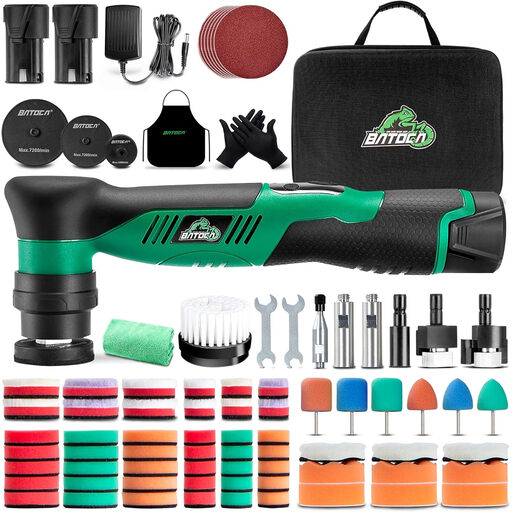
Why This Fits Their Persona: Ideal for the car care enthusiast who wants to achieve a professional finish on paintwork, headlights and intricate areas. Its compact, cordless design is perfect for home garage use without being tethered to a power socket.
This mini car polisher is a specialised tool, not a cheap add-on in a low-quality car detailing kit. It offers genuine 3-in-1 functionality (rotary, 3mm orbital, 12mm orbital) for true paint correction and finishing versatility.
The kit includes two 12V batteries for continuous work, and multiple backing plates (25mm, 50mm, 75mm) allow for precise polishing of small, complex surfaces like badges, grilles and headlight lenses.
We have compiled a complete, real-time list of products that fully satisfy these strict selection criteria and UK safety regulations.
The lifespan of an LED bulb is almost entirely dependent on its heat management. A well-engineered bulb with a high-speed cooling fan (e.g., 16,000RPM) and an aviation aluminium body can realistically last for over 50,000 hours. In contrast, cheaper, passively cooled (fanless) bulbs often fail to dissipate heat effectively, leading to a rapid decrease in brightness and a much shorter lifespan, sometimes less than a year.
A properly calibrated, high-quality digital torque wrench offers a distinct advantage in reducing user error. It provides a clear visual display of the torque being applied in real-time and uses multiple alerts (light, sound, vibration) to confirm when the target is met, which is more definitive than the subtle 'click' of a mechanical wrench. While a premium mechanical wrench is also highly accurate, the digital interface, data memory and preset functions of a digital torque wrench offer greater convenience and repeatability for professional vehicle repair tools.
If your car was manufactured after the mid-2000s, especially if it is a European brand, the answer is most likely yes. These vehicles use a Controller Area Network (CANbus) system to monitor the vehicle's electronics, including the lighting. Because LEDs draw less power than halogen bulbs, the system can misinterpret this as a burnt-out bulb and display a warning light on your dashboard. A CANbus-ready bulb includes a built-in resistor to mimic the load of a halogen bulb, preventing these error codes and ensuring seamless integration.