
24/7 Customer Support

Free returns

Same-day & Next-day Delivery

Quality Guaranteed

Unlock Your Welcome Offers: FREE Delivery | Up to 80% OFF | Free 30-day JoyPlus trial
Download the APP
A flat battery, soft tyre or dashboard warning light can turn a routine journey into an expensive inconvenience. The right automotive tools and accessories can help with basic roadside situations, vehicle maintenance and interior care, but choosing by headline figures alone often leads to wasted money.
This guide focuses on the specifications that matter in real UK conditions, from selecting a car jump starter to comparing a 12V car battery charger, OBD2 reader, polisher and handheld vacuum cleaner.
A large amp figure may look impressive, but it does not automatically mean a booster suits your vehicle. Check the product’s stated petrol and diesel engine limits, confirm that your vehicle uses a 12V system, and examine the included cable and clamp design.
A jump starter designed for a 6.0-litre petrol engine may not be appropriate for a larger diesel vehicle. Similarly, 24V commercial vehicles require different equipment. A portable car battery booster should also be kept charged and stored according to its instructions; it is not a substitute for repairing an ageing battery.
A 12V car battery charger is designed to replenish a battery gradually, while a jump starter supplies short-term starting assistance. Some multifunction products combine jump-starting, tyre inflation and USB charging, but their charging and compressor functions still have operating limits.
Check whether the charger is intended for AGM, GEL, EFB, wet or calcium lead-acid batteries. For a car tyre inflator, look for preset pressure control, a readable display and a stated duty cycle. A high maximum PSI figure is less useful if the device overheats before reaching the required pressure.
A cordless car polisher with multiple speed settings is more adaptable than a single-speed model, but runtime, pad size and movement type affect how useful it is. Rotary and orbital systems behave differently, and compact polishers are generally intended for smaller panels, wheels, trim or hard-to-reach areas.
For a handheld car vacuum cleaner, suction figures should be considered alongside battery runtime, filter maintenance, nozzle design and dust-cup capacity. A short runtime may be adequate for quick cleaning, but not for a full interior.
Before purchasing a charger, identify the battery chemistry and capacity printed on the vehicle battery. The EAFC HX-6A, for example, is specified for 4–100Ah 12V lead-acid batteries and lists support for AGM, GEL, SLA, wet, EFB and calcium types. It also includes stated features such as polarity protection, short-circuit protection, over-voltage protection and over-temperature protection.
These features reduce the risk of incorrect operation, but users should still connect the leads in the correct order and use an indoor charger away from rain. Look for clear instructions, suitable input voltage and a display that shows charging status.
For a jump starter, compare:
A car emergency kit should also contain practical items such as reflective equipment, gloves, a torch and suitable charging cables. Electronic equipment works best when stored securely, kept dry and checked periodically.
An OBD2 car diagnostic tool must support your vehicle’s diagnostic protocol and operating system. The THINKCAR ThinkDiag Mini connects through Bluetooth to iOS and Android devices and supports full-system scanning, reading and clearing diagnostic trouble codes, live data, battery voltage testing and VIN detection. Always check vehicle compatibility and app requirements before ordering.
For polishing, inspect the orbit size, backing-plate diameter, speed range, battery capacity and accessory selection. For cleaning, check whether the filter is washable, whether it must be fully dry before refitting and whether the attachments suit seats, mats and narrow gaps.
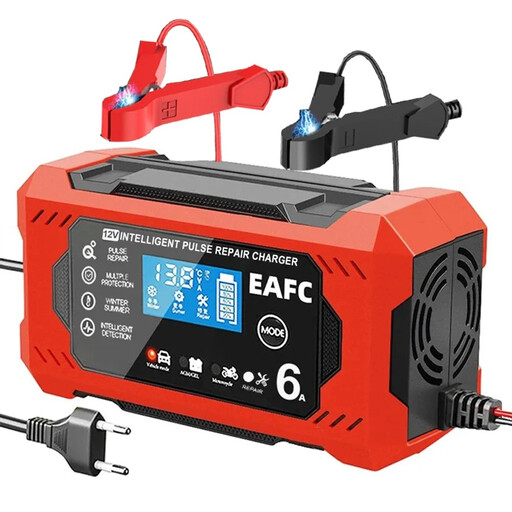
Why This Fits Their Persona: A practical choice for motorists who want to maintain a compatible 12V lead-acid battery at home rather than purchase several emergency devices.
Its stated 4–100Ah battery range and listed chemistry support make compatibility easier to check before purchase.
12V, 6A output; LCD display; polarity, short-circuit and over-temperature protection listed.
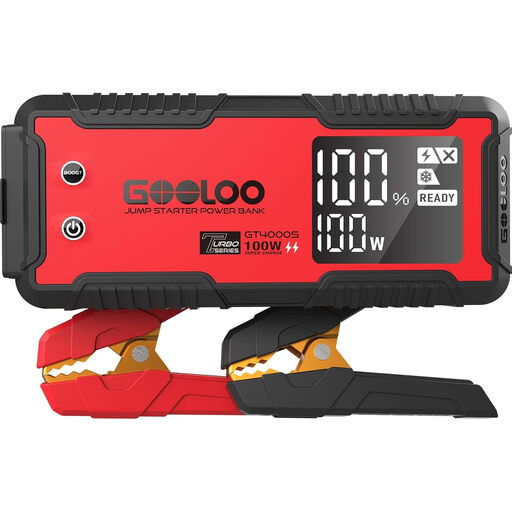
Why This Fits Their Persona: Suits drivers of larger vehicles, including SUVs, RVs and pickups, who value fast charging and several roadside functions in one unit.
The stated 12V compatibility and petrol/diesel engine limits provide clearer selection criteria than peak current alone.
4000A peak current; 100W USB-C charging; 15V DC output and three USB ports.
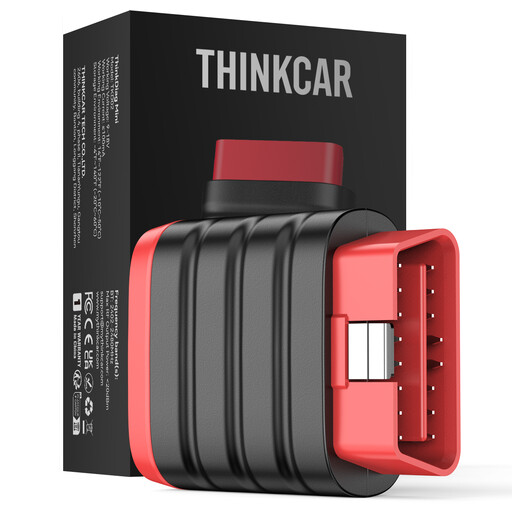
Why This Fits Their Persona: Useful for DIY vehicle owners and motorists who want to read fault information through a smartphone before deciding whether workshop assistance is needed.
Its stated supported protocols, operating systems and EU vehicle compatibility help buyers check suitability in advance.
Bluetooth 5.0; full-system scan, live data, DTC reading and battery-voltage test.
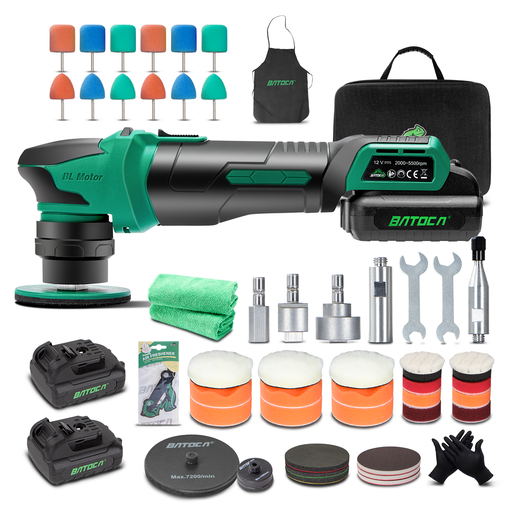
Why This Fits Their Persona: Designed for detailers and hobbyists working on mirrors, bumpers, wheels, trim and other confined areas.
The compact format, selectable backing plates and separate rotary/orbital systems are more specific than a general single-mode polisher.
Brushless motor; 25mm and 75mm plates; 2000–5500 RPM range with two 2.5Ah batteries.
We have compiled a complete, real-time list of products that fully satisfy these strict selection criteria and UK safety regulations.
For drivers who regularly use motorways, rural roads or long-distance routes, a charged jump starter, tyre inflator, torch and gloves can provide useful backup. Check the equipment before journeys and do not rely on an uncharged battery pack.
Service life depends on battery chemistry, storage temperature, charging frequency and usage. Follow the manual, avoid leaving the unit in extreme heat or cold, and recharge it at the interval specified by the manufacturer. A jump starter should be replaced if its casing, cables or battery shows damage.
No. An OBD2 reader can display diagnostic information such as fault codes and live data, but it does not repair the underlying issue. Treat a code as a starting point for further checks, and seek qualified assistance where the fault affects braking, steering, airbags or other safety-critical systems.