Small-batch dressing makers
If you usually prepare one or two portions, a cup-based blender may be a simpler starting point than a family-size jug. Check whether your usual quantity meets the model’s operating guidance.


For occasional, pourable avocado dressing, start with a personal blender if its cup suits your usual recipe quantity. A blender with a dedicated small bowl is worth considering when you also make thick dips or spreads; a compact food processor makes more sense when chopping, grating and other meal preparation matter too. Whichever format you choose, check the exact model’s fill instructions and the space needed to store it.
If you usually prepare one or two portions, a cup-based blender may be a simpler starting point than a family-size jug. Check whether your usual quantity meets the model’s operating guidance.
If you alternate between pourable dressing and thicker avocado spreads, consider a model with a vessel intended for thick mixtures. SharkNinja, for example, assigns those uses to different vessels on its CB100UK.
If the appliance must also help with chopping or grating, a compact food processor may justify its extra components. Measure the appliance and the parts you will need to store.
Choose when: You mainly make pourable dressing and want a cup-based appliance for a restricted worktop.
Trade-off: Check that the cup and operating guidance suit your usual quantity, particularly for a very small or thick batch.
Choose when: You regularly switch between dressing and thick avocado dips or spreads.
Trade-off: The additional vessel needs storage space; measure the complete setup rather than relying on a compact label.
Choose when: Dressing is one of several jobs, alongside preparation such as chopping and grating.
Trade-off: Its larger body and additional parts may be unnecessary if dressing is your only task.
| Concern | What to check | Who this matters to |
|---|---|---|
| Small-batch texture | Compare the vessel with your usual recipe quantity, and check the exact model’s fill and operating guidance. | I make just enough avocado dressing for a meal and want to judge whether the vessel suits that amount, especially when the mixture is thick; around 45% of consumers put small-batch texture first. |
| Counter and storage space | Measure the appliance, its vessels and the available cupboard or under-cabinet clearance. | With little worktop room, I need the machine and its parts to fit somewhere accessible; roughly 33% of consumers make storage footprint their primary concern. |
| Cleaning and other uses | Check which removable parts can go in the dishwasher and whether you will use the additional preparation functions. | If I also prepare ingredients for meals, I want useful extra functions without too many parts to wash; around 22% of consumers put wider preparation and clean-up first. |
A cup-only blender and a model with a dedicated thick-mixture bowl serve different uses. SharkNinja specifies the CB100UK’s cup for dressings and its separate bowl for thick spreads.
Match the vessel to the dressing or dip you make most often, then check the exact model’s quantity and fill instructions.
A compact label does not tell you whether the appliance, cup and accessories will fit your worktop or cupboard. Magimix lists the Mini Plus at H367 × L162 × D213 mm and 4.4 kg.
Measure your intended storage spot, including height clearance and room for separate vessels.
Fill and run-time limits vary by model. Electrical Safety First advises unplugging a blender before cleaning it and checking which parts are dishwasher-safe.
Follow the supplied manual’s fill and operating limits, and keep the motor unit out of water.
A cup-based personal-blender option for occasional dressings, sauces and dips.
A two-vessel blender option for cooks who make both pourable dressings and thick spreads.
A food-processor option when avocado preparation is part of wider meal preparation.
These choices include personal-cup blenders and a hand-blender set for dressing-related preparation. Compare their vessels with your usual batch, and check storage fit and the exact instructions before choosing.
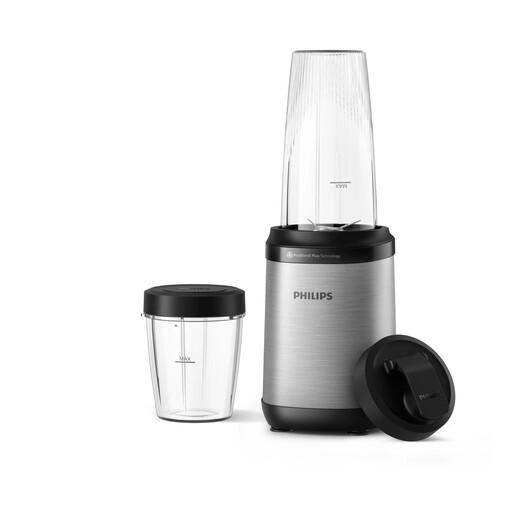 Image unavailable
A personal-blender option to consider for pourable dressing; check that your recipe quantity suits its vessel.
The listing specifies an EU power cord requiring a suitable adapter for UK use. Confirm the supplied plug and appropriate electrical setup before buying.
 Image unavailable
A cup-based option for dressing preparation if its fill guidance suits your usual batch.
The product title lists 909ml and 680ml cups. Confirm the cups and other included components before ordering, as the listing gives differing kit counts.
 Image unavailable
A personal-cup format to consider for dressing; compare its cup with the amount you normally prepare.
The title specifies 900W and a 900ml cup. Confirm the included components before buying because the listing gives differing kit counts.
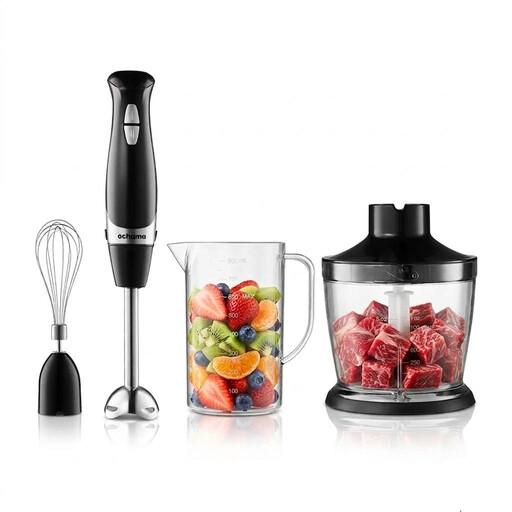 Image unavailable
A hand-blender set to consider if you also want separate tools for other food preparation; check which vessel suits your dressing quantity.
The title lists two speed settings and a whisk alongside the chopper and beaker. Follow the supplied blade-handling instructions and do not submerge the motor unit.
 Image unavailable
A personal-blender option if its cup and instructions suit the small dressing batches you intend to make; check that fit before ordering.
The title specifies 1200W and a 900ml cup. Measure your intended storage space for the appliance and its parts.
Yes, provided the recipe quantity and mixture suit the chosen appliance’s vessel and instructions. For a thicker avocado preparation, Magimix UK provides a one-avocado recipe using the Mini Plus mini bowl; do not assume a cup-based blender works the same way with that quantity.
Choose by what you make most often: a cup is a starting point for pourable dressing, a dedicated small bowl is worth considering for frequent thick dips, and a food processor suits cooks who also want chopping or grating. SharkNinja UK specifies separate dressing and thick-mixture vessels for its CB100UK, while Magimix positions the Mini Plus for broader preparation.
Only put parts in the dishwasher when the exact model’s instructions permit it. nutribullet UK lists the 600 Series cups, lids and lip rings as dishwasher-safe; Electrical Safety First advises checking which parts instead need hand washing and unplugging the appliance before cleaning.
Check the supplied plug and the manufacturer’s instructions before using a mains-powered blender. Electrical Safety First advises looking for a standard UK three-pin plug with a fuse; if a listing specifies a different cord or plug, establish an appropriate, safe setup before buying.