
24/7 Customer Support

Free returns

Same-day & Next-day Delivery

Quality Guaranteed

Unlock Your Welcome Offers: FREE Delivery | Up to 80% OFF | Free 30-day JoyPlus trial
Download the APP
As a parent or gift-giver, you want to find a toy that captivates a little one's attention while supporting their development. A baby activity table seems like the perfect solution, promising hours of educational fun. However, the market is filled with options that look great on the box but fail to deliver long-term value. Many of us have been caught out by clever marketing, only to find the toy gathering dust in a corner after just a few months.
Before you make a purchase, it's important to be aware of a few common pitfalls. Understanding these can help you sidestep disappointment and find a product that truly engages your child.
To ensure you're investing in a toy that will last, focus on a few core parameters. These are the non-negotiable features that separate a worthwhile purchase from a short-lived novelty.
The most valuable feature of a modern toddler activity table is its ability to adapt. For a baby around 9 months old, floor play is essential. Look for a model with removable legs. This allows you to place the activity panel directly on the floor for a baby who is confidently sitting up.
As they begin to pull themselves up, you can attach the legs to create a sturdy sit to stand learning table. When assessing stability, check for:
This dual functionality ensures the toy is relevant and safe from the sitting stage right through to the early toddler years.
An interactive baby table should do more than just make noise. While a baby play table with lights and sounds can be engaging, the activities themselves should promote specific developmental skills. Look for a balanced mix of features:
The goal is to find a table with distinct play zones that offer different types of engagement, preventing boredom and encouraging exploration.
Instead of a single "best" option, the right choice depends on your specific needs, budget and the child's developmental stage. Here are our recommendations, matched to different parent and gift-giver profiles.
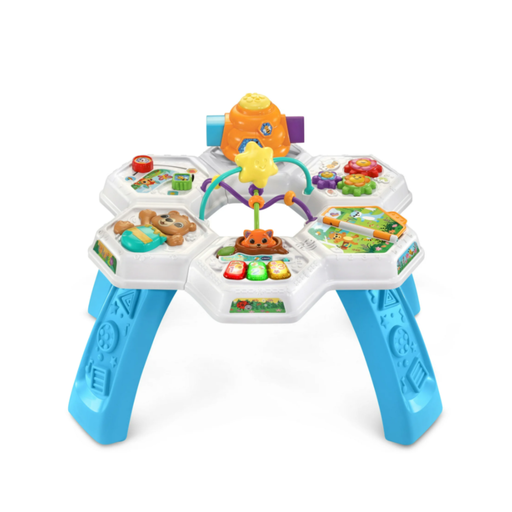
Why This Fits Their Persona: This is an ideal all-rounder for UK families looking to maximise a toy's lifespan. It directly addresses the 9-36 month age range with features that are genuinely useful at each stage, from sitting to standing.
Its removable legs make it a true 2-in-1 toy, avoiding the "stand-only" pitfall. The six distinct play zones provide varied, purposeful activities rather than just overwhelming noise.
The combination of floor and standing play offers excellent value. It includes a mix of activities targeting motor skills, sensory awareness and early language.
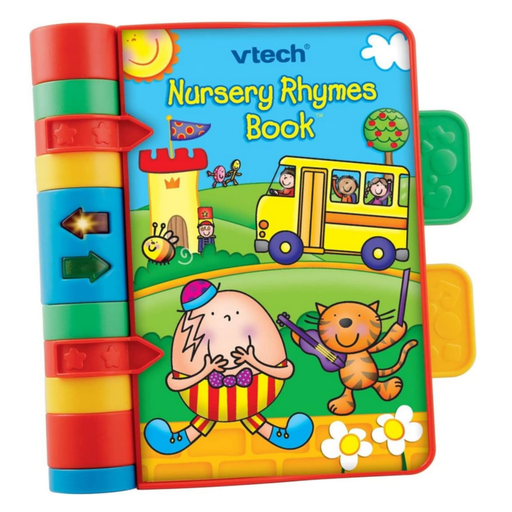
Why This Fits Their Persona: If you're looking for an affordable but highly effective educational toy for a 9 month old, this book is an excellent choice. It's portable, durable and delivers focused learning without the large footprint of a table.
It avoids the "over-stimulation" trap by focusing on a single, calming activity: classic nursery rhymes. Its design is inherently suited for floor play, car journeys and more.
The hard plastic pages are durable and easy to wipe clean. It promotes early language skills, manual dexterity and an introduction to reading concepts.
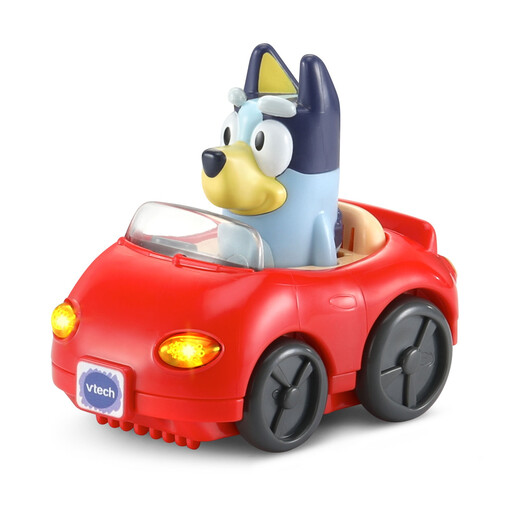
Why This Fits Their Persona: For toddlers (12m+) who are moving beyond stationary toys and love specific characters, this Bluey-themed car is perfect. It encourages movement and imaginative storytelling.
This toy sidesteps the "obsolete features" trap of a stationary table by offering mobile, imaginative play that grows with the child and can be integrated with other toys.
Features authentic Bluey voice and sounds to engage fans. Motion-activated driving sounds encourage active, push-along play, developing gross motor skills.
We have compiled a complete, real-time list of products that fully satisfy these strict selection criteria and UK safety regulations.
Most activity tables are designed for babies who can sit up confidently on their own, which is typically around 6 to 9 months. A sit to stand learning table with removable legs is an ideal first choice, as your baby can use the activity panel on the floor before they are ready to pull up to stand, usually between 9 and 12 months.
They can be an excellent investment, provided you choose a versatile model. A table that adapts from floor play to standing play will offer the best value, potentially seeing use from 9 months to 2 years or more. The key is to select one with a variety of engaging, age-appropriate activities that genuinely support motor and cognitive development.
For most plastic tables, a damp cloth with a bit of mild soap and water is sufficient. Always avoid submerging any electronic components in water. If the table has small, removable parts, check the manufacturer's instructions to see if they can be washed separately. It is always best to refer to the cleaning guide provided with the product.