
24/7 Customer Support

Free returns

Same-day & Next-day Delivery

Quality Guaranteed

Unlock Your Welcome Offers: FREE Delivery | Up to 80% OFF | Free 30-day JoyPlus trial
Download the APP
Choosing baby activity toys can feel straightforward until you compare age labels, batteries, materials, noise levels and cleaning requirements. Colourful lights and long feature lists may attract attention, but they do not automatically make a toy suitable for your child or your home.
Parents and gift buyers commonly encounter three purchasing traps:
The right choice depends on your child’s current abilities, your available space and how the toy will be used. Sensory toys for babies may suit early reaching and grasping, while toddler learning toys can introduce sorting, pretend play and simple problem-solving.
For newborns and young babies, look for lightweight textures, gentle rattles, crinkle sections, mirrors or teethers that encourage reaching and grasping. Portable baby toys with clips can be useful on a pram or car seat, but they should be securely attached and removed when the child begins trying to crawl or stand, according to the product instructions.
From around six months, babies may enjoy early development toys with large buttons, simple cause-and-effect actions and stable floor-play designs. Between one and three years, activity cubes, musical toys for toddlers, shape sorters and track sets can support more purposeful pressing, turning, assembling and role play.
For children aged three to five, electronic educational toys may introduce numbers, opposites, memory games or storytelling. Always follow the specific product age range rather than relying on a general “toddler” description.
A responsible listing should clearly state the material, age guidance and warnings. Several products in this selection list ABS plastic, rounded edges and BPA-free materials. These are useful details, but they do not remove the need for regular inspection.
Check for:
A CE marking indicates that the manufacturer declares conformity with applicable requirements; it is not a substitute for reading the instructions or supervising play. For products containing button or other batteries, keep new and used batteries away from children and dispose of used batteries promptly.
Musical and interactive baby toys can offer engaging auditory feedback, but volume control matters in flats, shared homes and open-plan living areas. Look for adjustable volume or mute settings where possible, and avoid placing noisy toys close to a baby’s ears.
Size also affects whether a toy will be used regularly. A compact activity cube may suit a smaller play area, while a track set or drum kit needs more floor space. For bath toys, drying is essential: squeeze out excess water where applicable, rinse away soap and allow the toy to air dry. Even toys advertised as airtight should be checked for damage over time.
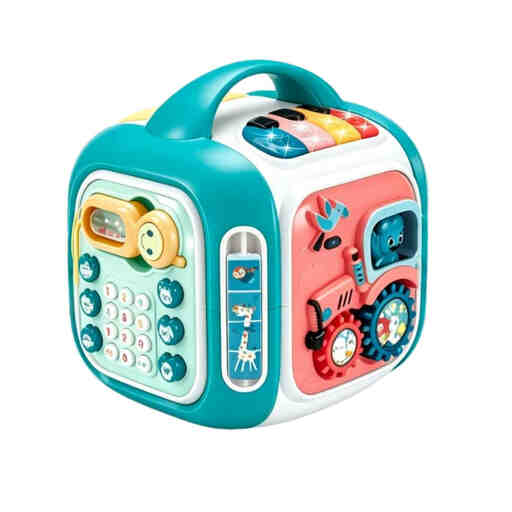
Why This Fits Their Persona: This compact 23 x 23 x 24 cm cube combines several activities in one unit, making it practical for families managing limited storage or buying a first set of toddler learning toys.
Its listed age range is 1–3 years and the activities are built into one sturdy cube, reducing the need to buy multiple single-purpose toys. Adult supervision remains appropriate.
Eight play modes include piano, guitar, gears and pretend phone functions; it also has a carry handle and listed BPA-free ABS construction.
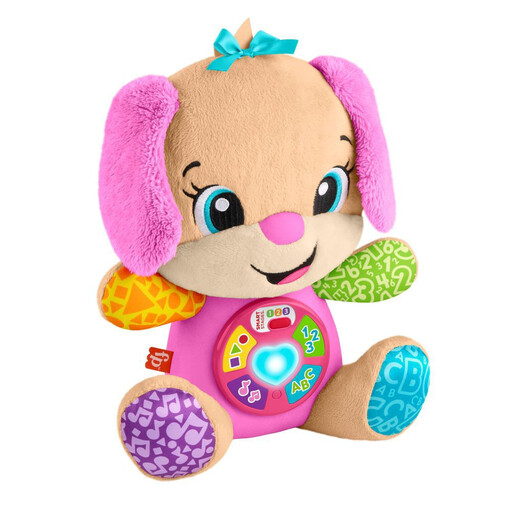
Why This Fits Their Persona: Families wanting a soft, familiar companion with multiple learning stages may prefer this plush option for shared singing and early language play.
The product specifies three learning levels from six to 36 months, rather than presenting one fixed activity list. It is surface washable, so care instructions should be followed.
Five interactive buttons, colour-changing heart lights, 80+ listed songs, sounds and phrases and selectable English, French, German, Italian or Dutch.
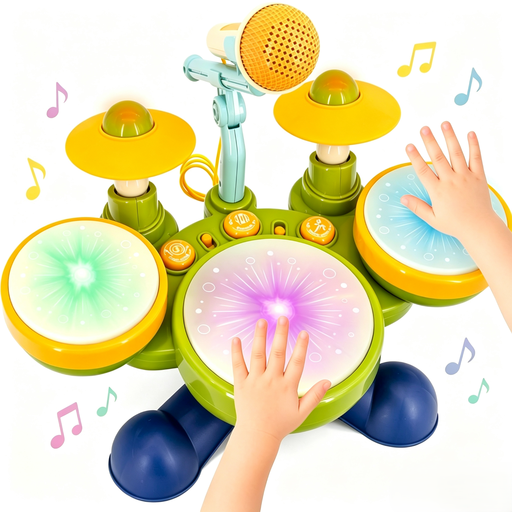
Why This Fits Their Persona: This is suited to active toddlers who enjoy repeated musical play, particularly households where controlling sound levels is important.
An adjustable volume dial addresses the common problem of electronic musical toys being too loud for shared living spaces. Batteries are not included, so factor in the initial running cost.
Three play modes, light-up drum pads, a working microphone and a removable stand for floor play; listed for ages 1–3 years.
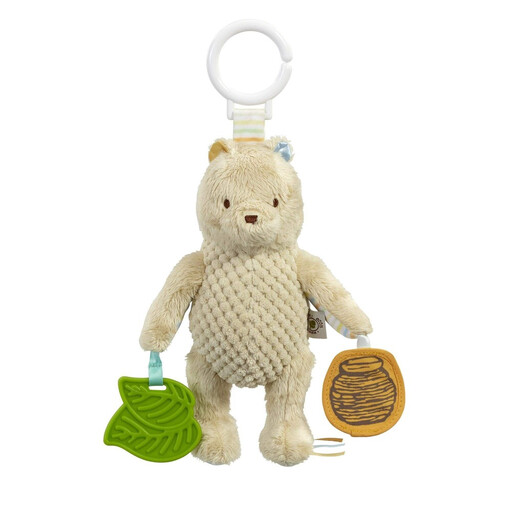
Why This Fits Their Persona: Its clip-on format is convenient for prams, car seats or play gyms, making it a practical choice for families regularly travelling around the UK.
It uses textures, crinkle sounds, a chime rattle, a mirror and a teether rather than relying on batteries or a screen. Secure attachment and regular inspection are still required.
Suitable from 0+ months, includes a BPA-free textured teether and has no stated battery requirement.
We have compiled a complete, real-time list of products that fully satisfy these strict selection criteria and UK safety regulations.
They can be useful when the features match the child’s stage. Rattles, crinkle fabrics, mirrors and textured teethers encourage reaching, grasping and visual attention. They are not a replacement for interaction with a parent or carer, and all age guidance and supervision instructions should be followed.
Lifespan depends on construction, frequency of use, cleaning and whether the toy is outgrown. Open-ended Montessori toys and activity cubes may remain useful while a child develops new ways to press, turn or pretend. Battery-operated toys may need batteries replaced, and any toy with cracks, loose parts or damaged wiring should be removed from use.
Not always. Some bath toys, rattles and mechanical activity toys work without batteries. Electronic drums, talking figures, activity tables and track sets may require AA or AAA batteries. Check whether batteries are included, whether the toy has adjustable volume and whether the battery compartment can be securely closed before purchasing.