
24/7 Customer Support

Free returns

Same-day & Next-day Delivery

Quality Guaranteed

Unlock Your Welcome Offers: FREE Delivery | Up to 80% OFF | Free 30-day JoyPlus trial
Download the APP
Choosing a baby bath and body wash can feel simple until you compare labels. “Natural”, “no tears” and “sensitive skin” appear across dozens of bottles, but these phrases do not all mean the same thing. Parents and carers also need to consider a baby’s age, washing frequency, fragrance preferences and the practicalities of bath time in a UK home.
This guide highlights common buying pitfalls, explains which product details matter and matches different household needs with suitable options.
A product may contain a high percentage of natural-origin ingredients yet still include fragrance or preservatives that do not suit every child. Conversely, a synthetic ingredient is not automatically harsh. The useful approach is to read the full INCI ingredient list, rather than relying on front-of-pack wording.
If your child has particularly reactive or eczema-prone skin, look for a short, clearly presented formula and consider avoiding fragranced products. Always follow the label and stop using a product if irritation develops.
A tear-free or no-tears formula is designed to make accidental contact more comfortable, but it is not a reason to deliberately apply wash near the eyes. Rinse immediately with clean water if contact occurs. A soft flannel and careful rinsing remain important, particularly with a newborn bath wash.
Bubble bath can make washing more enjoyable for older children, but it is not essential for cleansing. Fragrance and prolonged soaking may not be suitable for every child. For frequent washing, a simple gentle baby cleanser or a fragrance-free option may be more practical. Use only the recommended amount and rinse the skin thoroughly.
Check whether the packaging states 0+ months or provides another age recommendation. A baby body wash may be suitable for both skin and hair, while a dedicated baby bath could be intended mainly for adding to running water.
A 2-in-1 baby wash is useful when storage space is limited or you want one bottle for hair and body. However, check the directions: some products are designed to be applied directly to wet skin, while others can also be poured into bath water.
“Sulfate-free” is often written on labels; in British English, you may also see sulphate-free baby wash. This description refers to the absence of particular sulphate surfactants, not to every type of cleanser. For example, formulations may use ingredients such as cocamidopropyl betaine, glucosides or sarcosinates instead.
Check whether the product contains parfum, essential oils, colourants or botanical extracts. These are not automatically unsuitable, but fragrance-free formulas can be easier to assess when your child’s skin is easily irritated. Product formulations can change, so use the ingredient list printed on the current packaging.
A 500ml bottle may offer better value for regular family use, while a 250ml bottle can be easier to handle beside a small bath or useful for travel. Consider whether the pump or cap can be operated with one hand, and keep the bottle out of reach during bathing.
UK cosmetic products should display ingredients, responsible-use information and relevant warnings. “Paediatrician approved” or “dermatologically tested” describes a stated product assessment, but it does not guarantee that every child will react in the same way.

Why This Fits Their Persona: The 500ml bottle and dual-use format suit families setting up a first bathroom routine and wanting one product for hair, body and occasional bubbles.
Its product information clearly states the 2-in-1 use, soap-free formulation, no-tears formula and suitability from birth. Read the current ingredient list, which includes Sodium Laureth Sulfate and parfum, before purchase.
500ml capacity; can be used directly on hair and skin or added under running water; vegan formulation and Cruelty-Free International approval are stated in the listing.

Why This Fits Their Persona: This option suits buyers looking for a daily bath and wash with a moisturising feel and a familiar, clearly described ingredient profile.
The listing specifies that it is free from sulphates, soap and dyes, rather than relying only on a vague “gentle” label. Check the pack for the latest formula and warnings.
400ml size; contains glycerin, oat, chamomile and aloe ingredients as listed; designed for use on skin or in bath water.
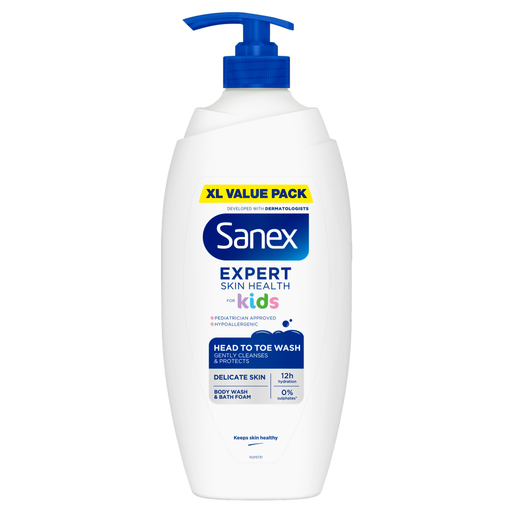
Why This Fits Their Persona: The larger 720ml bottle is practical for households washing more than one child or replacing a family cleanser frequently.
Its listing identifies the product as sulphate-free, hypoallergenic and suitable for daily use. It also provides the full ingredient list, allowing fragrance and cleanser preferences to be checked.
720ml net content; designed for head-to-toe use; product information describes a prebiotic and postbiotic complex.
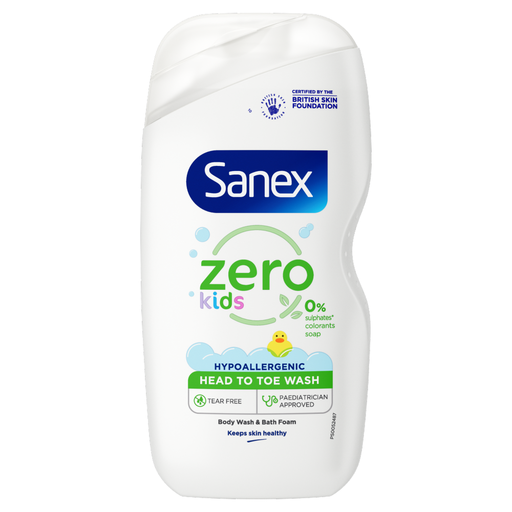
Why This Fits Their Persona: This format suits families seeking one product for showering, hair washing and occasional bubble baths, with no added fragrance or colourants stated in the listing.
Instead of choosing a scented bubble bath solely for entertainment value, buyers can check the stated 0% fragrance, 0% colourants and 0% soap formulation.
450ml size; can be used as a shower gel, hair wash or bubble bath; ingredient list includes glycerin and inulin.
We have compiled a complete, real-time list of products that fully satisfy these strict selection criteria and UK safety regulations.
Newborns do not usually need cleanser at every wash. Use a small amount when needed, follow the product directions and rinse thoroughly. A plain warm-water wash may be sufficient for some bathing sessions.
No. “Tear-free” describes the formulation’s intended mildness around the eyes, not immunity from irritation. Keep all products away from the eyes and rinse promptly if contact occurs.
It depends on the individual child and the formulation. Check the ingredient list, particularly for fragrance and colourants, use a modest amount and avoid prolonged soaking. If irritation occurs, discontinue use and seek appropriate healthcare advice.