
24/7 Customer Support

Free returns

Same-day & Next-day Delivery

Quality Guaranteed

Unlock Your Welcome Offers: FREE Delivery | Up to 80% OFF | Free 30-day JoyPlus trial
Download the APP
Choosing a baby bath is not simply about picking the most attractive colour or the lowest price. The right design should suit your child’s stage, your bathroom layout and the amount of time you can realistically spend cleaning, filling and emptying it.
Marketing descriptions can also make similar products sound very different. Before buying a newborn baby bath or toddler bath, look beyond phrases such as “extra comfortable” and check the practical details that affect everyday use.
A label such as “from birth to three years” does not mean one bathing position will suit every stage. A newborn needs head and body support, while a toddler generally needs more room to sit upright and move.
Check whether the product is intended for:
A baby bath from birth may be too small for a confident toddler, while a large foldable baby bathtub may not provide enough support for a newborn.
A non-slip baby bath can help reduce movement on a stable surface, but it is not a substitute for active supervision. Foam supports, grippy bases and rubber feet are design features, not safety devices.
The Royal Society for the Prevention of Accidents advises that young children should remain within arm’s reach during bathing. Always check the manufacturer’s instructions, place the bath on a level surface and never leave a child unattended, even briefly.
A full bath can be awkward to lift, particularly after use. Without a plug, you may need to tip the water into a bath or shower, which can be inconvenient and increase the chance of splashing.
Likewise, measure your storage space before ordering. A compact bath that fits inside a shower tray may be more useful than a larger model that cannot be stored easily. For smaller UK bathrooms, a baby bath with plug or a foldable design can simplify daily routines.
For a newborn baby bath, look for a shaped seat, raised support or padded backrest that helps position the baby without allowing them to slide down. Some designs include an integrated “bum bump” and foam backrest to create a more upright position.
This can make washing more manageable, but you must still support a newborn’s head and body as directed. Do not treat an ergonomic baby bath as hands-free equipment.
For toddlers, a contoured base and supportive sitting position may help them feel more settled during the transition from a baby tub to a standard bath.
A large household bathtub can require considerably more water than a compact baby bath. If lower water consumption is a priority, check the stated fill volume or fill-line guidance rather than relying on the product’s shape.
A water-saving baby bath should have a clearly marked maximum fill line. The Shnuggle baby bath models listed here state an approximate two-litre fill requirement, while the Shnuggle toddler versions are designed to use less water than a full-sized household bath.
Do not overfill to create extra room. Water should remain at the level specified in the instructions, with the child positioned appropriately for their age and development.
Look for durable, wipe-clean materials such as polypropylene, HDPE or baby-safe PP and TPE, where specified by the manufacturer. Foam backrests can add warmth and comfort, but they need to be wiped and dried thoroughly to reduce the chance of mould or mildew.
Also check:
Some products provide additional compliance information. For example, the Shnuggle Baby Bath with Plug Blossom listing states compliance with EN 17072:2018. This should be considered alongside the full instructions and warnings, not as a replacement for supervision.
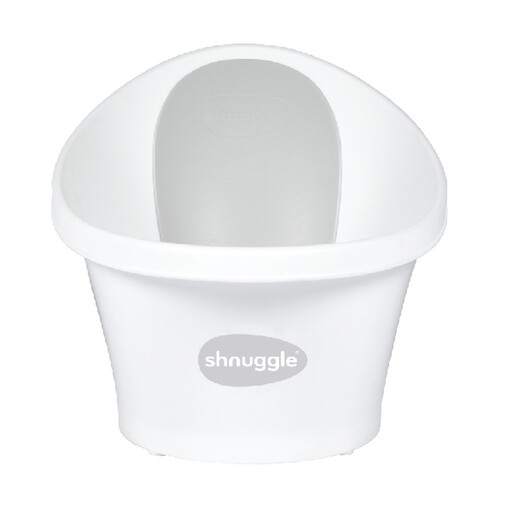
Why This Fits Their Persona: A compact option for new parents who want a straightforward bath for early use without filling a full household tub.
The integrated support and foam backrest address the problem of a newborn sliding into a large, unsupported tub. The plug also avoids lifting and tipping the bath after use.
Designed for children aged 0+; polypropylene construction, foam backrest and a built-in plug.
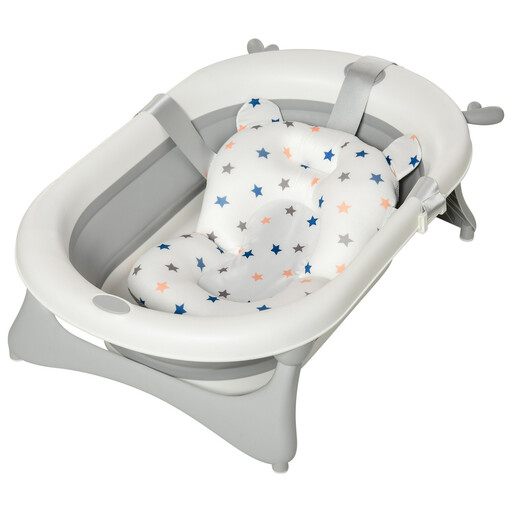
Why This Fits Their Persona: Suitable for households wanting one foldable bathing solution for children from 0 to 3 years, subject to the stated 30kg maximum load.
Its foldable construction addresses the storage problem often missed when buyers focus only on bathing space. The temperature-warning plug provides an additional visual check, but water must still be checked manually.
Folds to approximately 9.5cm thick; includes a soft bath cushion and non-slip covers on its outer legs.
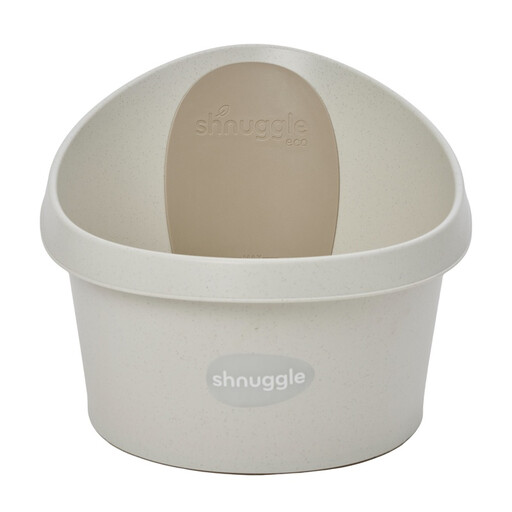
Why This Fits Their Persona: A practical follow-on choice for toddlers who have outgrown a newborn tub but are not yet ready for the space of a full-sized bath.
The marked fill line and compact form help avoid unnecessary water use, while the plug makes frequent draining easier for active households.
Suitable for children aged 12 months+; made with 98% post-consumer recycled plastic and fitted with an anti-slip base and foam backrest.
We have compiled a complete, real-time list of products that fully satisfy these strict selection criteria and UK safety regulations.
A newborn usually needs a bath with structured support for their head, back and bottom. Choose a product specifically labelled for use from birth and follow its positioning instructions. A support feature does not remove the need to keep your baby within arm’s reach throughout the bath.
The amount varies by design. Some compact newborn models specify approximately two litres, while larger foldable tubs may have a substantially higher capacity. Use the manufacturer’s fill line rather than estimating by eye, and do not overfill.
The usable period depends on the product’s age, weight and developmental guidance. A newborn bath may be suitable up to around 12 months, whereas a toddler bath is commonly intended for children aged 12 months and over. Stop using the bath when your child exceeds its limits, becomes unstable or can pull up and stand if the instructions say use should end at that stage.