
24/7 Customer Support

Free returns

Same-day & Next-day Delivery

Quality Guaranteed

Unlock Your Welcome Offers: FREE Delivery | Up to 80% OFF | Free 30-day JoyPlus trial
Download the APP
Bringing a new baby home is a whirlwind of joy and new responsibilities, and bath time is a cherished part of that routine. But a quick search for a baby bath reveals a bewildering array of options. As new parents in the UK, you want something safe, practical and comfortable. However, it's easy to fall for marketing claims that lead to a purchase you'll regret within months.
As the Joybuy Product Recommendation Officer, my role is to help you navigate this market. We'll look past the hype and focus on what truly matters, helping you avoid the common pitfalls and find a tub that makes bath time a calm and happy experience for both you and your little one.
Before you add a tub to your basket, be aware of these frequent traps that can lead to wasted money and daily frustration.
To ensure you're making a sound choice, focus on these non-negotiable parameters.
A baby's safety in water is paramount. Look for designs that offer inherent stability and support. A quality newborn bath tub will often feature an integrated baby bath support or an internal 'bum bump' to prevent your baby from sliding down. This is particularly important for newborns who lack head and neck control. An upright baby bath design can also provide excellent support and may help ease symptoms of colic by keeping your baby in a more comfortable position. Always check for a non-slip base and, where applicable, compliance with safety standards like EN 17072:2018.
The material should be durable, non-toxic (BPA-free) and easy to wipe clean. A smooth surface without hard-to-reach crevices will prevent the build-up of soap scum and bacteria. As mentioned, a drain plug is a game-changer for hygiene, allowing you to empty the tub without lifting and tipping a heavy, water-filled basin. Furthermore, a well-designed, compact tub is more water-efficient, typically requiring only a few litres. This not only saves on your water bill but also keeps the water warmer for longer, ensuring your baby stays cosy throughout their bath.
We've matched some standout products to the distinct needs of UK parents. Instead of a one-size-fits-all approach, this helps you find a tub that genuinely fits your lifestyle.
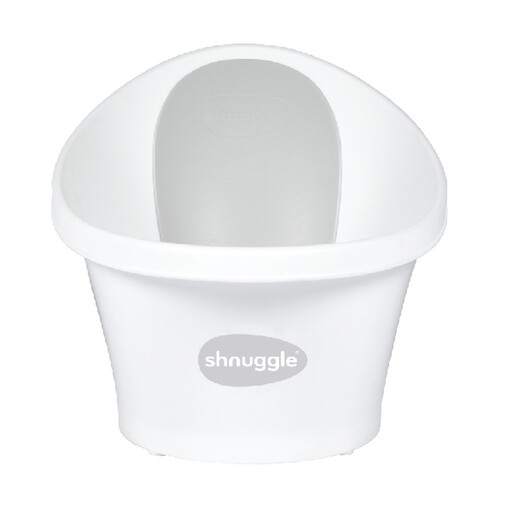
Why This Fits Their Persona: For new parents, the fear of a slippery baby is very real. The Shnuggle bath's design directly addresses this. The integrated 'bum bump' provides a reassuring stop, allowing parents to have both hands free for washing and bonding, which builds confidence during those first few bath times.
It is purpose-built for the 0-12 month stage, avoiding the "grows with baby" myth by excelling at its specific job. The handy plug and compact, water-saving design also sidestep common practicality issues.
The upright seating position can help ease colic and reflux. The foam backrest provides warmth and comfort against the baby's skin.
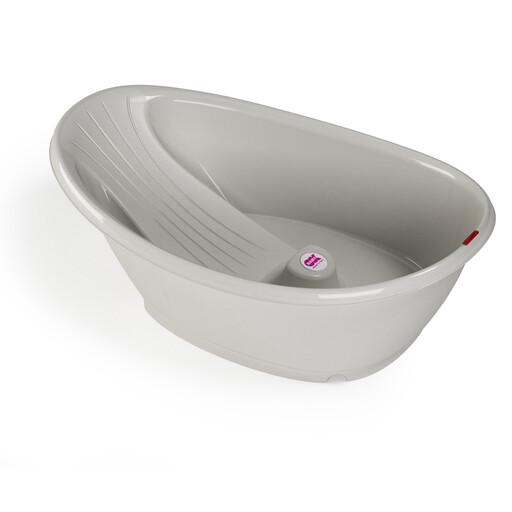
Why This Fits Their Persona: For those living in flats or homes with smaller bathrooms, a bulky tub is a non-starter. This bath is described as compact and lightweight, making it easy to store. Its compatibility with a foldable stand (sold separately) is a major benefit, saving parents from back strain without taking up permanent floor space.
It offers a more realistic "grows with you" solution by having two distinct seating positions: reclining for 0-6 months and sitting for 6-12 months. The quick drain plug and built-in thermometer add practical value often missing in purely aesthetic designs.
The built-in thermometer provides an extra layer of safety, removing guesswork. Its ergonomic design ensures correct posture for the baby at two different key stages of development.
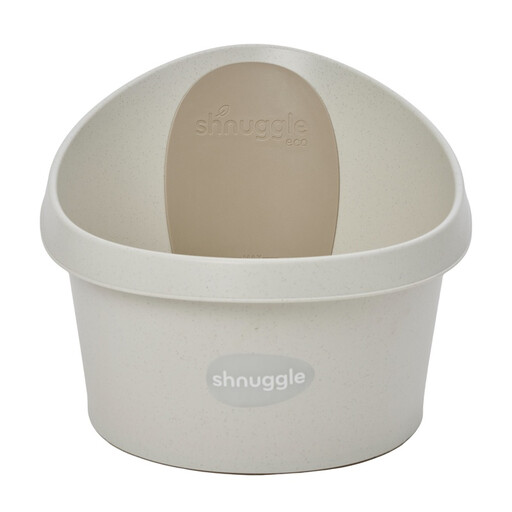
Why This Fits Their Persona: This is for the parent who understands that a baby's needs change. It's the perfect follow-on tub for when their child outgrows their first bath. The fact that it's made from 98% recycled plastic directly appeals to those prioritising sustainable purchasing decisions.
It completely avoids the "one-size-fits-all" trap by being a dedicated toddler bath. It acknowledges that a sitting, playful toddler needs more room than a newborn but still benefits from the security and water-saving benefits of a contained space.
Its primary advantage is its eco-friendly construction from recycled materials. It also uses significantly less water than a full-sized bath, continuing the water-saving benefits into the toddler years.
We have compiled a complete, real-time list of products that fully satisfy these strict selection criteria and UK safety regulations.
For a newborn, you only need about 5-7cm (2-3 inches) of water—just enough to cover their shoulders. For a compact, upright bath like the Shnuggle bath, this can be as little as two litres. Always check the manufacturer's instructions for a fill line indicator and test the water temperature (around 37°C is ideal) with your wrist or a thermometer before placing your baby inside.
Most babies can transition out of a dedicated baby bath once they can sit up confidently and unsupported for a sustained period, which is typically around 6 to 8 months. However, many parents continue to use a toddler-specific bath (like the Shnuggle Toddler Bath) as it uses less water and can feel more secure for a child under two than a large, adult-sized tub.
A baby bath support is an insert placed inside your main bathtub, while a baby bath is a self-contained unit. A support can be a good, space-saving option if you are comfortable bathing your baby in the family tub. However, a dedicated baby bath offers more portability, uses far less water and can be placed on a stand or in a large sink to save you from kneeling and bending, which is a significant advantage for parental comfort and safety.