
24/7 Customer Support

Free returns

Same-day & Next-day Delivery

Quality Guaranteed

Unlock Your Welcome Offers: FREE Delivery | Up to 80% OFF | Free 30-day JoyPlus trial
Download the APP
Feeding, teething and burping can turn clean clothes into a laundry load surprisingly quickly. The right baby bibs help manage drool, milk and food without making your baby uncomfortable, but product descriptions do not always reveal the practical details that matter most.
Before buying, watch for three common pitfalls:
The most suitable option depends on your child’s age, stage of feeding and how you plan to use it.
For newborns and babies who are dribbling or being burped, cotton muslin baby bibs are a practical choice. Muslin is lightweight and breathable, while layered construction can increase the amount of moisture the fabric holds. Three or four layers may be useful for milk, drool and small dribbles, although absorbency does not make a fabric completely leakproof.
Cotton is also suitable for burp cloth bibs, particularly when the same item can be placed over an adult’s shoulder. Check the product description for the fibre content rather than relying on terms such as “soft” or “luxury”. For sensitive skin, look for clearly stated materials and follow the washing instructions before first use.
Silicone baby bibs are more suited to weaning and meals involving sauces, drinks or soft food. Their structured shape can help direct mess into a front pocket, and many can be rinsed quickly. If choosing a silicone design, look for explicit wording such as food-safe silicone, BPA-free or PVC-free, where provided by the manufacturer.
A bib should sit comfortably around the neck without being tight. Adjustable baby bibs with several snap positions can accommodate growth, but the fastening still needs checking each time. A bib intended for newborns may not provide enough coverage for an active toddler, while an oversized design could be cumbersome for a small baby.
Always follow the stated age guidance. Some newborn bibs are suitable from 0 months+, whereas structured silicone designs may be recommended from 4 months and coverall styles from 12 months+. Age guidance is not a substitute for supervision: remove the bib when your child is unattended, sleeping or playing.
For toddlers, waterproof bibs for toddlers with sleeves can protect more clothing during messy meals. Look for elasticated cuffs, a secure closure and clear washing instructions. Waterproof fabric can reduce liquid transfer, but it may feel warmer than cotton muslin.
Consider the type of mess rather than simply buying the largest bib. A narrow drool bib may be enough for teething, while feeding bibs should cover the chest and shoulders. A bib with crumb catcher can be helpful during self-feeding, especially when food tends to fall into the lap.
Cleaning instructions also affect value. Machine washable baby bibs are useful for everyday rotation, while silicone bibs that are top-rack dishwasher safe may reduce rinsing time. Avoid abrasive cleaners unless the manufacturer specifically allows them, and allow washable silicone to dry fully before storage.
A baby bib multipack gives you replacements between washes. Three cotton bibs may suit a newborn who needs frequent changes, while a two-piece silicone set can work for meals when one bib is drying.
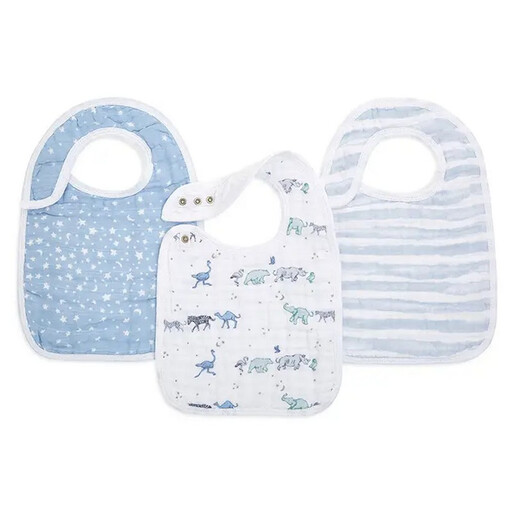
Why This Fits Their Persona: A three-pack gives new parents several washable bibs for daily changes, whether managing milk, drool or small feeding spills at home.
Its three layers of 100% cotton muslin provide more fabric than a single-layer dribble bib, while three front snaps allow adjustment as your child grows.
Suitable from 0 months+, machine washable and made with three layers of cotton muslin.

Why This Fits Their Persona: Parents who want one textile for feeding and burping can use this generously sized design at home or when travelling around the UK.
The 57cm x 28cm format offers broader shoulder and chest coverage than a small neck bib, with snaps for use as a bib rather than relying on a loose drape.
Four layers of organic cotton muslin; two-in-one bib and burp cloth design; machine washable.

Why This Fits Their Persona: A useful match for babies starting solids and families who need a compact option for cafés, nursery bags or trips out.
The waterproof material and wide roll-up crumb catcher address the limitations of narrow fabric bibs during messy self-feeding.
Three adjustable neck sizes, compact roll-up storage and top-rack dishwasher-safe cleaning.
We have compiled a complete, real-time list of products that fully satisfy these strict selection criteria and UK safety regulations.
For a newborn, a small rotation of three to six baby bibs can be practical, especially if your child dribbles frequently or feeds several times a day. Families starting weaning may prefer a smaller number of wipe-clean silicone bibs alongside cotton bibs for burping and drool.
Silicone bibs can usually be rinsed or wiped after meals, and some are suitable for the top rack of a dishwasher. Cotton bibs generally need machine washing and drying, but they can feel lighter and more absorbent for drool and burping. Check the individual care label before washing.
Lifespan depends on washing frequency, fastening wear and the type of mess managed. Inspect bibs regularly for thinning fabric, damaged snaps, tears or deterioration around the neck. Stop using any bib that no longer fastens securely or shows signs of damage.