Keeping your baby’s bottles, teats and pump parts spotlessly clean is a daily priority for every parent. With so many options available, finding the right tool for the job can feel overwhelming. A good baby bottle brush needs to be effective, safe and convenient, but the market is filled with different materials, shapes and sets. This guide is designed to help you understand the key features to look for, so you can choose a cleaning solution that fits your family’s needs.
As the Joybuy Product Recommendation Officer, my role is to provide clear, practical advice to help you make informed decisions without the marketing clutter. Let’s break down what makes a great baby bottle brush.
What to Look for in a Baby Bottle Brush
Choosing the right brush comes down to a few key considerations: the material, the type of kit and its portability.
1. Material: Silicone vs. Nylon Bristles
The material of the brush head is one of the most important factors. The two most common options are silicone and nylon.
- Silicone Bottle Brush: These have become increasingly popular for good reason. Silicone bristles are non-porous, which means they are less likely to harbour bacteria and are often easier to clean and sterilise. They are also soft and flexible, reducing the risk of scratching plastic or glass bottles. A BPA-free bottle brush made from food-grade silicone is a common choice for health-conscious parents.
- Nylon Bristles: Traditional nylon brushes are known for their stiff bristles, which can be very effective at scrubbing away dried milk residue. However, they can wear down more quickly, and the bristles may start to fray or fall out over time. They also need to be replaced more frequently to maintain hygiene.
2. The Complete Set: All-in-One Kits vs. Single Brushes
Your cleaning needs extend beyond just the bottle itself. Teats, straws and breast pump components all require specialised tools.
- Baby Bottle Cleaning Kit: A comprehensive kit offers great value and convenience. These sets often include a main bottle brush, a smaller bottle and teat brush and a thin straw cleaner. Some advanced kits even come with a bottle brush with drying rack and a storage case, creating a complete, self-contained cleaning station.
- Standalone Brush: A single 2-in-1 brush, which often has a smaller teat cleaner integrated into the handle, is a simple and effective option if you have limited space or fewer items to clean.
3. Portability: The Travel Baby Bottle Brush
For families on the move, a standard-sized brush isn't always practical. A travel baby bottle brush is specifically designed for portability. These are typically compact, often foldable and come in a dedicated case to keep them clean and prevent your bag from getting wet. They are an essential item for holidays, days out or even just for keeping a spare set in the car.
Recommended Baby Bottle Brushes
Based on features, materials and user convenience, here are some standout options to consider.

- Why It Stands Out: This set is a complete, portable cleaning station. Its most notable feature is the compact case that unfolds into a stable drying rack, making it exceptionally useful for travel or small kitchens where counter space is at a premium.
- Pros:
- 7-in-1 solution: Includes a silicone bottle brush, nipple brush, straw brush and a 50ml soap dispenser.
- Integrated drying rack: The case cleverly transforms into a rack for air-drying bottles and parts.
- Hygienic and safe: Made from food-grade silicone and BPA-free plastic; silicone parts can be boiled for sterilisation.
- Travel-ready: All components fit neatly into a compact, waterproof storage case.
- Who is it for?: Parents who travel frequently, have limited kitchen space or want an all-in-one system to keep everything organised at home.
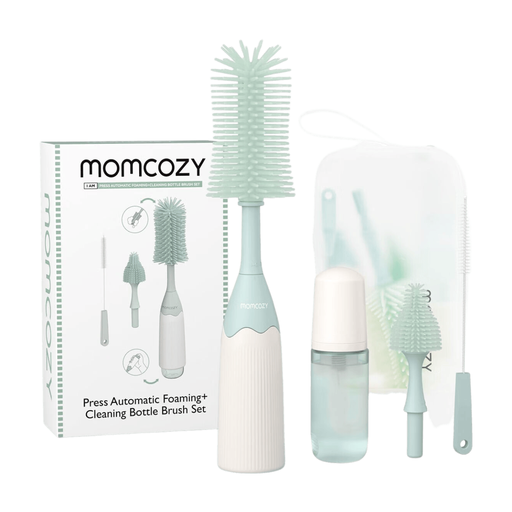
- Why It Stands Out: This brush set introduces an innovative press-to-foam mechanism. By simply pressing the handle, it helps generate a dense lather, which can make the cleaning process faster and more efficient while potentially using less soap.
- Pros:
- Press-to-foam design: Simplifies the creation of cleaning suds for a thorough wash.
- Comprehensive tools: Comes with a main brush, two replacement heads, an angled teat brush and a silicone tube brush for 360-degree cleaning.
- Portable and easy to store: Features a foldable design, a travel case and a hanging loop for convenient drying.
- Durable materials: Made with soft, scratch-free and food-grade silicone bristles.
- Who is it for?: Parents looking for a more effective and efficient clean and those who appreciate innovative features that simplify daily chores.

- Why It Stands Out: This brush combines practicality with an eco-conscious design. The plastic components are made with EarthSmart technology, which is designed to biodegrade in landfill. It’s a straightforward, effective tool with a reduced environmental footprint.
- Pros:
- Eco-conscious materials: The handle is made with plastic designed to biodegrade, reducing long-term waste.
- 2-in-1 functionality: A small, dedicated bottle and teat brush is conveniently stored in the handle.
- Effective cleaning: Durable nylon bristles combined with a soft sponge tip help remove stubborn residue from all corners of the bottle.
- Safe for baby: Made from materials free from BPA, Latex and Phthalates.
- Who is it for?: Environmentally-conscious families who prefer a simple, durable and effective 2-in-1 brush for daily use.
Looking for Other Options?
The right cleaning tools can make a world of difference in a busy household. If you're looking for different styles or organising other areas of your home, explore our wider collection of bottles and containers for all your household needs.
Frequently Asked Questions
How often should you replace a baby bottle brush?
For brushes with nylon bristles, it is generally recommended to replace them every 30-45 days, or sooner if the bristles become frayed or matted. Silicone brushes are more durable and can last much longer, but you should still inspect them regularly for any signs of wear, tear or discolouration and replace as needed to ensure optimal hygiene.
Is a silicone or nylon bottle brush better?
Neither is definitively "better," as it depends on your preference. A silicone bottle brush is hygienic, durable and won't scratch bottles, making it a popular modern choice. A nylon brush can offer a stronger scrubbing action for tough, dried-on milk, but it needs to be replaced more often and can potentially harbour more bacteria if not cleaned and dried properly.
Can you put a baby bottle brush in the dishwasher?
Many silicone brushes are top-rack dishwasher safe, which is great for easy sterilisation. However, nylon bristles and sponges may degrade more quickly with the high heat of a dishwasher. Always check the manufacturer's instructions before placing any part of your brush set in the dishwasher. For longevity, a thorough rinse with hot, soapy water after each use is always a good practice.


