
24/7 Customer Support

Free returns

Same-day & Next-day Delivery

Quality Guaranteed

Unlock Your Welcome Offers: FREE Delivery | Up to 80% OFF | Free 30-day JoyPlus trial
Download the APP
Welcoming a new baby brings a whirlwind of new responsibilities, and ensuring their feeding equipment is hygienically clean is a top priority for every parent. With so many options on the market, finding the right baby bottle steriliser can feel like another complex task. This guide is designed to cut through the clutter, offering clear, practical advice to help you choose a steriliser that fits your family’s needs, lifestyle and budget.
We will explore the different types of sterilisers available, highlight key features to consider and present our top recommendations to help you make an informed decision with confidence.
Before diving into specific products, it’s helpful to understand what sets different sterilisers apart. Your choice will likely depend on your daily routine, kitchen space and how often you travel.
There are three primary methods for sterilising baby bottles, each with its own set of benefits:
Think about your daily needs. Are you feeding twins and need a large-capacity unit, or do you need a compact solution for a small flat? If you travel frequently, a portable travel bottle steriliser, such as microwave bags or sterilising tablets, offers a practical way to maintain hygiene standards while away from home.
Modern sterilisers come with a range of features designed to make life easier. Look for automatic shut-off for safety, a drying function to prevent water spots and mould and a storage mode that keeps contents sterile for up to 48 hours. These additions can save you valuable time and provide extra peace of mind.
Based on functionality, user convenience and different lifestyle needs, here are our recommendations for 2026.
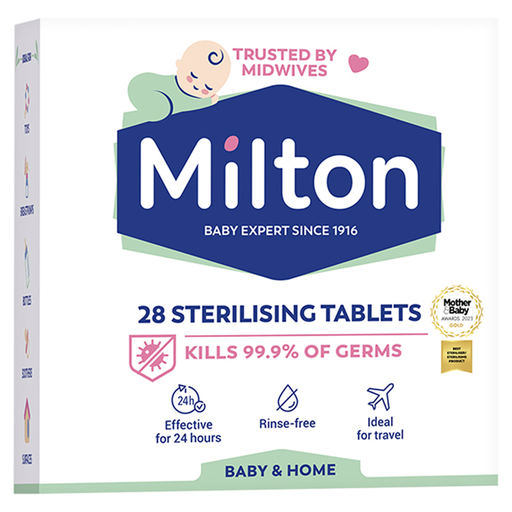
Why It Stands Out: Milton has been a trusted name in sterilisation for over 70 years. These tablets use the hospital-grade cold water steriliser method, offering a simple and highly effective way to ensure your baby’s feeding equipment is free from germs. The solution works in just 15 minutes and remains sterile for 24 hours.
Pros:
Who is it for? This is an excellent choice for parents who need a reliable and portable travel bottle steriliser, a backup for their electric unit or a method for sterilising items that aren't heat-safe.
View Milton Sterilising Tablets on Joybuy.co.uk
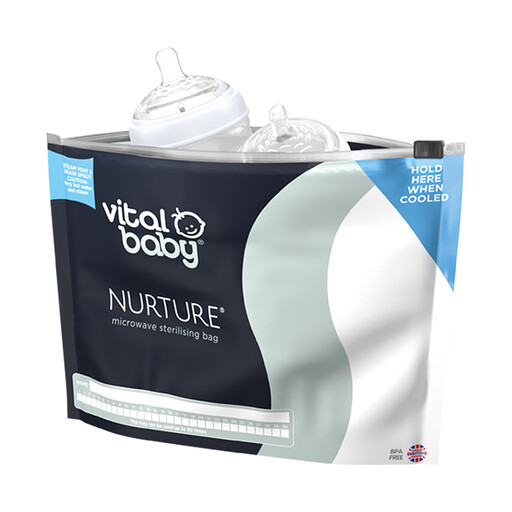
Why It Stands Out: These microwave sterilising bags offer a fast, chemical-free solution that is both convenient and eco-conscious. Each bag can be reused up to 30 times, providing a total of 150 sterilisation cycles per pack. They are incredibly compact, making them perfect for use at home or on the go.
Pros:
Who is it for? Ideal for parents with limited kitchen space, those who travel often or anyone looking for a quick, economical and environmentally friendly microwave steriliser option.
View Vital Baby Microwave Bags on Joybuy.co.uk
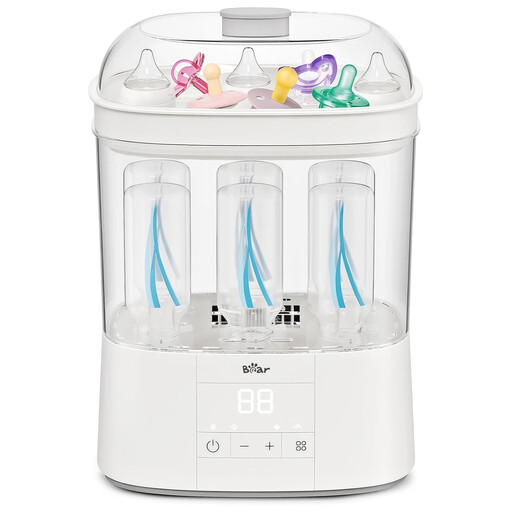
Why It Stands Out: This electric steam steriliser is a true multi-tasker. It combines sterilisation, drying and storage into one sleek unit. The 4-in-1 functionality allows you to sterilise and dry bottles in under an hour and its storage mode keeps contents sterile for up to 48 hours. The built-in HEPA filter ensures items are dried with purified air.
Pros:
Who is it for? This bottle steriliser and dryer is perfect for busy parents who value convenience and efficiency. It’s an excellent investment for those with twins or who simply want a "set-it-and-forget-it" system that keeps bottles clean, dry and ready around the clock.
View Bear Baby 4-in-1 Steriliser on Joybuy.co.uk
Now that you have a clearer idea of which steriliser fits your needs, the next step is ensuring you have the right bottles. The size and shape of a bottle can affect how easily it fits into your chosen steriliser, so it's worth considering them together.
Explore our curated selection of plastic baby bottles to find the perfect match for your new sterilising routine.
For babies under 12 months, it is recommended to sterilise feeding equipment after every single use. This is especially important for premature babies or those with a weakened immune system. This practice helps protect your baby from infections caused by harmful bacteria that can build up in used bottles.
This is a crucial distinction. Cleaning involves washing the bottles, teats and caps in hot, soapy water to remove all visible milk residue and grime. Sterilising is the next step, which eliminates invisible microorganisms like bacteria and viruses. You must always clean items thoroughly before you sterilise them, as any leftover milk can prevent the sterilisation process from being fully effective. This two-step process is the foundation of how to sterilise baby bottles correctly.
While you can use tap water, most manufacturers recommend using distilled or de-ionised water. This is because tap water contains minerals that can lead to limescale build-up on the heating element, reducing the steriliser's efficiency and lifespan. Regularly descaling your unit according to the instructions will help, but using purified water from the start is the easiest way to maintain performance.