
24/7 Customer Support

Free returns

Same-day & Next-day Delivery

Quality Guaranteed

Unlock Your Welcome Offers: FREE Delivery | Up to 80% OFF | Free 30-day JoyPlus trial
Download the APP
Choosing baby bottles can appear straightforward until you compare teat shapes, anti-colic systems, sterilisation methods and pump compatibility. A bottle that suits a newborn may feel too small after a few months, while an attractive “all-in-one” design may create extra parts to wash every day.
This guide from the Joybuy Product Recommendation Officer focuses on practical details rather than marketing language, helping UK parents choose newborn baby bottles, breast milk storage bottles and feeding sets for babies from birth to six months and beyond.
Anti-colic valves and vented bases are designed to manage air flow, but they cannot guarantee that a baby will experience no wind, reflux or discomfort. The system only works as intended when the correct parts are assembled and the teat remains filled with milk during feeding.
Look for clear instructions, removable components and a teat flow suitable for your baby. A complicated valve may be less useful if it is difficult to clean thoroughly.
A breast-like teat may support some babies during combination feeding, but no teat shape suits every baby. Babies can have different preferences, and a wide or flattened teat does not automatically create a better latch.
Check the recommended age and flow rate. A slow-flow teat is generally designed for younger babies, while medium or faster flows are intended for later stages. Moving up too quickly can make feeding rushed or uncomfortable.
Some breast milk storage bottles are designed primarily for expressing, refrigerating or freezing milk. They may connect directly to a breast pump but might not include a feeding teat.
Also check the intended use of unusual bottle listings. For example, a rabbit drinking bottle is designed for small animals and is not suitable for infant feeding, regardless of its capacity or leak-resistant spout.
For baby bottles 0+ months, smaller capacities such as 150ml or 160ml can be easier to handle during early feeds. A 240ml to 260ml bottle may offer more room as feeds increase, while 330ml or 340ml options are more appropriate for older babies when the stated teat flow also matches their stage.
Capacity should not be the only consideration. A larger bottle can encourage overfilling, create more weight during feeding and take longer to cool. Buy enough bottles for your routine, but avoid purchasing a large multi-size set until you know which teat your baby accepts.
Many current BPA-free baby bottles use polypropylene for the bottle body and silicone for the teat. BPA-free is a useful baseline, but also check whether the product is free from other substances you specifically wish to avoid, such as BPS, latex or phthalates.
In the UK, food-contact products should be supplied with appropriate safety information and instructions. Follow the manufacturer’s cleaning, heating and replacement guidance rather than relying on generic assumptions. Inspect bottles, rings, lids and teats before every use, and discard parts showing cracks, clouding, tackiness or weakness.
A wide-neck bottle may be easier to fill and brush clean. Removable anti-colic bases can improve access to internal parts, but they also add components that must be washed correctly.
Some self-sterilising baby bottles can be assembled with a measured amount of water and microwaved for a specified time. This can be useful in a small kitchen or while travelling, but it does not remove the need to wash milk residue first. Never microwave a sealed bottle of milk, and allow sterilised parts to cool before handling.
The NHS advises sterilising feeding equipment until at least 12 months of age. Always follow the product instructions, particularly for microwave power, water volume and which components can be sterilised together.
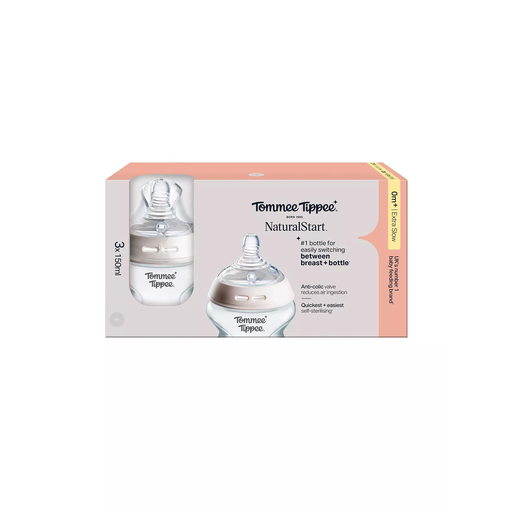
Why This Fits Their Persona: A three-bottle starter pack gives new parents a practical rotation for feeds, washing and sterilising, with 150ml bottles suited to early use.
The product specifies a slow-flow teat for 0+ months and provides cleaning and sterilisation instructions, rather than leaving flow selection unclear.
Soft silicone teat, integrated anti-colic valve, wide neck and BPA-free polypropylene bottle body.
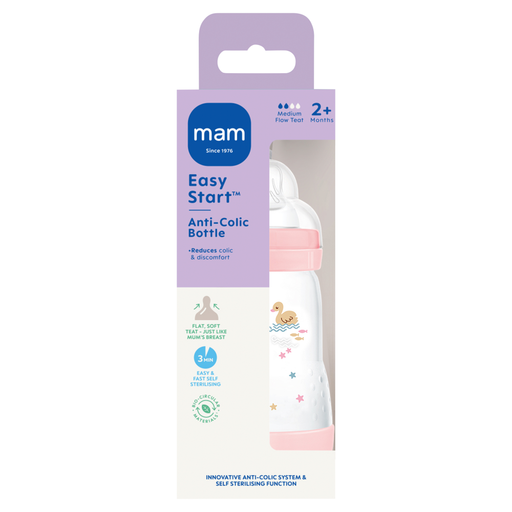
Why This Fits Their Persona: Suitable for parents who prioritise detailed cleaning access and a breast-like silicone teat, while accepting a multi-part design.
Its vented base is removable for cleaning, helping parents inspect the parts instead of relying on an enclosed valve that is difficult to reach.
260ml capacity, BPA- and BPS-free materials, removable vented base and three-minute microwave self-sterilising method.
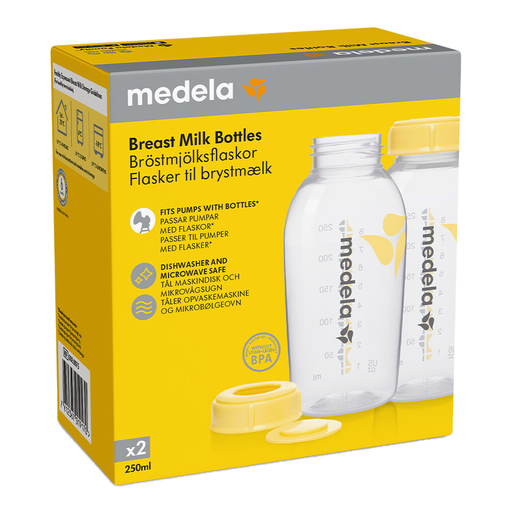
Why This Fits Their Persona: Designed for families expressing milk who want to pump, measure, refrigerate or freeze using the same container.
The product is clearly presented as a storage bottle with screw-on lids, reducing confusion about whether a feeding teat is included.
250ml capacity, volume markings, leak-resistant screw lids, BPA-free polypropylene and compatibility with Medela bottle-connected pumps.
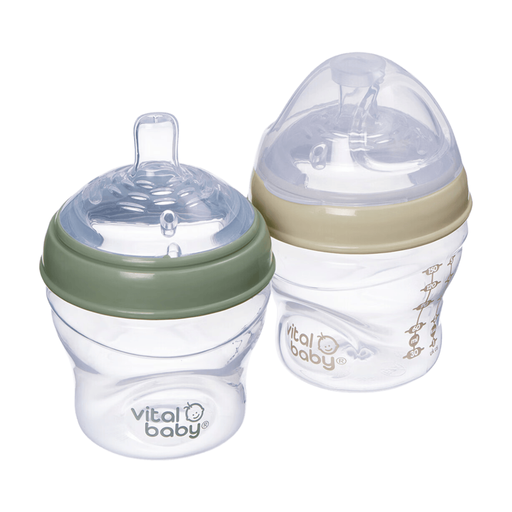
Why This Fits Their Persona: A practical option for parents switching between breast and bottle who value a slow-flow teat and microwave sterilisation at home.
The instructions distinguish between microwave sterilising the bottle body and separately sterilising the teat and lid.
150ml size, Flexzone breast-like silicone teat, triple anti-colic valve and BPA-, latex- and phthalate-free bottle materials.
We have compiled a complete, real-time list of products that fully satisfy these strict selection criteria and UK safety regulations.
A small rotation of around four to six bottles is often practical for combination feeding or regular bottle feeding. The right number depends on how frequently you wash and sterilise equipment, whether you express milk and whether feeds take place at home or outside.
They can be useful where microwave access is available and storage space is limited. However, the bottle still needs thorough washing first, and the teat, lid and other parts may require a separate sterilisation method. Compare the full care instructions rather than looking only at the advertised three-minute cycle.
Only if the bottle is compatible with a feeding teat and the manufacturer states that it is suitable for feeding. Pump-compatible storage bottles such as Medela models are useful for collecting, measuring and storing milk, but a separate teat may be required. Always check the product contents before ordering.