
24/7 Customer Support

Free returns

Same-day & Next-day Delivery

Quality Guaranteed

Unlock Your Welcome Offers: FREE Delivery | Up to 80% OFF | Free 30-day JoyPlus trial
Download the APP
Juggling the demands of daily life with a little one in tow is a familiar challenge for any parent. You need your hands free for everything from making a cup of tea to navigating the weekly shop, but you also want to keep your baby close, secure and content. A well-chosen baby carrier is the solution, offering a practical way to combine closeness with convenience.
However, the market is filled with options, and choosing the right one can feel overwhelming. As the Joybuy Product Recommendation Officer, my role is to help you navigate these choices. This guide offers practical advice and highlights some standout options to help you find a carrier that fits your family’s needs, focusing on safety, comfort and usability.
Before looking at specific models, it’s helpful to understand the key features that make a carrier a worthwhile investment. Considering these points will help you narrow down your search.
The most critical factor is how the carrier supports your baby. An ergonomic baby carrier is designed to hold your infant in a natural, comfortable position. Look for carriers that support the "M" position, where your baby's knees are higher than their bottom, creating an 'M' shape. This posture supports healthy hip and spine development, which is especially important for a newborn baby carrier. For the wearer, an ergonomic design with padded straps and good lumbar support is essential. A baby carrier for back support will distribute the baby's weight evenly across your hips and shoulders, preventing strain during extended use.
Consider when and where you will use the carrier most. If you are an active family or live in a region with warmer summers, a lightweight baby carrier made from breathable mesh fabric can prevent both you and your baby from overheating. For all-season use, natural fibres like cotton offer a soft and versatile option. Also, think about carrying positions. Many carriers offer multiple options, including a front facing baby carrier position, which is great for curious older babies who have developed strong head and neck control.
A hands-free baby carrier should be simple enough for you to put on and adjust without assistance. Look for intuitive buckles, easy-to-reach straps and clear instructions. A carrier that can be adjusted to fit different caregivers is a bonus for families who share the carrying duties. Furthermore, a carrier that grows with your child, accommodating them from infancy to toddlerhood, offers better long-term value.
Based on features that prioritise comfort, safety and practicality, here are our recommendations.
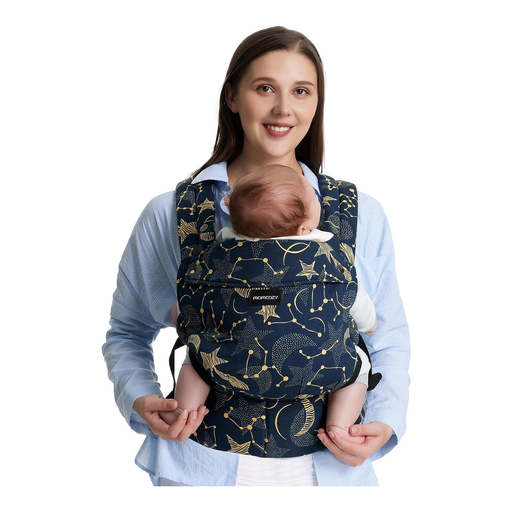
Why It Stands Out: This carrier combines a stylish design with thoughtful ergonomic features. Made from 100% cotton, it’s soft against the baby’s skin. The standout feature is its X-shaped back design, which works with the built-in EVA waist support to distribute weight exceptionally well, reducing pressure on the wearer's back and shoulders.
Pros:
Who is it for: Parents seeking a comfortable and supportive all-rounder for daily use. Its excellent weight distribution makes it a strong choice for those concerned about back strain.
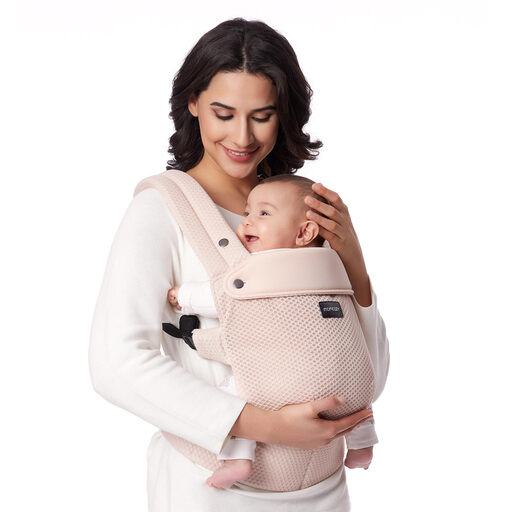
Why It Stands Out: Designed specifically for warm weather and active parents, this carrier features a large Air Mesh panel and cooling neck fabric. It maintains the core ergonomic benefits of the Momcozy design while focusing on breathability to keep both parent and baby cool.
Pros:
Who is it for: Active families, parents who tend to run warm, or anyone living in an area with hot summers. It’s an excellent choice for holidays and outdoor walks.
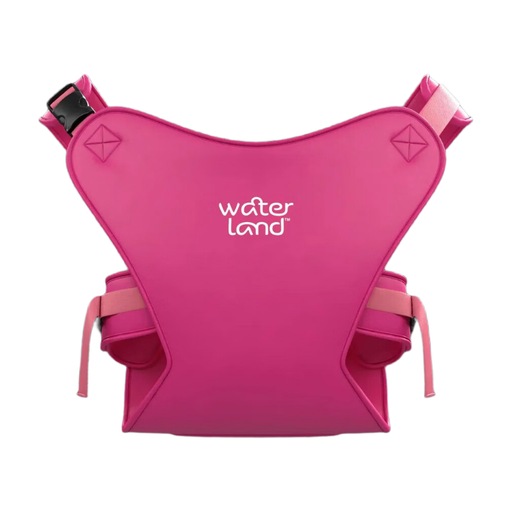
Why It Stands Out: This carrier’s unique selling point is its versatility for use on both land and in water. Made from high-quality neoprene (the same material used for wetsuits), it’s water-resistant and helps maintain the baby’s temperature, making it perfect for the pool or beach.
Pros:
Who is it for: Adventurous parents who love the water. If your family holidays involve swimming pools or trips to the seaside, this carrier provides a unique and practical solution. Note its specific age and weight range: 4 months+ and 13-33 lbs (6-15 kg).
While these three carriers address common needs, every family is unique. If you are looking for different styles, such as an infant carrier sling or other structured models, there are many more choices available.
Explore our full collection of hands-free baby carriers to find the ideal match for your lifestyle.
1. At what age can I start using a baby carrier? Most structured carriers are suitable for newborns weighing around 7 lbs (3.2 kg), provided they offer adequate head and neck support. Some models, like slings or wraps, are also designed for newborns. Always check the manufacturer's specified minimum weight and age recommendations to ensure safety.
2. Is a front facing baby carrier safe for my baby? The front-facing position can be safe and enjoyable for babies who have strong, consistent head and neck control, typically around 5-6 months of age. It is crucial to use a carrier that provides proper ergonomic support in this position, ensuring their legs are not dangling but are supported in the "M" shape. It is also wise to limit time in this position to avoid overstimulation.
3. How do I ensure my baby is positioned correctly in an ergonomic baby carrier? A good rule of thumb is the T.I.C.K.S. checklist for safe babywearing: