
24/7 Customer Support

Free returns

Same-day & Next-day Delivery

Quality Guaranteed

Unlock Your Welcome Offers: FREE Delivery | Up to 80% OFF | Free 30-day JoyPlus trial
Download the APP
A baby carrier can make nursery drop-offs, supermarket trips and countryside walks easier, but the wrong design may become uncomfortable or unsuitable as your baby grows. Product listings often focus on attractive fabrics, multiple carrying positions or broad weight ranges while leaving important practical details unclear.
Three common buying traps are worth avoiding:
The right choice should match your baby’s current size, your body shape and the situations in which you will actually use it.
Start with the stated minimum and maximum weight. A newborn baby carrier should clearly identify whether it is suitable from birth or only once the baby has reached a particular age or developmental stage.
The 100% cotton models listed here specify a range of 3.2–20 kg, which covers many newborns through to toddlers, subject to the product instructions and correct adjustment. The Waterland model has a different stated range of 6–15 kg and is described for children aged four months and above. It should therefore not be treated as a newborn option.
Do not rely on a weight figure alone. Check whether the product provides adequate head and neck support for your baby’s stage and whether the seat can be adjusted so the child sits securely rather than slumping.
An ergonomic baby carrier should allow the baby’s thighs to be supported, with the legs positioned in an M-position baby carrier arrangement: knees higher than the bottom and the seat supporting the thighs. The fit should be checked every time the carrier is used.
Look for:
An X-back baby carrier can distribute fabric or straps across the wearer’s back, while an adjustable baby carrier may offer more flexibility for different body shapes. Neither label replaces a careful fit check.
A cotton baby carrier may appeal to families who prefer a soft, familiar fabric for everyday use. The listed cotton carriers use a one-click buckle and are described as 100% cotton. Check the washing instructions before purchasing, particularly if you expect frequent spills or outdoor use.
For water-based activities, a neoprene baby carrier may be designed to resist water and retain some warmth. However, read the directions carefully. The Waterland product instructions state that it should be hand-washed or machine-washed on a delicate cool cycle, dried naturally and kept away from direct sunlight. Never use a water carrier as a substitute for an approved buoyancy aid, and supervise your child continuously.
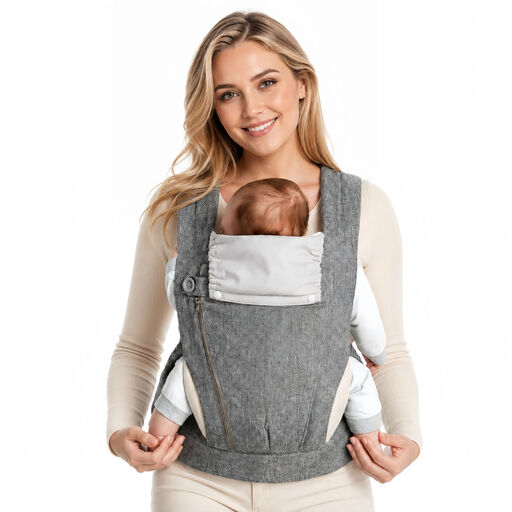
Why This Fits Their Persona: A practical option for new UK parents who want one carrier for home routines, short walks and everyday errands, with a stated 3.2–20 kg range.
Its listed weight range is specific rather than vague, and the product description identifies both the M-position and X-back design. Confirm the fit for your baby’s current stage before use.
100% cotton construction; one-click buckle; stated 3.2–20 kg capacity.
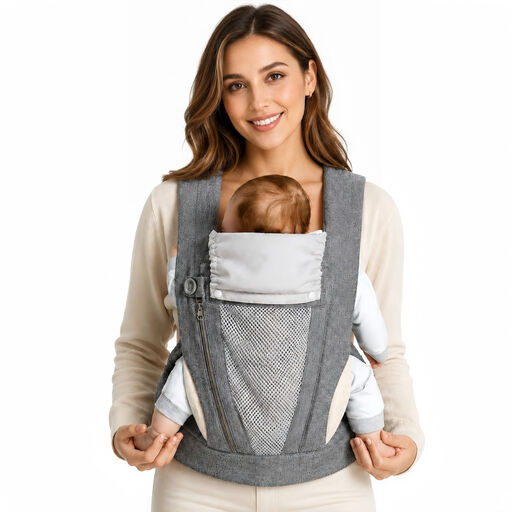
Why This Fits Their Persona: Suits parents prioritising a cotton construction and a flexible carrying design for regular use across changing seasons.
The design lists a defined M-position, X-back and 3.2–20 kg range, helping shoppers compare actual specifications instead of relying on general comfort wording.
100% cotton fabric; structured M-position; buckle fastening and X-back configuration.
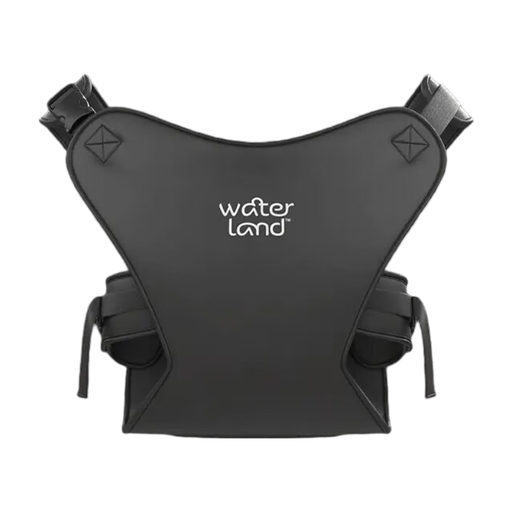
Why This Fits Their Persona: Designed for families who need a carrier for both land and water activities, provided the child meets the stated age and weight requirements.
It states a narrower 6–15 kg range and a four-month minimum, making its limits clearer than a general newborn-to-toddler claim. Water use still requires constant supervision and careful temperature awareness.
Neoprene material; adjustable straps and padded shoulder straps; inward- and outward-facing options; listed EN 13209-2:2015 + AC:2016 standard.
We have compiled a complete, real-time list of products that fully satisfy these strict selection criteria and UK safety regulations.
Before each use, work through these checks:
It depends on the model. The cotton carriers listed above state 3.2–20 kg, while the Waterland carrier states 6–15 kg and is intended for children aged four months and above. Always follow the product’s own instructions and stop using it when the fit no longer supports your child securely.
Usually, outward-facing carrying is not appropriate for a newborn because young babies need close support for their head, neck and body. Use the position specified for your baby’s developmental stage and only change position when the instructions indicate it is suitable.
Wash it whenever it becomes soiled, and follow the care label rather than assuming that every fabric can go in a standard wash. Cotton models may have different care requirements from a neoprene baby carrier. Allow the carrier to dry fully before storing or using it again.