
24/7 Customer Support

Free returns

Same-day & Next-day Delivery

Quality Guaranteed

Unlock Your Welcome Offers: FREE Delivery | Up to 80% OFF | Free 30-day JoyPlus trial
Download the APP
A suitable carrier can make school runs, supermarket trips and travel easier by keeping your hands available while your baby stays close. However, choosing between baby carriers, wraps and slings is not simply a matter of colour or advertised weight range. Small differences in fit, support and care requirements can make a carrier uncomfortable or unsuitable after only a short period of use.
This guide from the Joybuy Product Recommendation Officer explains which specifications matter, how to avoid common purchasing traps and which designs may suit different UK households.
A product may be marketed as a newborn baby carrier, yet its detailed guidance can set a minimum weight, age or developmental requirement. For example, some carriers are suitable from approximately 3 months, while a carrier designed for use from birth may require a smaller infant setting and additional head support.
Always check:
The word ergonomic does not tell you how the carrier achieves support. Look for a clearly described M-position, where the baby’s knees sit higher than the bottom and the thighs are supported. The baby should remain upright, close to the wearer, with the face visible and the airway clear.
A front-facing baby carrier should only be used when the instructions allow it and the child has reached the required developmental stage. Outward-facing carrying is not automatically suitable for a young infant.
A thick cotton carrier may feel comfortable in cooler weather but become warm during summer journeys or crowded public transport. Conversely, a breathable baby carrier may offer improved airflow but need more careful inspection around mesh panels and buckles.
Also check whether the carrier is machine washable, hand-wash only or unsuitable for tumble drying. Frequent cleaning is particularly relevant when using a carrier for feeding, outdoor walks or travel.
A carrier should fit the child now, not just promise future use. Models in this selection cover different ranges, including approximately 3.2–20 kg, 3.6–15 kg and 6–15 kg. Compare the carrier’s minimum weight with your baby’s current weight and check how the seat width, straps and neck support adjust.
An adjustable baby carrier with several sizing positions can accommodate growth, but adjustment must still produce a snug fit without compressing the child.
Look for a wide, supportive seat that helps maintain the baby’s natural M-position. The carrier should support the thighs while allowing the knees to remain higher than the bottom. For younger babies, head and neck support is also important.
For the wearer, padded shoulder straps, an X-shaped back and a waist panel can help distribute load. A baby carrier with lumbar support may be useful for everyday carrying, although comfort depends on correct adjustment and the wearer’s body shape.
Common options include:
A machine-washable baby carrier can reduce maintenance effort. Follow the label carefully, especially where the product specifies a 30°C wash, delicate cycle, air drying or no tumble dryer.
The following options are matched to practical shopping profiles rather than ranked universally. Features and suitability should always be checked against your child’s size and the manufacturer’s instructions.
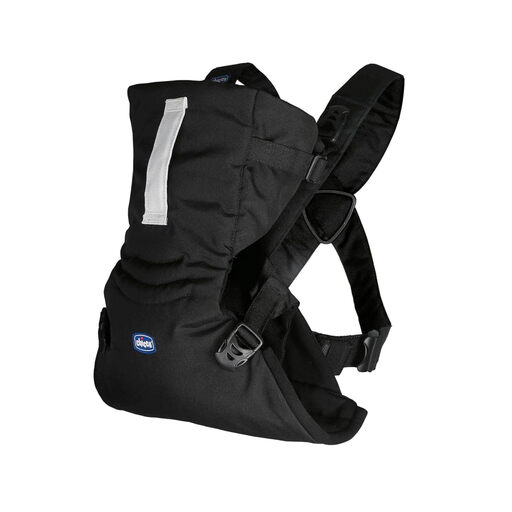
Why This Fits Their Persona: A straightforward choice for new parents who want a carrier designed to be worn like a T-shirt, with parent-facing use from birth and a later forward-facing option.
Its instructions specify parent-facing use from birth and forward-facing use from 4 months, helping buyers avoid treating all positions as suitable for every age.
T-shirt-style fitting, padded adjustable shoulder straps, M-position design and machine-wash guidance.
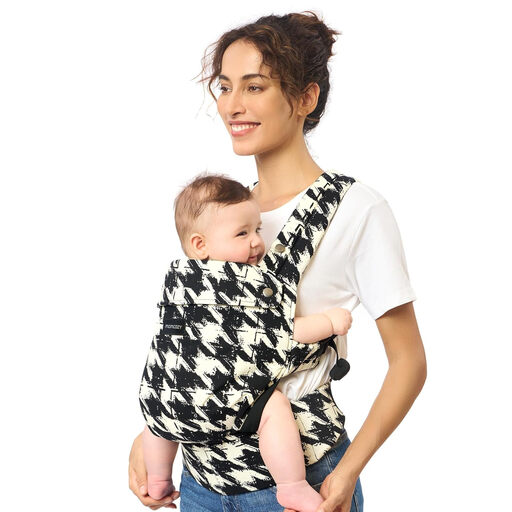
Why This Fits Their Persona: Suitable for families seeking a cotton carrier with structured support for regular errands, short walks and growing babies.
The listing gives a defined 3.18–20 kg range, three sizing positions, cross-back straps and a wide padded seat rather than relying only on general comfort wording.
100% cotton construction, machine-washable care and stated lumbar support with an M-shaped seat.
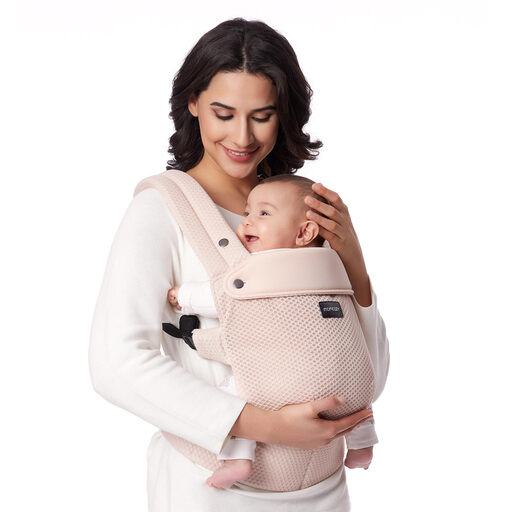
Why This Fits Their Persona: A practical option for warmer indoor spaces, summer walks and parents who carry frequently throughout the day.
The Air Mesh panel addresses airflow concerns, while the stated weight range and three sizing positions make the fit easier to check as the child grows.
Cooling neck-contact fabric, EVA waist support, padded straps and a stated 3.2–20 kg capacity.
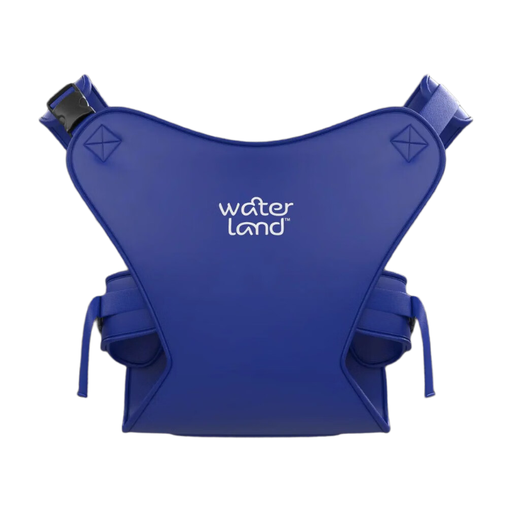
Why This Fits Their Persona: Designed for families who need a carrier for outdoor activities and shallow, calm water as well as ordinary land use.
It specifies a 6–15 kg range, adult supervision and water-use limitations. This makes its specialist purpose clearer than assuming an ordinary carrier is suitable for swimming.
Neoprene construction, adjustable padded straps, inward or outward carrying and stated compliance with EN 13209-2:2015 + AC:2016.
We have compiled a complete, real-time list of products that fully satisfy these strict selection criteria and UK safety regulations.
Before every use:
Some are designed for use from birth, while others begin at approximately 3 months or require the baby to hold their head independently. Check the minimum weight, age and carrying position in the individual product instructions before use.
There is no universal lifespan. Continue using one only while it remains within the stated weight range and all structural parts are in good condition. Replace or stop using it if straps stretch excessively, buckles fail to lock, seams fray or the carrier no longer holds the child securely.
Air Mesh and cooling-fabric panels may improve airflow during warm conditions, but they do not prevent overheating in every situation. Dress the baby lightly, check their temperature regularly and avoid prolonged use in direct sun or poorly ventilated areas.