
24/7 Customer Support

Free returns

Same-day & Next-day Delivery

Quality Guaranteed

Unlock Your Welcome Offers: FREE Delivery | Up to 80% OFF | Free 30-day JoyPlus trial
Download the APP
For new parents, baby carriers can make school runs, public transport, travel and household tasks easier. They can also become an expensive mistake when the design does not match your baby’s age, your body shape or the way you intend to use it.
The most useful approach is to look beyond attractive colours and phrases such as “hands-free”. Check the stated weight range, carrying positions, support features, fastening system and care instructions before buying.
A product described as a newborn baby carrier should still state a clear minimum weight and age, along with instructions for positioning a very young baby. Some carriers require a separate insert, while others are only intended for babies who have developed sufficient head and trunk control.
Never rely on a product photograph alone. Confirm that your baby’s weight falls within the manufacturer’s range and that their face and airway can remain visible at all times.
A front-facing baby carrier may offer an outward-facing position, but that does not mean it is suitable for every age or stage. Outward-facing carry can also make it harder to monitor a young baby’s face and breathing.
Check which positions are permitted, the minimum age for each one and whether the instructions require inward-facing carry initially. A carrier for infants and toddlers may offer several modes, but each mode still needs to be used according to its instructions.
A water baby carrier is designed for a specific environment, but it is not a flotation device and should not replace close adult supervision. Water, cold temperatures and slippery surfaces can increase risk. Follow the product’s water-use guidance, check every buckle and keep your baby’s face clear.
For ordinary UK rain, a water-resistant fabric may be useful, but it does not automatically make a carrier suitable for swimming or bathing.
The weight range is one of the most important specifications. A carrier may be labelled for babies from 3–20 kg, for example, but the minimum age and permitted positions still matter. Weight alone does not determine whether a particular carry mode is appropriate.
Look for:
If your baby is close to the minimum or maximum limit, allow room for clothing and check the fit carefully rather than relying on the headline specification.
An ergonomic baby carrier should allow the baby’s legs to sit in an M-shaped position, with the knees higher than the bottom, while keeping the back suitably supported. The carrier should also sit securely against the adult’s body without forcing the baby’s chin down towards their chest.
For the wearer, useful features may include:
A good fit depends on adjustment, not just padding. Looseness, twisted straps or a waist belt positioned too high or low can reduce comfort and stability.
A breathable cotton baby carrier can feel comfortable for daily use, while mesh or net fabric may suit warmer conditions. Neoprene can be relevant to a water carrier, but it may feel warmer than lightweight cotton during indoor use.
Also check the care label. A machine-washable baby carrier may be easier to maintain after spills, but wash temperature and drying instructions vary. Some products require hand washing or air drying to protect buckles, fabric shape and support panels.
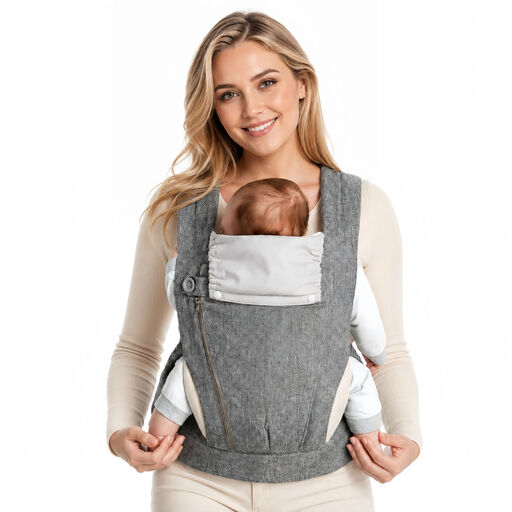
Why This Fits Their Persona: The listed 3.2–20 kg range and one-click buckle design may suit families seeking a straightforward everyday carrier, provided the instructions confirm suitability for their baby’s age and development.
Its listed M-position and X-back details give buyers specific design points to check instead of relying on vague comfort claims.
100% cotton construction is listed; the one-click buckle may simplify routine fitting.
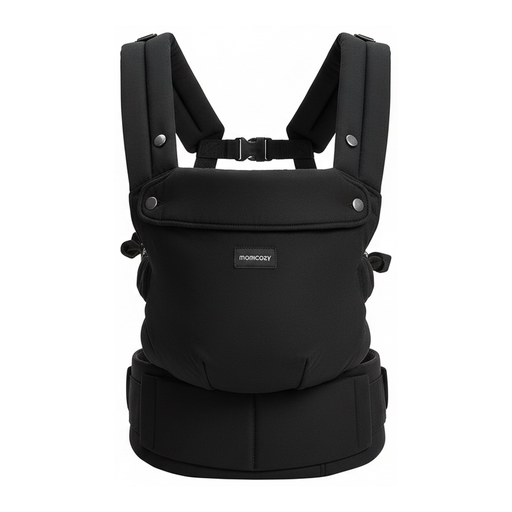
Why This Fits Their Persona: Families taking longer walks or travelling may value the adjustable 3–20 kg range, three carrying positions and built-in support features.
The specification lists an EVA waist panel, X-shaped back and padded straps, making the support system easier to assess.
100% cotton; machine washable; listed weight range of 3–20 kg.
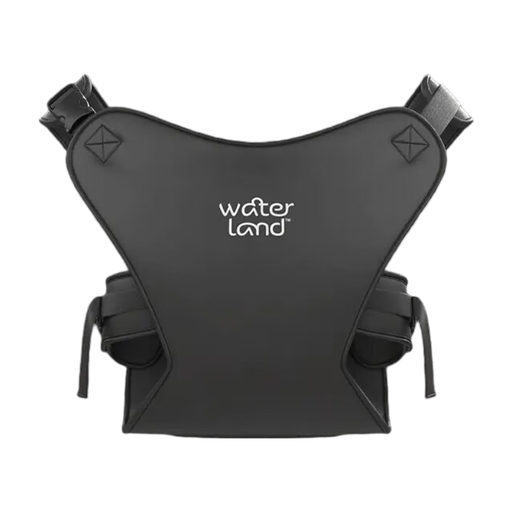
Why This Fits Their Persona: This option is aimed at families who need a carrier for land and water activities, such as supervised beach outings, rather than a standard indoor or commuting carrier.
The listing identifies neoprene construction, adjustable straps and specific water-use warnings. It must still be used with direct supervision and is not flotation equipment.
Listed for 6–15 kg and ages from four months to two years; product information references EN 13209-2:2015 + AC:2016.
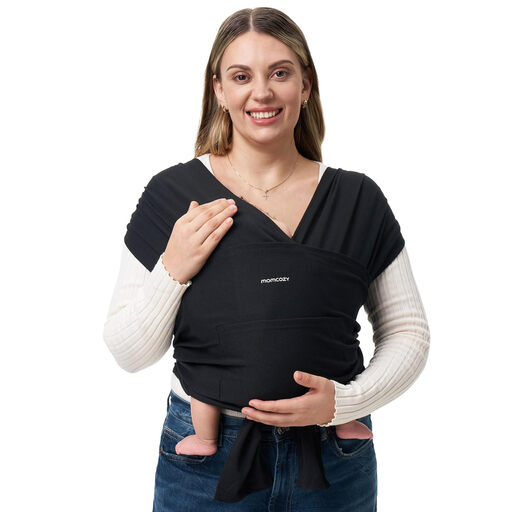
Why This Fits Their Persona: A sling can suit short trips, feeding breaks and parents who want a compact option that stores in a changing bag or car.
The double-ring closure and pre-shaped support reduce reliance on complex wrapping, although the fabric must still be spread evenly across the back.
Machine washable at 30°C; listed for 3.6–15 kg and supplied with a travel storage bag.
We have compiled a complete, real-time list of products that fully satisfy these strict selection criteria and UK safety regulations.
Before carrying your baby, check that:
For longer journeys, stop periodically to check your baby’s position and your own comfort. Wash and dry the carrier according to its care instructions; excessive heat can affect fabric, elastic and structured support panels.
Some are, but not all. Check the exact minimum weight, age guidance and carrying instructions. A newborn baby carrier should support the baby securely without obscuring their face. If the product information is unclear, choose a different model or seek guidance from a qualified healthcare professional.
This depends on the stated weight range, the child’s development and the carrier’s adjustment system. Several options listed above specify ranges up to 20 kg, but comfort and fit can change before the maximum weight is reached. Stop using the carrier if it is damaged or cannot maintain the recommended position.
A sling can be lighter and more compact, while a structured adjustable baby carrier may offer more defined waist and shoulder support. Ease of use depends on the closure system and your ability to achieve a secure fit. Practise at home before using either product outdoors or while travelling.