
24/7 Customer Support

Free returns

Same-day & Next-day Delivery

Quality Guaranteed

Unlock Your Welcome Offers: FREE Delivery | Up to 80% OFF | Free 30-day JoyPlus trial
Download the APP
Starting your little one on solid foods is a significant milestone, and choosing the right first baby cereal can feel like a major decision. The shelves are filled with options, all promising to be the perfect start. However, navigating the marketing claims to find a genuinely suitable and nutritious weaning food can be tricky. As a Joybuy Product Recommendation Officer, my role is to help you see past the hype and focus on what truly matters for your baby's first meals.
Before you make a choice, it's worth being aware of a few common pitfalls that can lead to confusion and less-than-ideal purchases:
organic baby porridge can be a great choice, signifying that the ingredients were grown without certain pesticides. However, the organic label doesn't automatically guarantee nutritional superiority. An organic cereal can still be high in sugar or lack essential fortification, so it's vital to look beyond this one word and check the full nutritional information.To make a confident choice, focus on these key parameters. They are the non-negotiables for a quality infant cereal that supports your baby's development.
Around the age of six months, the iron stores your baby was born with begin to deplete. Iron is crucial for normal cognitive development, making it one of the most important nutrients during the weaning stage. A good baby breakfast cereal will be explicitly fortified with iron. Always check the nutritional panel on the back of the pack to confirm it's included.
For a baby's first taste of solids, a simple, single-grain porridge is often recommended. Smooth oat or rice-based cereals are gentle on a tiny tummy and help you identify any potential sensitivities. As your baby gets older (around 7+ months), you can introduce multi-grain cereals to offer more complex carbohydrates and textures. Look for a short, understandable ingredient list without artificial flavours, colours or preservatives.
Pay close attention to the age guidance on the packaging. Cereals for 6 month baby food will have a very smooth consistency. Those for older babies (7-10 months) will introduce softer lumps and a thicker texture to encourage chewing and help develop oral motor skills. Matching the texture to your baby's developmental stage is key for a positive mealtime experience.
We've filtered through the options to match specific products with common parental needs.
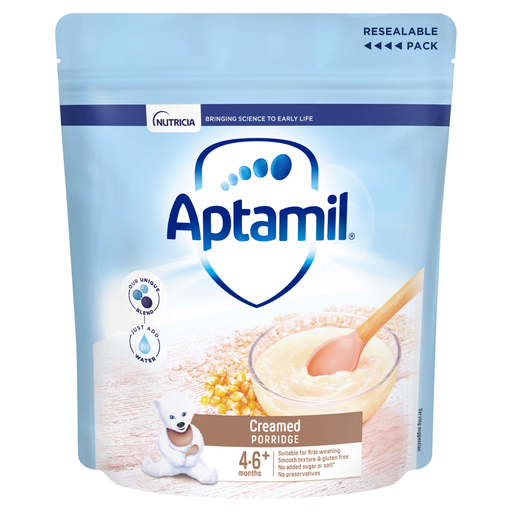
Why This Fits Their Persona: For parents starting the weaning journey, this porridge offers a gentle introduction. Its very smooth, creamy texture is designed for babies who are just learning to manage solids, making it an uncomplicated and reliable first choice.
It has a simple ingredient profile without the high levels of fruit sugars found in more complex blends, directly addressing the "hidden sugar" pitfall. The texture is specifically for early weaning, avoiding the trap of being too advanced.
Fortified with key vitamins and minerals. Its smooth texture is ideal for babies from 4-6+ months, and it's quick to prepare by just adding warm water or your baby's usual milk.
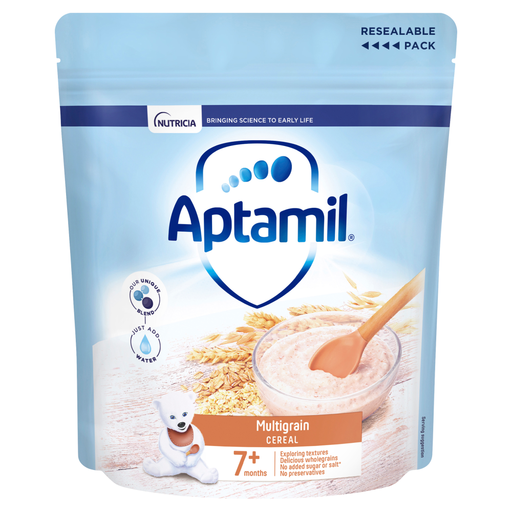
Why This Fits Their Persona: For babies who are confidently eating and ready for the next step, this cereal introduces a blend of seven different grains. It helps expand their palate and encourages them to manage a thicker, more varied texture.
This cereal contains no added sugar or salt, focusing on the natural flavour of the grains. It also directly addresses the texture progression pitfall by being specifically designed for the 7+ month stage.
It is fortified with iron to support cognitive development and contains a blend of prebiotics (GOS/FOS). The seven-grain mix provides taste and texture variety.
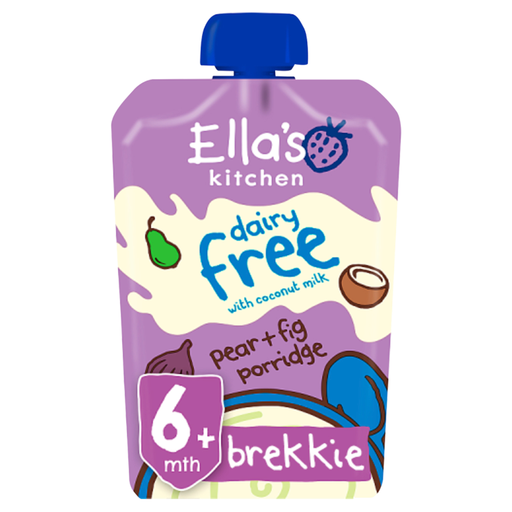
Why This Fits Their Persona: Perfect for parents looking for a dairy-free option without compromising on taste or convenience. This ready-to-eat pouch is made with coconut milk and is 100% organic, making it a great choice for babies with dairy sensitivities or for vegan families.
This product's value is in its specific formulation for a dietary need, moving beyond the simple "organic" halo effect. It is dairy-free by design and uses whole fruits, not concentrates, for its flavour.
It is deliciously dairy-free, made with organic coconut milk. The convenient pouch format is ideal for travel or quick meals, and it contains no added sugar, salt or artificial ingredients.
We have compiled a complete, real-time list of products that fully satisfy these strict selection criteria and UK safety regulations.
The Department of Health and the NHS recommend introducing solid foods at around 6 months of age. By this point, your baby can typically sit up and hold their head steady, and they will have the coordination needed to move food to the back of their mouth for swallowing. Every baby is different, so it is always a good idea to speak with your health visitor or GP before starting.
Iron is very important. From around 6 months, the iron a baby inherits at birth starts to run low, just as they need it for rapid growth and brain development. While you can get iron from other foods like puréed meat and lentils, iron-fortified infant cereal is a simple and reliable way to help meet their daily requirements as part of a balanced weaning diet.
You can certainly make your own porridge from plain, finely milled oats and your baby's usual milk. The main advantage of commercial baby porridge is that it is specifically designed for infants. This means it has a guaranteed smooth texture suitable for early weaning and, crucially, is fortified with a precise balance of vitamins and minerals, including iron, which is difficult to ensure in homemade versions.